Your Guide To a Comfortable Everest Base Camp Trek
At some point on the trek to Everest Base Camp, your idea of a good day starts to change. After several hours on the trail above 3,000 meters, you stop thinking about the comfortable bed you left behind in Kathmandu. Instead, you start looking forward to simple things: a warm dining room, a hot plate of dal bhat, a cup of tea, a place to charge your phone, and a quiet evening before the next morning’s walk.
These small moments can become some of the nicest memories of the trek. The Everest Base Camp Trek in Comfort takes you deep into a remote mountain region, far from the usual comforts of daily life. The trail becomes more challenging, the air gets thinner, and the facilities become simpler as you climb higher. Yet that does not mean the journey has to be harder than necessary.
A little planning can make a big difference. You can choose a walking level that feels manageable, allow enough time for your body to adjust to the altitude, select suitable accommodation, keep your bags light, plan the route carefully, and decide whether you want to walk the entire way back or use a helicopter for part of the journey.
Some travelers love the idea of walking the complete traditional route. For them, every village, bridge, climb, and mountain view is part of the story. Others would rather spend more time enjoying the surroundings and less time retracing the same trail, making better lodges, private arrangements, or chopper return attractive options.
And if your time in Nepal is limited, you do not necessarily have to give up on seeing the Everest region trek. There are shorter ways to encounter the mountains, including Everest helicopter flights to high-altitude viewpoints.
This travel insight explores the different ways to experience Everest Base Camp, from the classic hiking route to helicopter-led options. It also covers the questions visitors usually have before setting out, including how difficult the trek is, how many days you need, when to go, where you stay, what the journey may cost, and how helicopter flights can fit into the travel.
What Makes The Everest Base Camp Trek More Enjoyable and Comfortable?
Give Yourself Enough Time to Acclimatize
Acclimatization is not a day wasted from the itinerary. Namche Bazaar and Dingboche are important stopping points because they allow your body to adjust before you climb deeper. Many itineraries include acclimatization days at these locations rather than trying to gain altitude continuously. The goal is not to reach Base Camp as quickly as possible. It is to arrive there feeling reasonably strong.
Keep Your Daypack Light
A heavy backpack becomes more noticeable as the trail climbs. Many trekkers use porter services so they only carry the things they need during the day. This leaves you with a smaller portable daypack containing water, layers, snacks, sun protection, a camera, and other essentials. It may sound like a small change, but after a few hours on a rocky trail, it makes a real difference.
Walk at a Normal Pace
There is very little benefit in rushing. The trail is not a race, and the people who walk fastest in the morning are not necessarily the ones who feel best in the afternoon. A steady pace with regular breaks usually works better, particularly once you are above Namche. You also get more time to notice what is around you.
Travel with Expert Guide and Porter
Everest trek guides and porters are usually local, and some are especially known as Sherpas. They are best at their work for navigation, knowledgeable enough to illustrate all the tiny details from the mountains to stones; they know when to slow down and when to rest.
Porters are the saviors of these treks, carrying your luggage with a full smile, never frowning, which gives you energy to hit the trail with a light backpack. A guide and porter can turn any demanding trek into a manageable and safe one.
Upgraded Accommodation Options
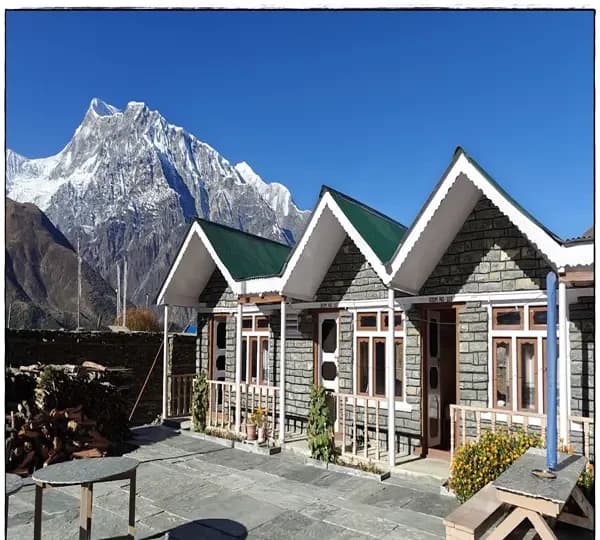
The standard of accommodation varies considerably along the route of the Comfortable Everest Base Camp Trek. In larger villages such as Namche, you can find lodges with more facilities and a wider choice of rooms. Some of the upgraded mountain teahouses available are Yeti Mountain Home, Everest View Hotel, and Everest Summit Lodge. Higher up, options become more limited due to the remote environment, but the upgraded lodges provide you with the best services.
Consider a Helicopter Return
One of the most demanding highlights of the trek is a helicopter flight for trekkers who want to avoid the strenuous return, with a limited schedule, and aerial views of the glaciers, Himalayan valleys, alpine forests, and mountain trails.
Time Your Trek for Suitable Season
Everest is a high-altitude landmark in Nepal, and to visit, you need to choose the best time of year. In the Everest region trek, trekkers prefer the popular autumn and spring periods for the gorgeous views, cleaner mountain views, favorable trekking conditions, suitability for helicopter flights, and an amazing time to cherish. Choosing the best time of the year makes the journey safe and incredible. If you are interested in experiencing the Everest base camp in comfort, you can explore the pacakage here.
Price from
US$3516
Experience the Majesty of Everest in Pure Luxury
Can You Shorten the Everest Base Camp Trek?
Yes, but the best way to shorten the journey is usually through transportation rather than by rushing the walking days. Everest Base Camp Trek options usually mean a helicopter transfer can remove some of the walking and travel days. You can also choose a more streamlined itinerary, based on your acclimatization needs and operating conditions. What should not be sacrificed simply to save a day is adequate altitude adjustment.
What Happens If You Add a Helicopter
A helicopter can change the shape of the trek structure. Instead of spending most days walking back to Lukla after reaching the highest point, you can sometimes fly out of the Everest region. It means that the trekking portion remains central, but the return becomes much shorter. Many travelers say the best way to experience the Everest Base Camp Trek is by including a helicopter return.
Combining the Everest Base Camp Trek with Helicopter Flights
A helicopter flight can be added to an Everest Base Camp journey in various ways. For travelers with limited time, it can reduce the number of hiking days without taking away the meaningful part of the trek. For others, it simply offers a different way to see the Khumbu after experiencing it on foot.
Fly to Lukla by Helicopter—Then Trek to Everest Base Camp
One option is to begin the journey with a helicopter flight from Kathmandu to Lukla and start walking from there. From Lukla, the trail continues through Phakding, Namche Bazaar, Tengboche, Dingboche, Lobuche, and Gorak Shep before base camp. You still experience the gradual change in scenery: Sherpa villages with locals, in lower green valleys and forest trails, to the colder, more open terrain above the tree line.
The helicopter gives you a different start to the adventure. Instead of spending the beginning trip on a regular domestic flight, you get an aerial view of the hills and mountains before your feet meet the trail.
Trek In, Fly Out: The Comfortable Way to Everest Base Camp
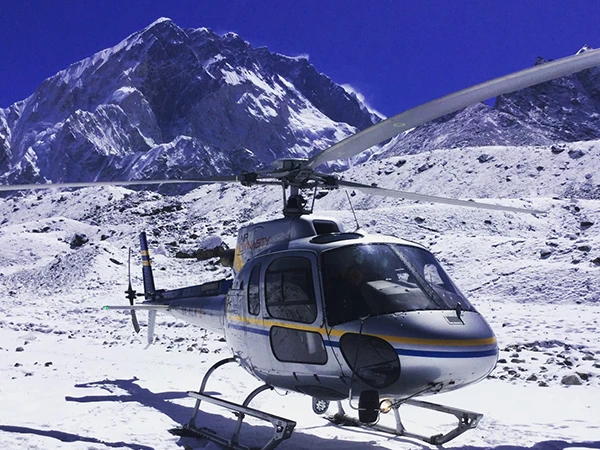
For many travelers, hiking up to Everest Base Camp and returning by helicopter is the most practical combination. You walk through the Khumbu, reach Everest Base Camp, and usually include Kala Patthar before taking a helicopter to the Everest region rather than retracing the trail all the way back to Lukla.
Everst base camp trek with helicopter return can shorten the numerous days of walking same way back, while preserving the main trekking adventure. After spending days approaching Everest on foot, the return flight offers an entirely different view of the mountain settings. The villages, valleys, glaciers, and trails that seemed so vast from the ground become part of one enormous Himalayan scene.
For leisure travelers who want this combination with upgraded accommodation and planned helicopter transfers, the Luxury Everest Base Camp Trek with Helicopter combines the main trekking route with helicopter flights.
Why Mountain Weather Matters for Helicopter Flights
This is important to understand before choosing a helicopter-inclusive itinerary.
The regular flights in the Everest Region depend on visibility, wind, cloud cover, airport conditions, aircraft availability, and other operational factors. A helicopter can make the journey faster, and more chance and guarantee that a flight will operate in every weather condition. But sometimes the bad weather does not permited.
It is therefore sensible to keep some flexibility in your travel plans, particularly if you have an international flight or another fixed commitment after the trek.
If weather prevents the helicopter from operating, the available alternative will depend on the location, conditions, and flight availability at the time.
When to Choose a Helicopter Return
A return by helicopter can be particularly useful if you have limited time in Nepal, want to experience the main Everest trail without walking the entire return route, would rather avoid a handful of days of downhill walking, prefer a more flexible or private arrangement, want to see the Khumbu from both the trail and the air, or would rather use the saved time to explore Kathmandu or another part of Nepal.
Most travelers who wanted to explore Nepal’s most popular places in a short period of time chose a helicopter return to complete the Everest Trek quickly to join a luxury Chitwan jungle safari tour, the Ghorepani Poon Hill trek, Pokhara and Lumbini cultural and heritage-focused trips, explore Kathmandu city fully, take a street food round, and so on.
There is also something special about leaving the mountains this way. After days of walking through the Khumbu, you suddenly see the same valleys from the air above. You recognize the villages and trails below because you have just traveled through them on foot. It can make you realize just how far you have come.
Experience Everest From the Air: A One Day Adventure
Not every international traveler has enough time for a two-week Himalayan trek. Some may have only a few days in Nepal but still want to see Everest, experience the high mountain scenery, and get close to some of the region's famous viewpoints.
A helicopter excursion offers a completely different way to do this. Instead of spending days walking toward the mountains, you can reach the high Everest region by air and return to Kathmandu within the same day, subject to weather and operating conditions.
Luxury Everest Base Camp Helicopter Tour with Kala Patthar Landing
A luxury Everest Base Camp helicopter tour with Kala Patthar landing is designed as a one-day helicopter excursion rather than a multi-day walking trek.
The main highlight is Kala Patthar, one of the most famous viewpoints in the Everest region. From this viewpoint, you can take in Everest and the magnificent Himalayan peaks without committing to the long approach required by a traditional trek.
This option can suit travelers who have very limited time in Nepal, do not want to spend two weeks on a high-altitude trek, want to see the Everest region from the air, prefer to avoid more days of high climbing, or want to fit Everest into a wider Nepal itinerary.
It is important not to confuse this feeling with trek to Everest Base Camp. They offer two very different ways of experiencing the region.
The multi-day trek gives you time to become part of the landscape, walking through villages, forests, valleys, and high mountain trails before reaching Base Camp. The one-day helicopter travel focuses more on the mountains, views, and the feeling of being close to Everest when time is limited.Your content here
When is the Suitable Time to Experience Everest Base Camp
The best trekking period depends on what you value most, but spring and autumn are commonly the most popular seasons.
Spring: March to May
By March, the Khumbu valley is waking up. Snow retreats from the lower trail, rhododendron forests around Namche and below burst into red and pink, and the days grow long enough, and temperatures climb into the low teens, around 10 to 15℃, at Namche and Tengboche. Skies tend to be clearest in the early morning, before afternoon cloud builds around the peaks, when most of Everest's best photographs are taken. It's widely considered the most forgiving season to trek in: not effortless, but the trail cooperates more than it fights you.
Autumn: September to November
The monsoon has cleared out, and what's left is the kind of sky the Khumbu is famous for: sharp, high-altitude blue with barely a wisp of cloud around Everest, Lhotse, and Ama Dablam by late September. Daytime temperatures reach a pleasant 12°C through September and October, dropping to around 2°C once the sun goes down, with November turning noticeably colder as winter closes in. October and November are the trail's busiest weeks for exactly that reason: stable weather, dependable flights, and views that don't need much luck to see. Teahouses fill up fast, so this is also the season where booking ahead actually matters.
Winter: December to February
Once December arrives, most of the crowds go home, and the trail turns quiet in a way that has its own kind of beauty: empty dining rooms, still air, and mornings so clear you can pick out individual ridgelines before the sun's properly up. That clarity comes at a cost, though: temperatures above Dingboche can drop hard after dark around -20°C, trails can ice over, and higher passes sometimes close if snow moves in. It's a season for trekkers who don't mind the cold in exchange for having the mountain almost to themselves.
Monsoon: June to August
June through August brings cloud rolling in most afternoons, trails turning to mud lower down, and Lukla flights becoming considerably less reliable. The Everest region sits partly in the rain shadow of the main Himalayan range, so it gets less rain than much of Nepal during these months, but "less" isn't "none," and the views you came for can vanish behind clouds for days at a stretch. It's the quietest season on the trail, with daytime temperatures often near 20°C, and for good reason.
The Classic Everest Base Camp Trek: Walking Into the Khumbu Valley
For many people, the trekking is not simply a way to reach Everest Base Camp. It is the reason for going. The classic route begins around Lukla and follows the Dudh Koshi Valley toward Namche Bazaar. From there, the trail continues through Tengboche, Dingboche, Lobuche, and Gorak Shep before reaching Everest Base Camp.
The return journey follows much of the same trail. That may sound repetitive when written on a map. It rarely feels that way when you are actually walking it. The landscape keeps changing. The forest gradually gives way to open mountain terrain. Villages become smaller. The air becomes colder. The sound of rivers and birds is eventually replaced by wind, prayer flags, and the occasional bell of a yak caravan.
From Lukla to Namche Bazaar
The lower part of the trek is greener than many new visitors expect. You walk through wooded areas, cross Jholunge bridges, and pass small settlements along the Dudh Koshi River (Milk-Koshi River), a high-altitude river in eastern Nepal. The trail has plenty of uphill and downhill sections, but the nearby vegetation helps make the first days feel relatively welcoming. The climb toward Namche is where the trek begins to feel more serious.
From Namche to Tengboche
The mountains begin to dominate the landscape. On clear days, views of Ama Dablam and other major peaks start to become part of the walk rather than something you have to search for. Tengboche is also home to one of the region's best-known monasteries (Tengboche Monastery at 3,867 m/12,687 ft.), known as Dawa Choling Gompa, making this more than just another overnight stop.
From Dingboche to Gorak Shep
The landscape becomes increasingly sparse as you climb higher. Trees disappear, temperatures drop, and the trail becomes more exposed. Your days on foot speed naturally slows.
This is where preparation and acclimatization become especially important. You are no longer simply hiking through the mountains. Your body is working at altitude.
Everest Base Camp and Kala Patthar
Reaching Everest Base Camp is a major milestone, but it is important to understand that the famous panoramic view of Everest is not necessarily from Base Camp itself. Kala Patthar is the better-known viewpoint for broad views toward Everest and the neighboring peaks.
Many trekkers make the early-morning climb from Gorak Shep to Kala Patthar, when the first light reaches the mountains. It is cold, often windy, and physically strenuous, but the changing colors on the towering peaks can make the early start worthwhile. Some trekkers encounter Kala Patthar as a side trip during the 3 High Pass trek of the Everest (Renjo La, Cho La, and Kongma La), also known as the Everest High Pass Trek.
How Difficult Is the Everest Base Camp Trek
The Everest Base Camp Trek is generally considered a high-altitude trek that is challenging but not a technical mountaineering expedition.
No one requires climbing skills to reach Base Camp, but everyone needs to be prepared for long days of walking, steady climbs, and a dramatic change in altitude. It’s not just your legs that are the problem. The higher you ascend on the trail, the more oxygen-depleted the air, the colder the mornings, and the more the need to slow down and listen to your body.
Here is where the journey becomes more meaningful for many trekkers. What looks like a walk in the park from a distance can take twice as long as you think, and a short climb can have you stopping to catch your breath. But the mountains seem to get nearer with every slow step.
Why is the trek challenging?
The reasons that make the journey demanding are
- High altitude
- Longer walking days
- Recurring uphill and downhill sections
- Rugged and uneven trails
- Colder temperatures at higher elevations
- Reduced oxygen
- Many consecutive days of walking
Someone who is very fit at sea level can still find walking above 4,000 meters surprisingly difficult. You may feel strong on one day and slower the next. This is normal at high altitude. Fitness gives you a good foundation, but it cannot completely protect you from the effects of thin air. This is the reason why this adventure is not proving how fast you can walk. It is about when to slow down, taking breaks to allow your body to rest, drinking enough water, and giving yourself time to adjust.
There may be some moments to think about why these trails feel so hard. Then you look up and see the gigantic mountains rising above the valley, or reach a village you had been walking toward since morning, and the tiredness feels different. Those small victories make the process special. The goal is not simply to reach Everest. It is to get there safely, with enough energy to look around and appreciate having made it.
Is Everest Base Camp Suitable for First-Time Trekkers
You do not need to be an expert mountaineer, but you should be physically active and willing to prepare before the Everest base camp trek. Involve yourself in regular walking and active workouts, such as cardiovascular exercise, hiking, strength training, cardio, swimming, stair walks, and so many others. You can join some short hiking events to prepare before diving into the Everest Base Camp trek. Most importantly, walking gradually is the key to success, not reaching the main point fast.
Why Acclimatization Matters More than Speed
The itinerary plays a role in acclimatization. A good itinerary allows your body time to adjust. Namche Bazaar is commonly used for an acclimatization stay, and another acclimatization period is generally included around Dingboche before continuing toward the higher settlements. Those pauses are part of the route, not interruptions to it.
How Many Days Do You Need for the Everest Base Camp Trek
For the traditional walking route, most travelers should allow around two weeks once flights, acclimatization, and the return journey are taken into account. The exact duration changes according to the itinerary and whether you use helicopter transportation.
A standard trek may follow a progression similar to
Kathmandu - Lukla - Phakding - Namche Bazaar - Tengboche - Dingboche - Lobuche - Gorak Shep - Everest Base Camp - Gorak Shep - Kala Patthar - Gorak Shep—Kathmandu
Along the way, the trail passes through places such as Chaurikharka, Chheplung, Ghat, Zhamfute, Toktok, Bengkar, Monjo, Jorsale, Khyangjuma, Sanasa, Phunki Tenga, Dengboche, Pangboche, Shomare, and Dhugla. Trying to remove too many days can create problems because the itinerary needs to account for altitude, not just distance.
How Long Is the Classic Everest Trek
A traditional Everest Base Camp itinerary generally takes around twelve to sixteen days, depending on the schedule and return transportation. The most common format is a 14-day itinerary in Nepal because it provides time for both the ascent and acclimatization.
If you want the full trekking moments, there is a strong argument for keeping the schedule relatively relaxed rather than trying to compress everything into the shortest possible trip.
For travelers who want to complete the timeless walking journey, you can explore the Classic Everest Base Camp Trek as the full-route option.
Price from
US$1350
Write your own chapter in the history of adventure
What Kind of Accommodation Can You Expect on the Everest Base Camp
Accommodation gradually changes as you move farther uphill into the Everest region. In Kathmandu, you can stay in a full-service hotel with familiar facilities and a well-supported room. Once you begin trekking, the atmosphere becomes more remote, and the accommodation becomes simpler.
That does not mean every night has to feel the same. Choosing better lodges can make a noticeable difference, especially after a long day of walking.
Teahouses and Mountain Lodges
Most trekkers stay in teahouses or mountain lodges along the trek route. Rooms are generally very simple, but with twin beds, mattresses, blankets, and basic furnishings. Shared bathrooms are common, particularly at higher elevations, although some better lodges offer private or attached facilities.
The dining room often becomes the heart of the lodge in the evening. After hours on the trail, it is where trekkers gather around the stove to enjoy a warm meal, share stories, laugh, sing, and dance, and talk about the next day's walk while waiting for dinner.
What Can You Expect from upgrated Lodges
In lower-and mid-altitude Sherpa villages, some mountain lodges provide more facilities than basic teahouses. Depending on the location and availability, you may find:
- Private rooms
- Attached bathrooms
- Hot showers
- Charging facilities
- Wi-Fi
- Larger dining areas
- Nutritious, freshly prepared foods
- Warmer common rooms
- Electric blankets or heated bedding
Electric blankets can be particularly welcome after you reach the colder parts of the route. Some upgraded lodges provide them to help keep the bed warm during the night, although availability can vary between properties and may come with an additional charge.
These can make a real difference when temperatures drop after sunset. After spending the day outside in the cold mountain air, getting into a warm sleeping bag and a pre-warmed bed can be one of those small conveniences you appreciate more than you expected.
How Does Accommodation Change at Higher Altitudes
The higher altitude you go, the fewer facilities you can experience. Transporting supplies and maintaining services becomes increasingly difficult in remote mountain settlements, so accommodation around Lobuche and Gorak Shep is much more basic than what you may find in Namche Bazaar.
Even where electric blankets, hot showers, or private bathrooms are available, they should not be assumed to be guaranteed throughout the path. Facilities can depend on the lodge, season, electricity supply, and availability.
A better lodge can make your evenings warmer and more relaxing, but it cannot change the basic character of the Everest region. You are still sleeping in a remote Himalayan town, covered by some of the world's highest mountains.
And perhaps that is part of what makes the experience unique and worthwhile. After a long day on the trail, a warm dining room, a hot meal, and a heated bed can feel surprisingly special when Everest is waiting outside your window.
What Is the Food Like on the Everest Base Camp Trek
Food becomes part of the experience as soon as you leave the city behind. The farther into the mountains you walk, the simpler the meals may become, but there is still plenty to choose from along the main Everest Base Camp way.
Dal bhat is one of the most common meals and a favorite for many trekkers. A warm plate of rice, lentil soup, vegetables, spicy achar, and sometimes curry can be exactly what you need after several hours on the trail. It is filling, familiar, and easy to appreciate when you are tired and hungry.
You will also find momos, noodles, soups, eggs, pasta, and other simple international dishes at many mountain teahouses. In some places, you can try Sherpa or Tibetan-style dishes, such as t-momo, tsampa, rildok, Sherpa stew, butter-and-salt tea, thukpa, rikikur, and many others, giving you a chance to experience some of the local flavors along the way.
Vegetarian food is widely available, and many teahouses can prepare simple meals according to your preferences. As you climb higher, however, the choices may become more limited, so it is better to keep an open mind and enjoy what is available.
Drinking enough water is just as important as eating well. The dry mountain air, physical effort, and increasing altitude can leave you dehydrated without you noticing. Carry a reusable bottle and drink regularly throughout the day.
After some hours of walking, even a simple bowl of hot thukpa soup or a plate of warm staple food can feel like exactly what you needed. Sometimes, it is not about having a long list of choices. It is about sitting down somewhere warm, taking the weight off your feet, and enjoying a hot meal while the mountains wait outside.
Major Permits Required for the Everest Base Camp Trek
Before heading into the Everest region, you have to take care of a few permits. It may sound like another bit of paperwork, but it is a straightforward part of preparing for the trek.
The main requirements for the standard Everest Base Camp trail are the Sagarmatha National Park Entry Permit, which costs around NPR 3,000 for foreign travelers. The Khumbu Pasang Lhamu Rural Municipality permit, which costs around NPR 3,000. SAARC nationals receive a reduced national park entry fee. These allow you to enter the protected Everest landscape and travel through the local rural municipality.
If you are trekking with a registered trekking company, the permit arrangements are usually handled for you. You simply provide the necessary details and documents, and your guide or trekking team takes care of the process.
Independent trekkers need to arrange the required permits themselves and should check the latest requirements before setting off, as fees and procedures can change.
What Should You Pack for a More Enjoyable EBC Trek
You do not need to pack a whole wardrobe for this trip. Packing simple and mostly needed things is important. The major things needed are
- Moisture-wicking base layers
- Warm fleece or insulated jacket
- Waterproof outer layer
- Warm hat and gloves
- Comfortable trekking boots
- Sunglasses
- Sunscreen
- Reusable water bottle
- Headlamp
- Power bank
- Trekking poles
- Sleeping bag suitable for cold temperatures
- Small personal first-aid kit
- Necessary personal medication
The lower trail can feel warm during the day, whereas the higher section may be freezing, mostly at the Kala Patthar and Gorak Shep. You should pack for the range rather than one temperature. If you want to know more about the equipment list for the Everest Trek, take a look here.
How Much Should You Budget for an Everest Base Camp Experience
The budget of the Everest Base Camp Trek varies on how you choose to travel, how long you stay in the mountains, the level of lodging, and whether you return on foot or by helicopter.
What Affects the Price
The major factors affecting the costs are the number of trekking days, group size, accommodation standard, guide and porter services, permits, Lukla transportation, meals, helicopter flights, private transportation, additional nights in Kathmandu, or seasonal demand.
A standard guided Everest Base Camp Trek generally costs approximately USD 1,250 to USD 1,800 per person, while a private or upgraded trip can cost approximately USD 1,800 to USD 3,000 or more. If you choose a helicopter return from the Everest region, the price usually rises to around USD 2,300 to USD 3,200, or more, per person. On the other hand, higher-end trips with upgraded lodges, private services, and helicopter transportation, which can reach USD 3,000 to USD 5,000 or more.
What Is Included in the Everest Base Camp Trek Cost
Normally, a standard trekking package commonly covers domestic flights between Kathmandu and Lukla or the applicable Ramechhap-Lukla transfer, teahouse accommodation, meals during the trek, a licensed guide, porter service, required permits, airport transfers, and government or service charges. However, inclusions differ between operators, so it is worth checking the details before comparing prices.
If you trek independently, your expenses are divided into separate costs. You may spend roughly USD 350 to 700 on food, depending on where and what you eat, while basic teahouse rooms can range from around USD 10 to 40 or more per night. A guide and porter hired separately may add several hundred dollars each, and you should also allow for travel insurance, personal expenses, Wi-Fi, charging, hot showers, snacks, drinks, gear, and tips.
The flight to Lukla is another important part of the budget. Airfares change according to season, availability, and operating arrangements, and during busy trekking periods flights may operate from Ramechhap instead of Kathmandu. If you choose a helicopter instead of a regular flight, the transportation cost increases considerably.
How Much Does the Everest Base Camp Trek With Helicopter Return Cost
A helicopter return can be the easiest way for many days of walking after you reach the higher parts of the Khumbu, making it an appealing option for trekkers who want to experience the main trekking route without spending as much time retracing the trail.
In 2026, a guided Everest Base Camp Trek with a shared helicopter return generally falls around USD 2,300 to 3,200 or higher per person. These are tentative figures, but the exact price is influenced by the number of passengers sharing the helicopter, the pickup point, the final destination, season, weather, and other factors.
A helicopter from Gorak Shep to Kathmandu can cost roughly USD 1,200 to 1,400 per person when shared, although prices vary. Some itineraries instead fly from Gorak Shep to Lukla and continue by regular flight; we should check exactly what the helicopter service covers.
Private helicopter arrangements cost considerably more because the aircraft is chartered rather than shared.
What Other Costs Should You Budget For
Even when the main trekking package is paid for, it is sensible to keep aside some extra money. Travel insurance suitable for high-altitude trekking can cost approximately USD 100 to 250 or more, while personal spending may be around USD 150 to 300 depending on your habits. Tips for guides and porters are customary, and many trekkers budget around USD 100 to 250 for this; it depends on the guest. If you need to buy or rent trekking equipment, the amount can vary from a small rental fee to several hundred dollars.
The most important thing is not to choose a trek simply because it has the lowest advertised price. A cheaper package may exclude flights, meals, permits, porter service, accommodation upgrades, or transportation that another package already includes.
For travelers who want to spend more time enjoying the mountains and less time worrying about logistics, paying for a better place to stay, private arrangements, or a helicopter return can make the journey feel considerably easier. For others, hiking the full route and keeping the budget modest is part of the satisfaction. There is no single right way to experience Everest. The better choice is the one that matches your time, priorities, and the kind of memories you want to take home.
Final Thoughts
The Everest Base Camp Trek can give you more than memories of mountains and long days on the trails. Somewhere between the quiet villages, the thin mountain air, and vast Himalayan views, you may begin to see your everyday life from a different perspective. Things that once felt overwhelming can seem smaller, while simple moments—a warm meal, a kind smile, yak husbandry, cute children of the mountain, or standing quietly beneath a pearl-shining peak—can suddenly feel much more meaningful. The mountains have a way of slowing you down and giving your mind space to breathe.
Perhaps that is what makes this journey so special. You are thinking going to see Everest, but along the way you may discover something about yourself too. Experiencing the Everest Base Camp Trek in comfort does not mean removing every challenge from the journey. It means giving yourself proper acclimatization time, walking gradually, choosing the right accommodation, keeping your days manageable, and using transportation options such as domestic flights, helicopters, private vehicles, or tourist buses. These small choices can affect your experience on the Everest journey. If you are looking for more comfortabel and premium experience, you can explore, and book the Luxury Everest Base Camp Trek Here
General Asking Questions
Can you experience Everest by helicopter without completing the full trek?
Yes, helicopter-supported itineraries can reduce the number of trekking days, while helicopter excursions can provide a high-altitude Everest experience without completing the traditional route on foot.
How many days do you need for the Everest Base Camp Trek?
Generally, a traditional Everest trek takes around two weeks, although the exact duration depends on acclimatization, starting arrangements, and return transportation.
Can you combine the Everest Base Camp Trek with a helicopter flight?
Yes, helicopters can be used to reach Lukla, return from the Everest region, or support a customized itinerary, depending on weather and operational conditions.
Can you fly by helicopter from Gorak Shep to Kathmandu?
Helicopter transportation can be arranged from Gorak Shep to Kathmandu, subject to weather, aircraft availability, and operational conditions.
Is the Everest Base Camp Trek suitable for beginners?
Yes, for reasonably fit travelers who prepare properly and follow an itinerary that allows adequate acclimatization. Previous high-altitude trekking experience is helpful but not essential for this trek.
What is the best time to reach Everest?
Spring and autumn are generally the most popular periods because of favorable trekking conditions, best flight and helicopter flying conditions, and mountain visibility. Winter and monsoon season can also be possible but bring additional challenges.
How difficult is the Everest Base Camp Trek?
It is a challenging high-altitude trek rather than a technical climbing expedition. Long walking days, elevation, and cold temperatures are the main challenges.
Can the Everest Base Camp Trek itinerary be customized?
Yes, depending on availability, travelers can discuss additional acclimatization days, private groups, different trekking durations, accommodation upgrades, and helicopter transportation.
How cold does it get at night during the trek?
Temperatures become noticeably colder as you gain altitude, particularly after sunset. Lower-area villages of the Everest, like Phakding and Namche, are usually manageable, while places such as Lobuche and Gorak Shep can become very cold at night and may have freezing temperatures in winter. The Nepal Tourism Board (NTB) notes that temperatures in the mountainous region can drop below zero, with temperatures generally falling as altitude increases.
Is travel insurance required for this trek?
Travel insurance is strongly recommended for the Everest Base Camp Trek because the adventure takes place at high-altitude zones and helicopter evacuation can be way more expensive. The Nepal Tourism Board advises trekkers to have insurance that covers medical treatment and activities such as trekking and recommends coverage for emergencies like helicopter rescue.
What is the difference between a standard and comfortable Everest Base Camp Trek?
The main difference is usually how the trek is arranged, rather than the trekking route itself. A standard Everest Base Camp Trek generally focuses on the essential trekking experiences with basic teahouse accommodation and regular transportation. A more comfortable and upgraded trek includes better-standard lodges, private arrangements, lighter luggage, more flexible services, and options like a helicopter return. Both can follow the same trail and reach Everest Base Camp. The difference is in the level of convenience and how much effort you want to take out of the overall trip.
Can you do the Everest Base Camp Trek without carrying a heavy backpack?
Yes, many trekkers use porter services as a team member of the trek so they can carry only lightweight bags with water, snacks, extra layers, sun protection, sunglasses, and personal essentials.
Are electric blankets available on the Everest Base Camp Trek?
Yes, some of the best-available mountain lodges provide electric blankets to keep you warm after sunset. Electric blankets are very limited, so it’s best to reserve them in advance and subject to the availability of electricity in high-altitude areas.
How important is acclimatization on the Everest Base Camp Trek?
Acclimatization is an essential part of the Everest Base Camp trek because your body needs time to adjust to the higher-altitude areas with thinner air as you climb. The most popular and important acclimatization places for this trek are Namche Bazaar and Dingboche to help you slow down and prepare for the next day’s adventure.
What should you pack for this trek?
Always pack warm and layered clothing, comfortable trekking shoes, a good sleeping bag, sun protection, water bottles, personal medication, a headlamp, a power bank, toiletries, and other essentials. Walking more easily on the trails is only possible with the small daypack.