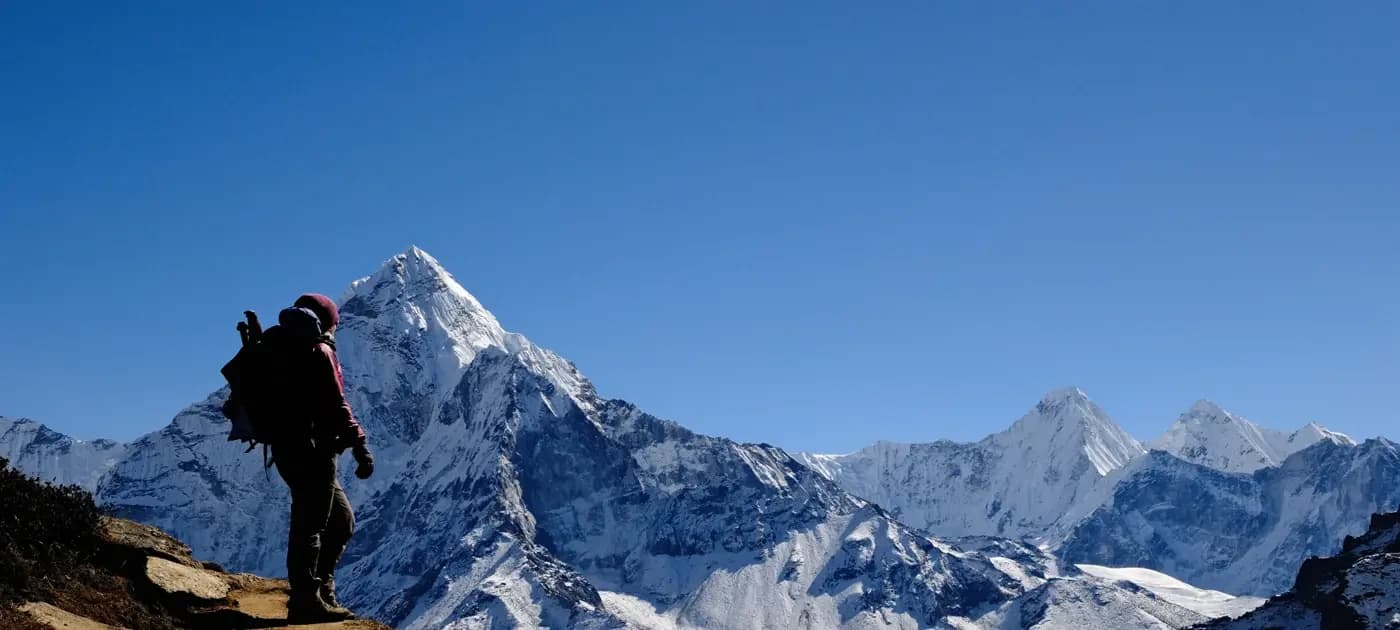
Climate of Nepal: Weather, Seasons, Temperature and Best Time to Visit
The climate of Nepal is shaped by one simple fact: no other country has such a dramatic altitude range in such a small area. Nepal rises from around 60 meters near the Indian border to 8,849 meters at the top of Everest, all within roughly 200 kilometers.
This vertical journey means the climate of Nepal isn't one climate at all, it's five or six climates stacked on top of each other. A trekker can leave a 35°C morning in Kathmandu and arrive, within days, at a teahouse where the night drops below freezing.
Climate of Nepal at a Glance
| Fact | Detail |
| Climate type |
Subtropical monsoon (south) to alpine and arctic (north) |
| Climatic zones |
5, based on altitude |
| Main seasons |
4: spring, summer/monsoon, autumn, winter |
| Monsoon period |
June to September |
|
Share of annual rain in monsoon |
About 80% |
| National average annual rainfall |
Roughly 1,600 mm |
| Wettest city |
Pokhara, about 3,345 mm per year |
| Driest region | Upper Mustang, under 300 mm per year |
|
Temperature lapse rate |
About a 6°C drop per 1,000 m gained |
|
Kathmandu Valley extremes |
-3°C to 37°C on record |
|
Terai summer high |
40–45°C |
| Everest Base Camp winter low |
Around -16°C |
|
Best trekking months |
October, November, March, April |
Why Is the Climate of Nepal So Diverse?
The climate of Nepal owes its extremes to three overlapping forces working at once.
- Altitude does most of the work: Temperature drops about 6°C for every 1,000 meters climbed, so a 30°C day in Kathmandu (1,400 m) can become a 5°C afternoon at Namche Bazaar (3,440 m).
- The Himalaya acts as a wall: The mountains block freezing Central Asian winds in winter, which keeps the southern plains milder than their latitude alone would suggest.
- The same wall traps the monsoon: Rain clouds sweeping up from the Bay of Bengal dump most of their moisture on the southern slopes, leaving northern valleys like Mustang and Dolpo in a permanent rain shadow.
Due to these three forces, the climate of Nepal genuinely behaves as three or four countries layered on top of each other. Locals describe it simply: go south for heat, go north for cold, and everything in between depends on how high you stand.
Geography and Climate of Nepal: Three Ecological Belts
Geographers usually split Nepal into three horizontal belts running east to west, and each belt experiences the climate of Nepal completely differently.
| Belt | Elevation |
Climate character |
|
Terai (lowlands) |
Below 300 m |
Hot, humid, subtropical, similar to the plains of northern India |
|
Pahad (hills and valleys) |
300–3,000 m |
Temperate, four clear seasons, home to Kathmandu and Pokhara |
|
Himal (Himalaya) |
Above 3,000 m |
Cold, alpine to arctic, permanent snow above roughly 5,000 m |
This structure explains why the same week can bring jungle heat in Chitwan and blizzard conditions at Thorong La.
It also explains why our geography of Nepal guide and this climate guide are best read together before you finalize a trip.
The Five Climatic Zones of Nepal by Altitude
For a more precise picture, meteorologists divide the climate of Nepal into five zones based on altitude bands.
| Zone | Altitude | Typical conditions |
Example location |
| Tropical/subtropical | Below 1,200 m |
Hot, humid, heavy monsoon rain |
Chitwan, Bardia, Terai plains |
| Warm temperate | 1,200–2,400 m | Mild, four distinct seasons | Kathmandu, Pokhara |
|
Cool temperate |
2,400–3,600 m | Cold winters, cool summers | Ghorepani, Namche Bazaar |
|
Subarctic |
3,600–4,400 m |
Snow likely much of the year |
Dingboche, Manang |
| Arctic (alpine) | Above 4,400 m | Below freezing year-round |
Everest Base Camp, Thorong La Pass |
The Four Seasons of Nepal
The climate of Nepal moves through four seasons each year, and trekkers plan almost everything around them.
Spring in Nepal (March–May)
- Rhododendron forests bloom bright pink and red across the mid-hills.
- Daytime temperatures reach the low-to-mid 20s°C in the hills and Kathmandu Valley.
- Haze builds up by late May, which can soften long-distance mountain views.
- Spring is the second most popular trekking season after autumn.
Summer and Monsoon in Nepal (June–September)
- The monsoon delivers roughly 80% of Nepal's total annual rainfall.
- Rain typically falls in short, heavy bursts, often overnight, leaving mornings dry.
- Landslides and flight delays become more frequent on hill and mountain routes.
- Rain-shadow regions like Upper Mustang, Manang and Dolpo stay largely dry and trekkable.
Autumn in Nepal (October–November)
- Monsoon clouds clear completely, giving the sharpest mountain visibility of the year.
- Daytime temperatures stay comfortable, while nights turn crisp at altitude.
- Dashain and Tihar, Nepal's two largest festivals, both fall within this window.
- Autumn is, by a wide margin, the busiest and most recommended trekking season.
Winter in Nepal (December–February)
- Skies stay dry and clear, though nights turn cold, especially above 3,000 m.
- High passes such as Thorong La and Cho La can close after heavy snowfall.
- Lower-altitude treks, including Ghorepani Poon Hill and Langtang Valley, stay fully open.
- Bright daytime sun at altitude often feels warmer than the actual temperature suggests.
Nepal Monsoon Season Explained
The monsoon defines the wettest chapter of the climate of Nepal, and it deserves its own explanation because so many trip decisions hinge on it.
How it works:
- Moist air rolls north from the Bay of Bengal between June and September.
- The air collides with the Himalayan wall and releases most of its moisture on the southern and eastern slopes.
- Northern valleys sitting behind the mountains receive very little of this rain, creating dry "rain-shadow" pockets.
Rainfall by region:
| Location |
Approximate annual rainfall |
| Pokhara (wettest major city) |
3,345 mm |
|
National average |
1,600 mm |
|
Kathmandu |
1,400–1,600 mm |
|
Upper Mustang (rain shadow) |
Under 300 mm |
The practical impact of the monsoon climate of Nepal is straightforward: trails below 3,000 m turn muddy and leech-prone, but rain-shadow treks like the Upper Mustang trek and our remote area treks remain genuinely enjoyable through summer.
Climate of Nepal by City and Region
The climate of Nepal varies so sharply by location that city-level data is far more useful than a single national average. The table below breaks down quarterly highs and lows for four key destinations.
Kathmandu
| Period | Average high |
Average low |
|
March–May |
27°C |
12°C |
| June–August |
28°C |
18°C |
|
September–November |
25°C |
13°C |
| December–February | 19°C | 3°C |
Kathmandu is at 1,400 m and rarely snows, though winter mornings can dip close to freezing. Heaviest rainfall arrives in July.
Everest Base Camp Region
|
Period |
Average high | Average low |
|
March–May |
11°C | -6°C |
| June–August | 16°C |
6°C |
|
September–November |
12°C |
-6°C |
| December–February |
4°C |
-16°C |
This range shows exactly why the climate of Nepal at altitude demands proper gear regardless of season. Even the "warmest" quarter still drops below freezing at night.
Pokhara
| Period | Average high | Average low |
| March–May | 33°C | 18°C |
| June–August | 36°C | 26°C |
| September–November | 31°C | 18°C |
| December–February | 20°C | 8°C |
Pokhara's position beneath the Annapurna range makes it Nepal's rainiest major city, with the heaviest downpours arriving in July.
Chitwan (Bharatpur)
| Period | Average high | Average low |
| March–May | 34°C | 21°C |
| June–August | 33°C | 27°C |
| September–November | 29°C | 17°C |
| December–February | 25°C | 13°C |
For wildlife spotting on a jungle safari in Nepal, the dry, milder months of December and January offer the best visibility across the grasslands.
Nepal Weather by Month: Best Time to Visit
Pulling every data point together, here's how the climate of Nepal rates month by month for trekking and general travel.
| Month | Rating | What to expect |
| January | Good (lower routes) | Cold, dry, clear; high passes may close |
| February | Good | Cold nights, dry days, quieter trails |
| March | Very good | Rhododendrons begin blooming |
| April | Best for spring trekking | Warm days, clear early mornings |
| May | Good, pre-monsoon | Warm but increasingly hazy |
| June | Fair | Monsoon begins, humidity rises |
| July | Low | Heaviest rainfall, landslide risk |
| August | Low | Rain continues; rain-shadow routes remain open |
| September | Improving | Monsoon tapers off by month's end |
| October | Best overall | Clearest skies of the year, festival season |
| November | Best overall | Stable weather, excellent visibility |
| December | Good (lower altitude) | Cold, dry, fewer crowds |
Climate of Nepal for Trekkers: Region-by-Region Best Season
As the climate of Nepal shifts so much by elevation, the ideal season also depends on which trek you're doing.
- Everest Region Treks: Best in autumn and spring, as winter works below Namche Bazaar with the right gear.
- Annapurna Region Treks: The widest weather window of any region due to its range of altitudes.
- Langtang Region Treks: A solid monsoon-season choice as it’s closer to Kathmandu and partly sheltered.
- Manaslu Region Treks: Best in autumn, since the upper valley sits closer to Tibet's drier climate.
- Remote Area Treks (Upper Mustang, Dolpo): The strongest monsoon-season pick, sitting entirely in the Himalayan rain shadow.
- Easy and Short Treks: More forgiving across seasons, since lower altitude means milder swings.
Contact Our Team for Season Details
What to Pack for Nepal's Climate
| Season | Essentials |
| Spring | Light layers, sun hat, and a light rain shell for afternoon showers |
| Summer / Monsoon | Waterproof jacket, quick-dry clothing, and leech socks below 3,000 m |
| Autumn | Down jacket for evenings, layered base wear, and sunglasses |
| Winter | Insulated down jacket, thermal base layers, and a sleeping bag rated to -15°C at altitude |
Is the Climate of Nepal Changing?
Nepal's mountain communities have reported earlier snowmelt and increasingly erratic monsoon rainfall over the past decade. The climate of Nepal came into sharp focus in September 2026, when intense monsoon rain triggered severe flooding across the country, underscoring that weather patterns are becoming less predictable rather than more stable.
This doesn't make travel to Nepal unsafe, but it does make real-time monitoring and flexible planning more important than ever. If you're planning a trip around current conditions, check the latest updates from Nepal's Department of Hydrology and Meteorology alongside our own trip alerts before departure.
How Global Adventure Trekking Keeps You Safe in Every Climate
As the climate of Nepal can shift quickly at altitude, safety planning is built into every trip we run, not treated as an afterthought.
- Licensed, experienced guides who read local weather patterns daily and adjust the day's plan whenever conditions change.
- Acclimatization days built into every high-altitude itinerary, reducing altitude-related risk regardless of season.
- Flexible departure and rerouting options during monsoon and peak winter, including rain-shadow alternatives like Upper Mustang.
- Real-time monitoring of trail, weather, and flight conditions, with contingency plans for Lukla and Jomsom flight delays.
- Route-specific gear guidance tailored to your trek and season, shared with you well before departure.
- Established partnerships with the Himalayan Rescue Association (HRA), giving trekkers access to rescue and evacuation support at altitude.
Ready to Plan Your Trek?
The climate of Nepal isn't one climate at all; it's five altitude zones and four seasons layered across a single small country. Once you understand how elevation, monsoon timing and rain-shadow geography interact, planning around the climate of Nepal stops feeling unpredictable and starts feeling manageable.
Contact Our Team to Plan Your Trip
Frequently Asked Questions About the Climate of Nepal
What is the climate of Nepal like?
The climate of Nepal ranges from hot and humid in the Terai lowlands to alpine and arctic in the high Himalaya. Altitude drives almost everything, more than the calendar season alone.
What is the best time to visit Nepal?
Autumn, specifically October and November, is the best time to visit Nepal thanks to clear skies and stable temperatures. Spring, in March and April, comes a close second for rhododendron blooms and good visibility.
When is the monsoon season in Nepal?
Nepal's monsoon runs from June to September and brings about 80% of the country's annual rainfall. Rain-shadow areas like Upper Mustang and Dolpo stay largely dry throughout this period.
Is Nepal cold or hot?
The climate of Nepal is hot and humid in the Terai and cold at altitude in the mountains. Kathmandu sits in between, with mild winters and comfortably warm, non-extreme summers.
Can you trek in Nepal during winter?
Yes, lower-altitude treks like Ghorepani Poon Hill and Langtang Valley stay open through winter. High passes above 5,000 m can close after heavy snowfall, so check current conditions before booking a high-pass route.
What should I pack for Nepal's climate?
Pack layers you can add or remove quickly, since temperatures can swing 15–20°C in a single day at altitude. Always bring a waterproof shell and a warm insulated layer, even outside the monsoon and winter months.
Does it rain in Kathmandu in summer?
Yes, Kathmandu receives most of its annual rainfall between June and September during the monsoon. Rain typically falls in short, heavy bursts, often overnight, leaving daytime hours mostly dry.
Why is the weather at Everest Base Camp so much colder than in Kathmandu?
Everest Base Camp sits above 5,000 meters, while Kathmandu sits at roughly 1,400 meters. Temperature drops about 6°C for every 1,000 meters gained, which explains the dramatic gap.
Is the climate of Nepal changing?
Yes, Nepal has experienced more erratic monsoon rainfall and earlier snowmelt in recent years, including severe flooding in September 2026. This makes flexible itineraries and experienced local guides more valuable than ever.
What is the coldest month in Nepal?
January is typically the coldest month across most of Nepal, with the Himalayan regions dropping well below freezing at night. Kathmandu's winter lows hover around 2–3°C during this period.
Which city in Nepal gets the most rain?
Pokhara receives the most rainfall of any major Nepali city, at roughly 3,345 mm per year. Its position directly beneath the Annapurna range forces monsoon clouds to release their moisture right above the city.
What is the driest place in Nepal?
Upper Mustang is the driest region in Nepal, receiving under 300 mm of rain annually. It sits in the rain shadow of the Annapurna and Dhaulagiri ranges, which block most monsoon moisture.