Experience the ultimate Himalayan adventure with a luxury Everest Base Camp trek featuring premium accommodations, breathtaking mountain views, expert Sherpa guides, and a scenic helicopter return from the Everest region. Here you can read all about the essential information for this package.
Luxury Everest Base Camp Trek Helicopter Flights and Practical Information
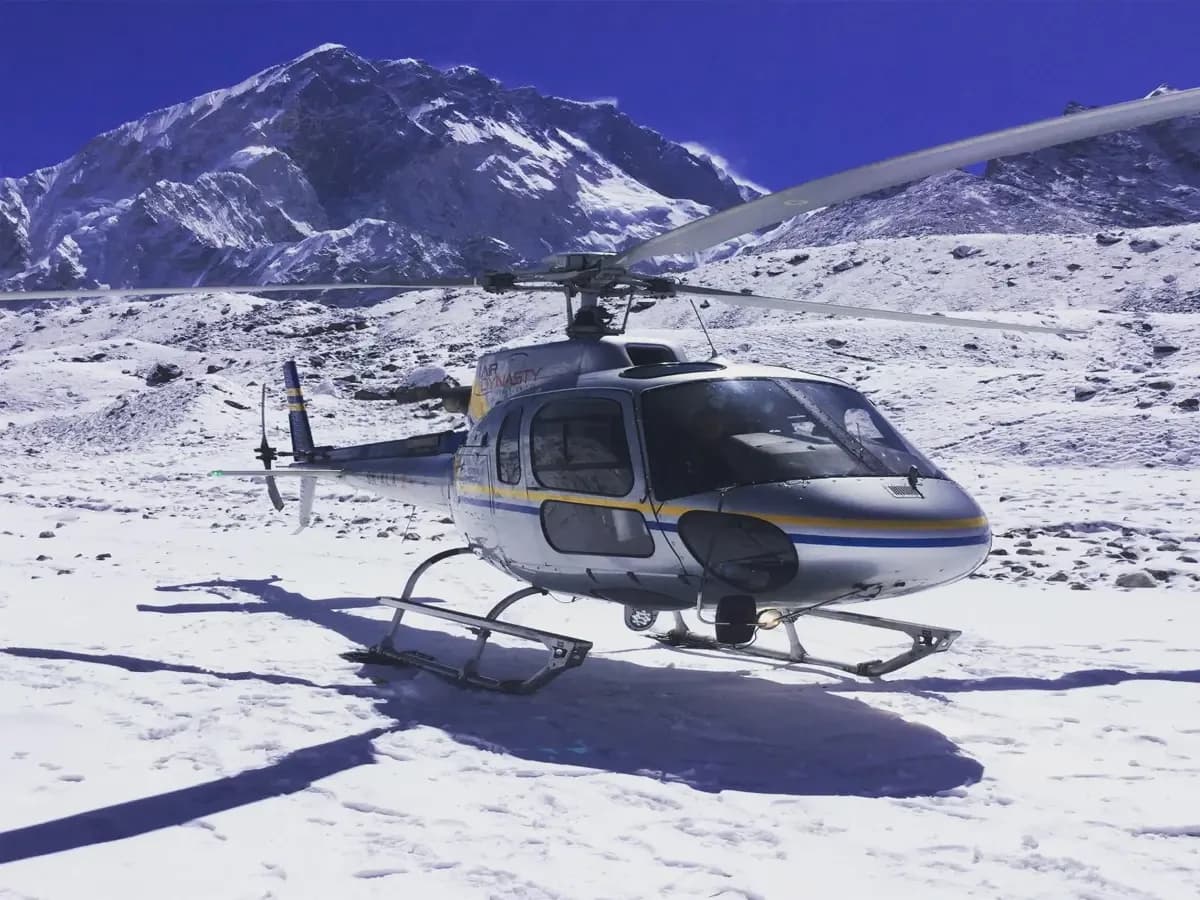
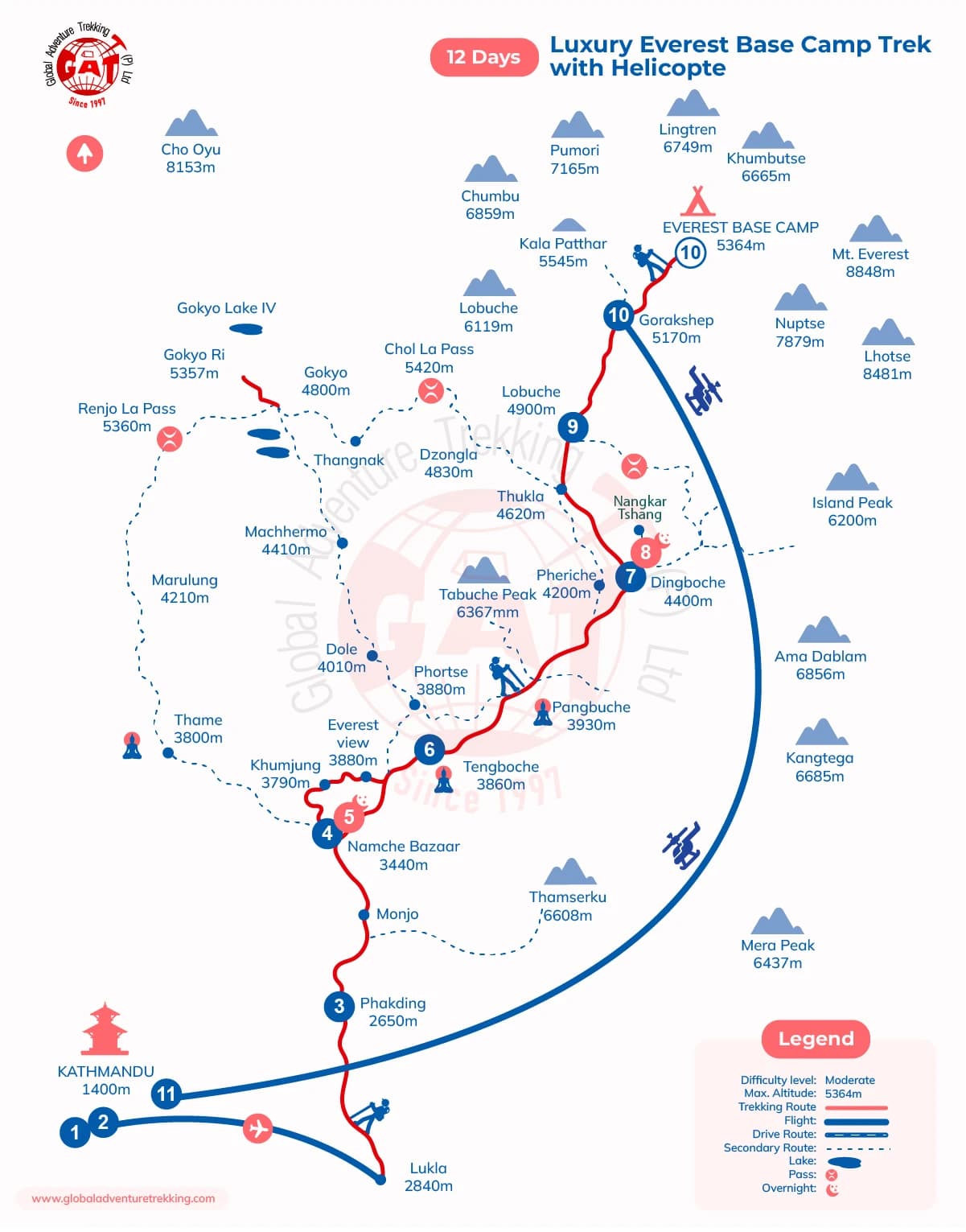
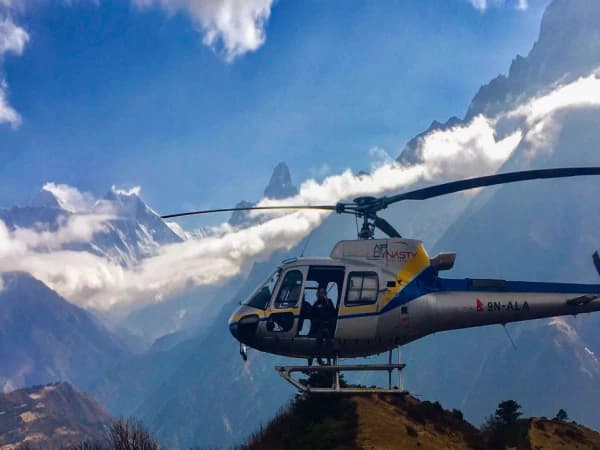
One of the main features of our Luxury Everest Base Camp Trek is the helicopter transfer at both ends of the journey. You fly from Kathmandu to Lukla at the beginning of the trek and return from Gorak Shep to Kathmandu after visiting Everest Base Camp and hiking to Kala Patthar.
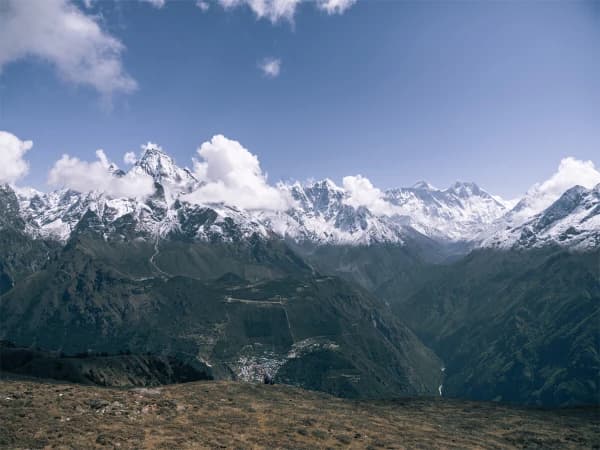
These flights save several days of walking and give you a different view of the Everest region. Instead of seeing the mountains only from the trail, you can look down over the valleys, glaciers, villages, and high mountain ridges from the air.
Here is how the two helicopter journeys are arranged.
Kathmandu to Lukla Helicopter Flight
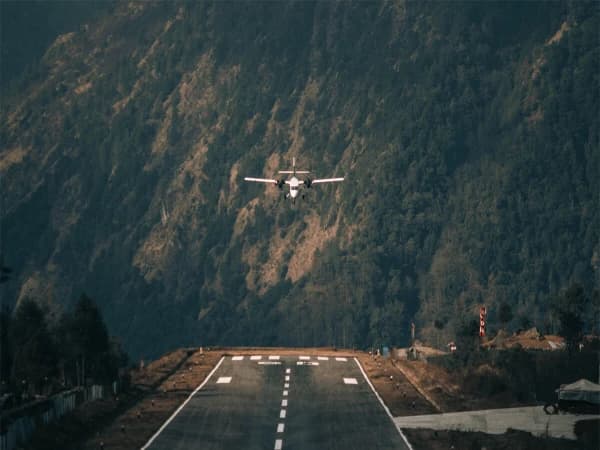
The helicopter flight from Kathmandu to Lukla (2,860 m) takes approximately 40–45 minutes, covering around 138 km. During peak trekking seasons, regular flights often operate from Ramechhap (Manthali Airport), requiring an additional 4–5-hour road journey from Kathmandu. Our direct helicopter arrangement avoids this transfer, subject to weather and operating conditions.
What you see during the flight:
- The Kathmandu Valley and the surrounding hills as you depart
- Terraced fields, forested ridges, and the foothills of the Solu-Khumbu region
- The Dudh Koshi River gorge and mountain valleys
- Kongde Ri and Thamserku on a clear day
- The mountain setting and sloping runway of Lukla Airport
Gorak Shep to Kathmandu Helicopter Return
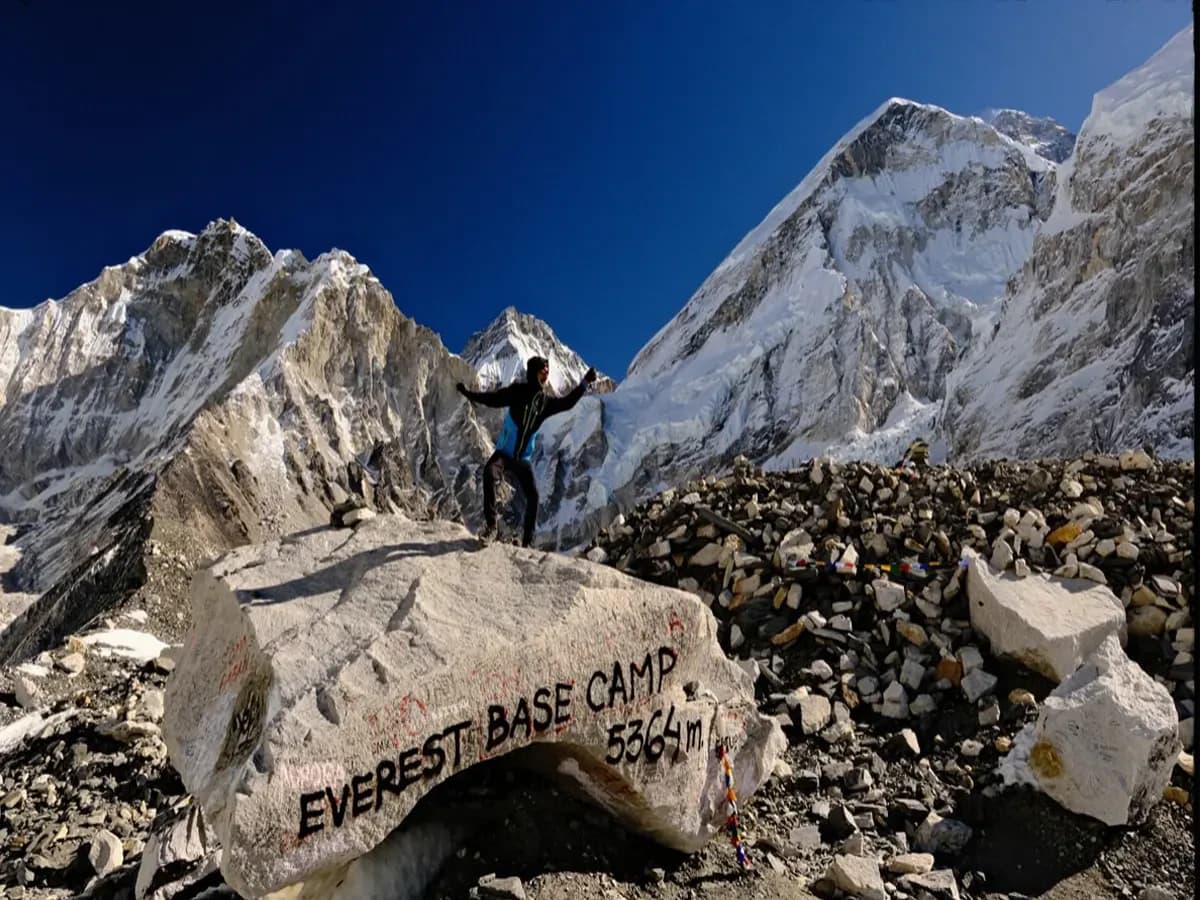
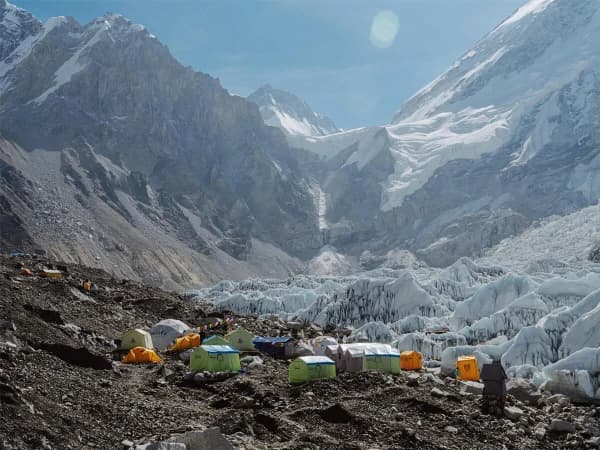
After visiting Everest Base Camp (5,364 m) and hiking to Kala Patthar (5,545 m), you board a helicopter from Gorak Shep (5,164 m) for your return to Kathmandu. The flight generally takes 45–60 minutes and may include a stop at Lukla, depending on weather, route, and operating requirements.
Mountain views you see during the return flight:
- Mount Everest (8,849 m) and the surrounding Himalayan peaks
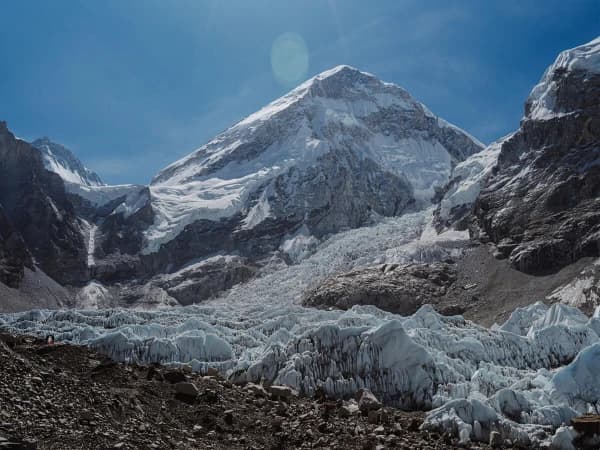
- The Khumbu Glacier and Khumbu Icefall
- Lhotse (8,516 m), Nuptse (7,861 m), and Pumori (7,161 m)
- Ama Dablam and the surrounding Khumbu mountains
- The villages and valleys below as you descend towards Kathmandu
For reference, a helicopter return from the Everest region can cost approximately USD 1,200 to 1,500 per passenger, depending on the flight arrangements. The actual rate varies, so the confirmed package price and inclusions should always be checked before booking.
Shared, Private, and Chartered Helicopter Options
The Luxury Everest Base Camp Trek package includes shared helicopter transfers. This means you may travel with other passengers rather than having the entire helicopter to yourself. Sharing the aircraft helps keep the package price more accessible while including helicopter transportation at both ends of the trek.
Shared Helicopter Transfers
Shared flights are the standard arrangement in this package. The helicopter operator confirms the passenger load, baggage allowance, and flight arrangements according to the aircraft and operating conditions. At higher elevations, the allowable load can be lower than on flights operating from Kathmandu or Lukla.
Private Helicopter and Full Charter Options
If you prefer to fly only with your own companions, private helicopter arrangements can be requested. Depending on the route and aircraft availability, options may be available for two or three travelers, a small private group, or a full helicopter charter.
A private return charter from the Everest region may cost approximately USD 5,500 to 6,000, although the final quotation depends on the route, date, aircraft, passenger numbers, and operating requirements. Private arrangements are not included in the standard package price and require an additional payment.
Please contact GAT if you would like a private helicopter or charter arrangement. We can check the available options and provide a quotation for your preferred travel dates.
Please note: All helicopter flights are subject to weather, visibility, aircraft performance, landing conditions, and aviation operating requirements. The final arrangements depend on the conditions on the day of travel.
Helicopter Baggage and Weight Restrictions
Helicopter flights in the Everest region have strict weight restrictions. These become particularly important at higher elevations, where thinner air affects aircraft performance. Passengers and their baggage may be weighed before departure, and the total load must remain within the operator's permitted limit.
As a general guide, the baggage allowance is typically around 12 to 15 kg per person, depending on the flight and passenger load. Aircraft payload can also vary considerably between lower and higher elevations. For example, the approximate figures may be 450 to 500 kg at lower elevations and around 220 to 250 kg for some high-altitude sectors. These are indicative figures, not guaranteed allowances.
The actual permitted weight depends on the aircraft, altitude, weather, passenger weights, and operating conditions. Our team will confirm the applicable baggage allowance before your helicopter flights. If your baggage exceeds the permitted limit, separate arrangements may be necessary.
What If the Weather Causes a Delay or Cancellation?
Helicopter flights in the Everest region are also affected by mountain weather. Low cloud cover, poor visibility, strong winds, and snowfall can delay or prevent flights. Helicopters may sometimes operate when regular fixed-wing flights cannot, but they are not immune to weather-related cancellations.
Spring and autumn are generally the preferred trekking seasons because the weather is often more favorable. However, even during these months, flight delays can occur.
If your scheduled helicopter flight cannot operate, our team will stay in contact with the helicopter operator and help coordinate the available alternatives. Depending on your location and the conditions, you may need to wait for suitable flying weather or make other arrangements.
Additional expenses for accommodation, meals, transportation, or other personal services during a weather-related delay are the traveler's responsibility unless otherwise stated in the confirmed booking terms.
Keep Extra Buffer Days in Your Itinerary
We recommend keeping at least one or two extra days in Kathmandu after your scheduled return before booking an international departure. If bad weather prevents the helicopter from flying from Gorak Shep, you may need to wait until conditions improve or follow an alternative arrangement.
It is also sensible to keep some flexibility at the beginning of the trip in case weather affects the Kathmandu-to-Lukla flight.
Please remember that buffer days are not automatically included in the 12-day itinerary unless they are specifically stated in your booking. Any additional accommodation, meals, transportation, and personal expenses resulting from delays should be confirmed with our team before departure.
Luxury Everest Base Camp Trek Group Discount Cost: 2027 and 2028
The cost of the Luxury Everest Base Camp Trek with Helicopter depends on the number of travelers and the services included in the confirmed package.
The following are the published group-size rates for the standard shared-helicopter arrangement.
| Number of Travelers |
Price Per Person |
Action |
| 1 trekker |
USD 4,500 |
Book Now |
| 2-3 trekkers |
USD 3,516 |
Book Now |
| 4-5 trekkers |
USD 2,950 |
Book Now |
The listed prices are for the luxury package. Private helicopter arrangements, exclusive charters, and additional accommodation upgrades require a separate quotation.
A few things sit outside the package price, and it's worth setting money aside for them:
Tips for your guide and porter, Wi-Fi cards like Everest Link, hot shower fees higher up the trail, and device charging above Namche, where most lodges run on solar. Carrying around USD 200 to 400 in Nepali rupees covers this comfortably over the course of the trek.
Timing affects pricing too. Spring (March to May) and autumn (September to November) are the best windows to trek, with stable weather, clear skies, and dependable helicopter operations. Group discounts apply automatically depending on party size.
For the most accurate quotation, contact our team with your preferred travel dates, group size, and helicopter preference.
Early Bird Benefits: 2027 and 2028
Book the Luxury Everest Base Camp Trek for 2027 and 2028 and secure your spot on this incredible Himalayan adventure. Lock in the best price and enjoy flexible cancellation, including free cancellation up to 60 days before your departure date.
Luxury Everest Base Camp Trek Early Bird Booking Benefits:
- Discounted rates up to 10%
- Book 6 to 12 months in advance and get 10% off.
- Book 3 to 6 months in advance and get 5% off.
- Bonus spa and wellness hampers.
- Priority access to preferred departure dates.
- Flexible cancellations and trip upgrades.
Benefit from our Early Bird Offer. Reserve your Luxury Everest Base Camp Trek 2027/2028 now!
Customized Luxury EBC Trek: 2027 and 2028
Our Everest Base Camp Trek with a helicopter is meticulously crafted to meet all your requirements and preferences, such as a carefully planned itinerary, combining comfortable mountain lodges, scenic trekking routes, and convenient helicopter transfers. However, if you prefer a more personalized experience, we can tailor the journey to match your travel plans and preferences.
At Global Adventure Trekking, you can customize the Luxury Everest Base Camp Trek package by adjusting the itinerary, travel dates, accommodation, more acclimatization days, and other arrangements. Whether you are travelling as a couple, with family, or in a private group, our expert team will assist you in creating a tailor-made luxury EBC trek in Nepal that blends the beauty of the Himalayas with the utmost luxury, catered to your needs.
Contact us to plan your customized luxury Everest Region Trek for 2027 or 2028. Our team will discuss your preferences and recommend a suitable itinerary for your journey.
Luxury Everest Base Camp vs Standard Everest Base Camp Trek
Featuring
|
EBC Trek with Helicopter
|
Standard EBC Trek
|
| Accommodation During Trek |
Best available mountain lodges |
Basic teahouses |
| Kathmandu Hotel |
Upgraded 4-star hotel |
Standard hotel |
| Lukla Transfer |
Helicopter from Kathmandu |
Kathmandu to Lukla regular flight |
| Return Journey |
Helicopter from Gorakshep |
Lukla to Kathmandu regular flight |
| Duration |
12 Days |
14 Days |
| Comfort Level |
Premium |
Basic |
| Bathrooms |
Attached bathroom options |
Mostly shared |
| Hot Showers |
Available |
Limited |
| Meals |
Enhanced dining experience |
Standard trekking meals |
| Best For |
Comfort-focused travelers |
Budget travelers |
| Experience |
Luxury Himalayan adventure |
Traditional Adventure |
Which Everest Trip Is Right for You?
Choose the Luxury EBC Trek if you want to experience a trek with comfort, and choose the Standard Everest Base Camp Trek to experience wilderness on every trail with basic facilities. Contact our travel experts for personalized recommendations based on your fitness level, travel style, budget, and available time. Talk to a local expert!
Who Is This Trek For?
The Luxury Everest Base Camp Trek with Helicopter is designed for travelers who want to experience the classic Everest trail with selected premium accommodation and more convenient transport at both ends of the journey.
- Travelers with Limited Time: Ideal for busy professionals and visitors with tight schedules who want to trek to Everest Base Camp without spending extra days walking back to Lukla.
- Couples and Honeymooners: A memorable choice for couples seeking a different kind of holiday, from sunrise views over the Himalayas to quiet evenings in Sherpa villages.
- First-Time and Comfort-Conscious Trekkers: Suitable for those who appreciate an experienced guide, porter support, arranged accommodation, and organized logistics rather than managing every detail themselves.
- Travelers Who Prefer a More Comfortable Trek: Selected premium lodges, a quality hotel in Kathmandu, and helicopter transfers make the journey more convenient. However, the trek still involves long walking days, steep trails, and high-altitude conditions.
Is the Luxury Everest Base Camp Trek Right for You?
Although the package includes luxury accommodation and helicopter transfers, it is not an easy trek. You still need good physical fitness, preparation, and time for proper acclimatization. The route reaches Everest Base Camp at 5,364 m and Kala Patthar at 5,545 m. If you want to experience the Everest trail with more comfort and less return travel time, consider this trek.
Best Season for Luxurious Everest Base Camp Trek with Helicopter
The Luxurious Everest Base Camp trekking with helicopter adventure package is ideal during spring (March to May) and autumn (September to November). During these seasons, the weather is suitable for an uninterrupted Himalayan journey, as there are fewer chances of rainfall. In spring, the trails in the lower regions come to life with vibrant rhododendron blossoms. Likewise, autumn offers crisp visibility of the stunning Himalayan landscape. You will find clear skies and incredible visibility, offering ideal conditions to capture the Himalayan skyline.
Luxury Everest Base Camp Trek with Helicopter: Seasonal Overview
Season
|
Weather Conditions
|
|
Monsoon (June to August)
|
- The weather can be unpredictable, occasionally resulting in delayed helicopter flights.
- Trails are slippery due to heavy rain.
- Best to avoid.
|
|
Autumn (September to November)
|
|
- Ideal time for trekking.
- Stable weather and clear visibility
- Nights can be cold, with high-altitude regions reaching freezing temperatures
|
|
Winter (December to February)
|
|
- Heavy snow can disrupt your trekking plans toward the higher elevation areas (4,000 m and above).
- Recommended only for professional and experienced trekkers.
|
|
|
Spring (March to May)
|
- Good conditions for trekking.
- Temperatures are mild and hover between 5°C and 20°C in the lower regions. Expect colder temperatures in high-altitude regions.
- Trails are covered in rhododendron and wildflower blossoms.
|
Luxury Lodges on the Everest Base Camp Trek
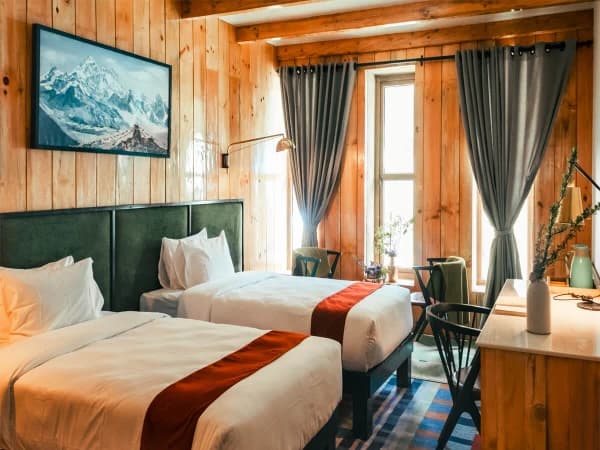
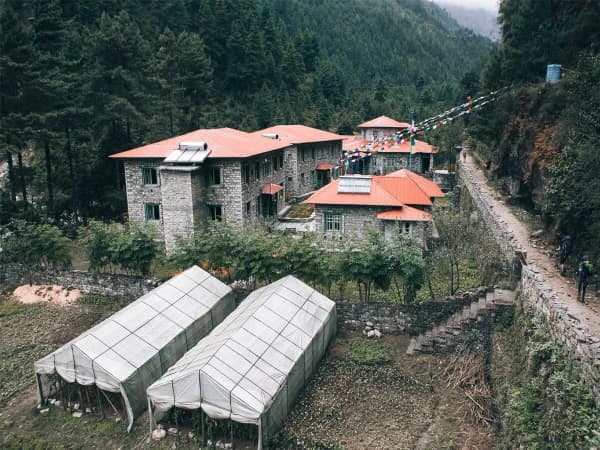
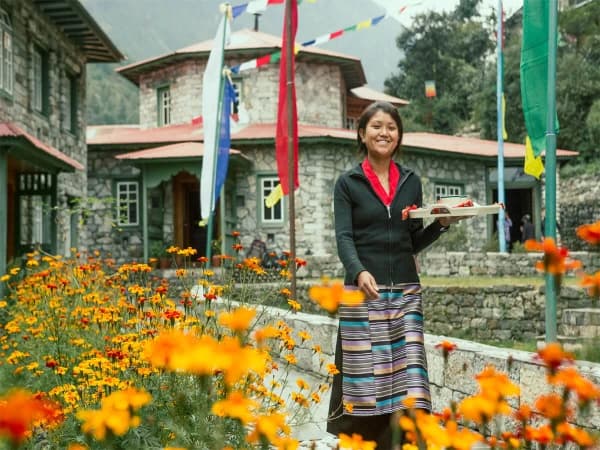
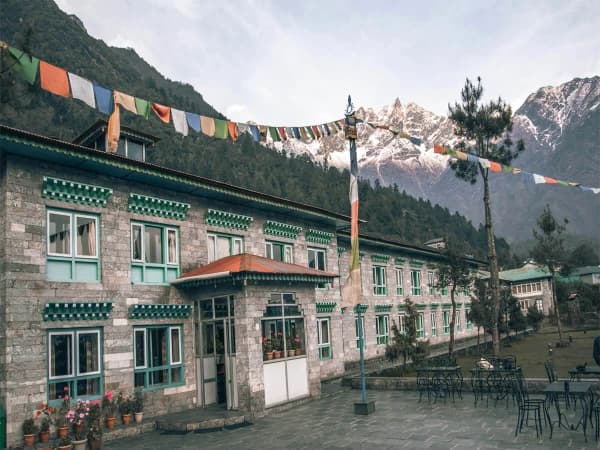
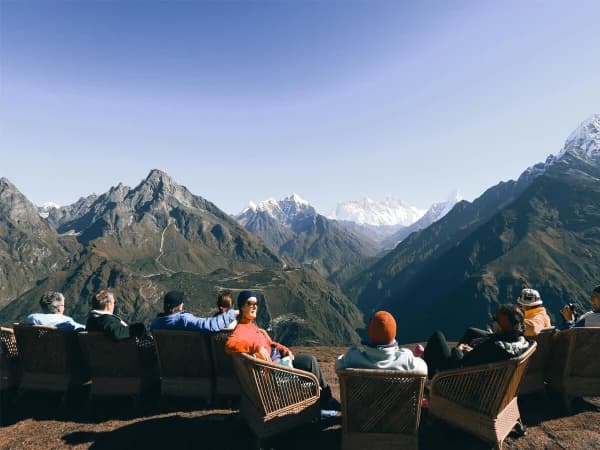
The luxury lodges on the Everest Base Camp Trek provide you with premium services and facilities during your Himalayan adventure. Your comfort journey incorporates 4-star luxury accommodations in the cultural heart of Nepal and premium stays at your Himalayan destinations.
While the luxury elevated hotels in Kathmandu provide you with all the necessary facilities and services, you may experience limited amenities during your Himalayan trek. The lower altitude regions, like Phakding, Namche Bazaar, and Tengboche, have luxurious lodges. These establishments provide premium services, including rooms with attached bathrooms, heated blankets, and gourmet meals. Here are the overnight lodges for this trek package:
Kathmandu (1,400 m): 3 nights
You will stay at Hotel Ramada Encore or a similar luxury hotel, offering a comfortable place to rest before and after your trek.
Phakding (2,650 m): 1 night
Your first night in the Everest region is at Yeti Mountain Home, where you can relax after the helicopter flight to Lukla and your walk to Phakding.
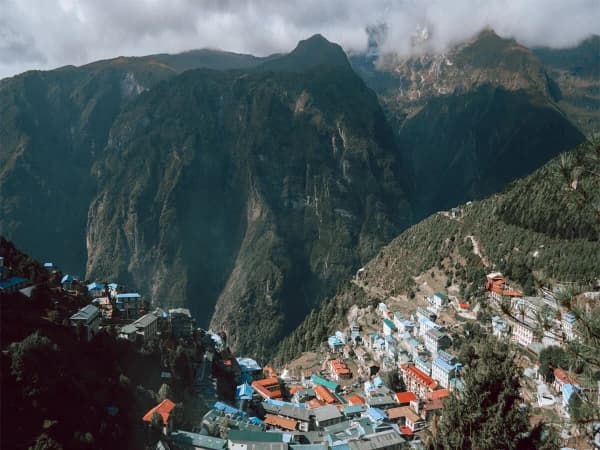
Namche Bazaar (3,440 m): 2 nights
You will spend two nights at Yeti Mountain Home in Namche Bazaar. The additional night allows time for acclimatization before continuing to higher elevations.
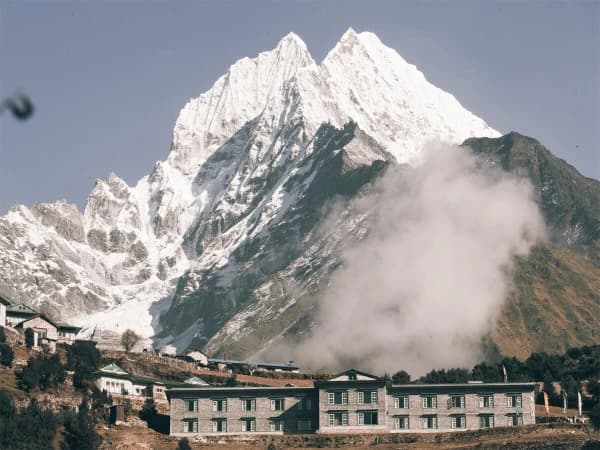
Tengboche (3,860 m): 1 night
At Tengboche, you will stay at Himalayan Luxury Lodge, subject to availability. This gives you a comfortable overnight stop near the famous Tengboche Monastery.
Dingboche (4,410 m): 2 nights
You will spend two nights at the best available lodge, such as Green Tara Lodge or Hotel Tashi Delek. The second night is part of your acclimatization schedule.
Lobuche (4,900 m): 1 night
At Lobuche, accommodation is arranged at Hotel Oxygen or a similar available lodge.
Gorak Shep (5,164 m): 1 night
Your final mountain overnight stay is at Himalaya Lodge or a similar local lodge before your early-morning hike to Kala Patthar and helicopter return to Kathmandu.
Accommodation note: The properties listed above are our usual choices. Lodge allocations may change depending on availability and operating conditions. Accommodation standards and facilities become more basic at higher elevations, where premium hotels are not available.
Learn more about every overnight stay, meals, and facilities with Luxury Accommodation on the Everest Base Camp Trail before booking.
Room Arrangements
This package includes twin-sharing accommodation for two travelers. If you are travelling with a friend, partner, or family member, you will normally share a room with your companion.
Single Room Option
Solo travelers who prefer a private room can request a single-room arrangement by paying an additional single supplement. Single rooms are available in Kathmandu. They may also be arranged at mountain lodges along the trek. This depends on availability. The supplement depends on the hotels and lodges used during your travel dates.
Private Bathrooms and Room Facilities
Attached bathrooms are available at our selected hotels and mountain lodges, particularly at lower elevations. However, private bathrooms cannot be guaranteed at every overnight stop. As you travel higher in the Everest region, lodging becomes more basic, and you may need shared bathrooms. Room and bathroom arrangements depend on the property and availability at the time of booking.
Please tell us your room preferences when you book. We will check availability and confirm any single supplement or upgrade cost in advance.
Food and Hydration During Everest Base Camp Luxury Trek
The following explains the provisions and facilities for food and safe drinking water during the luxury Everest Base Camp trek.
Nutritious Food on the Everest Base Camp Luxury Trek:
You may be surprised by the variety of food options you will find along the trails to the trek. The menu typically consists of a mix of Nepali, Sherpa, and Tibetan cuisines. However, most teahouses and lodges also include gourmet Western dishes.
Breakfast is served at your lodge before the day's walk. Common options include porridge, eggs, toast, pancakes, Tibetan bread, and tea or coffee. These filling choices provide a good start before heading towards the next village.
Lunch is usually taken at a teahouse along the trail. Depending on the village and available menu, you can choose from traditional dal bhat, noodle soup, fried rice, pasta, sandwiches, and other local dishes. It is a good opportunity to rest and recharge before continuing the walk.
Dinner is served at your overnight lodge after you reach the day's destination. Popular choices include dal bhat with lentils and vegetables, momos, vegetable curry, pasta, noodles, and warm soups. Food choices become more limited at higher elevations because supplies are transported from lower villages, but you can still enjoy filling meals after a day on the trail.
Tea, coffee, and seasonal fruits are provided during the trekking days. You can also bring your own snacks, such as nuts, chocolate, biscuits, or energy bars, to enjoy during short breaks. You can also try high-energy snacks and garlic soup, which is believed to help with acclimatization.
Dietary Requirements
Vegetarian meals are widely available along the Everest trail. If you have vegan, gluten-free, or other dietary requirements, please inform us when booking so we can discuss suitable options with the lodges in advance. Food choices may become more limited as you gain altitude, so carrying a few personal snacks can be helpful if you follow a specific diet.
The menu and availability of ingredients vary between villages. We recommend choosing freshly prepared meals and eating enough throughout the day to support your energy and recovery during the trek.
However, the menu can be limited but pricier in the higher-elevation regions due to the challenges of transporting the ingredients.
Safe Drinking Water on the Everest Base Camp Luxury Trek
It is crucial to stay hydrated during the luxury Everest Base Camp Trek, as it aids in acclimatization. Make sure you drink 3 to 4 liters of fluid daily. Bottled water is available during the trek but may not be available at higher altitudes sometimes. For a more sustainable and cost-effective approach, we encourage the use of reusable water bottles. You can refill your water bottle with boiled water at the local teahouses. This comes at a small fee. Alternatively, you can purify tap water with purification tablets, drops, or a UV purifier. We strongly advise against drinking untreated tap water.
How Difficult is the Luxury Everest Base Camp Trek?
The Nepal Luxury Everest Base Camp trek is difficult to rate. The high altitude, long trekking days, and unpredictable weather make this journey difficult. However, the comfortable accommodations and premium hospitality services make the journey manageable. There are a few factors that trekkers should consider while taking on this trek.
The trek reaches a maximum elevation of 5,545 meters at Kala Patthar. At high elevations, atmospheric oxygen is scarce and can cause altitude-related sicknesses. To combat the possibility of altitude sickness, we have acclimatization days at Namche Bazaar and Dingboche.
You will be trekking for 12 days and covering approximately 130 kilometers (80 miles) of rugged high-altitude trails. The daily trek lasts 4 to 7 hours. The trek requires participants to have good stamina and endurance to journey through the strenuous routes.
Despite the challenges, the trek can be achieved by people with moderate fitness and strong morale. The Luxury Everest Base Camp Trek ensures comfort, making it accessible even for first-time high-altitude trekkers. If you have pre-existing health conditions, consult with your doctor before taking on this trek.
Altitude Sickness and Safety on Nepal’s Luxury EBC Trek
Reaching Everest Base Camp means ascending to 5,364 meters (17,598 ft), an altitude where the air holds roughly half the oxygen available at sea level. Altitude sickness, medically known as Acute Mountain Sickness (AMS), is the most common health challenge on any high-altitude trek and can affect anyone, regardless of age, fitness, or prior experience in the mountains.
At Global Adventure Trekking, your safety is our highest priority. Our entire 12-day luxury itinerary is built around preventing, detecting, and responding to AMS, so you can focus on the experience, not the risk.
What is AMS and its symptoms?
AMS occurs when the body ascends faster than it can adapt to lower oxygen levels. Early recognition is critical. Inform your guide immediately if you notice any of the following:
- A persistent headache is the most common and earliest AMS sign
- Nausea or vomiting, or loss of appetite
- Unusual fatigue or weakness beyond normal trekking tiredness
- Dizziness or feeling lightheaded at rest
- Difficulty sleeping or disturbed sleep at altitude
- Shortness of breath while resting (not just during exertion)
- HAPE and HACE: High-Altitude Pulmonary Edema (HAPE) and High-Altitude Cerebral Edema (HACE) are life-threatening emergencies that require immediate descent even on a luxury Everest Base Camp trek. Luxury lodges, acclimatization days, and helicopter transfers reduce risk and speed up evacuations, but they do not prevent altitude illness if you ascend too fast or ignore symptoms.
Note: Never ignore early AMS symptoms. Do not take painkillers to mask a headache and continue ascending. Always tell your guide immediately.
Acclimatization and Altitude Safety
Our luxury EBC itinerary follows the internationally recognized principle of 'trek high, sleep low.' Two full acclimatization days are built into the schedule, one at Namche Bazaar (3,440 m) and one at Dingboche (4,410 m). Above 3,000 m, daily altitude gain is capped at around 300 to 500 m. This gradual pace gives your body the time it needs to produce more red blood cells and adapt to the thinner air.
Our luxury helicopter transfer from Kathmandu to Lukla also eliminates the stress and unpredictability of fixed-wing delays, so you arrive at Lukla rested and on schedule, with your acclimatization days exactly where they need to be.
- GAT's EBC On-Trail Safety Measures
- Pulse oximeter monitoring at every camp, which means your guide checks blood oxygen saturation each morning.
- Daily health assessments conducted before departure from each stop.
- Emergency supplemental oxygen is carried by guides above Namche Bazaar.
- First-aid-trained mountain staff on every trekking day.
- 24/7 direct radio and phone communication with GAT's Kathmandu base.
- Most helicopter evacuations are coordinated within hours from any point on the route.
Should I take Diamox (acetazolamide)?
Diamox is a prescription medication that helps the body acclimatize faster by stimulating deeper breathing, but we strongly recommend consulting your doctor to discuss whether Diamox is right for you before departure.
Emergency Evacuation Protocol
If a trekker develops moderate or severe AMS symptoms, including severe headache, loss of coordination, confusion, or difficulty breathing at rest, our guides are trained to initiate immediate descent without hesitation.
Descending even 300 to 500 meters typically provides rapid relief. Helicopter rescue can be arranged from Gorak Shep, Lobuche, or Dingboche within a few hours, weather permitting. We strongly recommend that every trekker hold travel insurance with a minimum of USD 100,000 helicopter rescue coverage before departure.
Stay hydrated by drinking 3 to 4 liters of water and foods that are in fluid form like soups, thenduk, etc. daily. Avoid alcohol and sleeping pills above 3,000 m, as both suppress breathing during sleep and can worsen AMS symptoms.
How to Prepare Physically for the EBC Trek
The Luxury Everest Base Camp Trek is rated as a difficult trek even with a helicopter transfer. Premium lodges, gourmet meals, and helicopter transfers reduce fatigue significantly, but the trek still covers approximately 130 km of high-altitude terrain over 12 days, with 4 to 7 hours of walking daily. Arriving physically prepared will not only maximize your enjoyment but also meaningfully reduce your risk of altitude sickness.
Fitness and Preparation
To prepare for the Luxury Everest Base Camp Trek and maximize your chances of a successful and enjoyable journey, we (GAT) recommend the following.
- Start a fitness routine 8 to 12 weeks before departure.
- Focus on cardiovascular exercises like hiking, jogging, running, cycling, swimming, or stair climbing.
- Practice hiking on uneven terrain to improve balance and endurance.
- Train with a loaded daypack to simulate trekking conditions in the Himalayas.
- Gradually increase the duration and intensity of your workouts over time.
- Incorporate strength exercises for your legs, core, and lower back.
- Stay consistent with your training and maintain a healthy lifestyle before the trek.
- Consult your doctor before booking if you have any pre-existing medical conditions or concerns about high-altitude trekking.
Note: No prior high-altitude trekking experience is required. Every year, first-time trekkers with good general fitness and optimism complete this journey and reach Everest Base Camp successfully.
Solo Traveler vs. Private Small Group
The Luxury Everest Base Camp Trek with helicopter return is available for solo travelers, couples, families, and small private groups of up to 5 people.
Solo Everest Base Camp Luxury Trek
Solo travelers on the Premium EBC Trek receive a fully private, personalized experience with their own dedicated licensed guide and porter. Your daily pace, rest stops, meal timing, and schedule are adapted entirely to your preferences and acclimatization needs. The guide's attention is entirely yours for the duration of the trek and is a significant advantage at altitude, where individual health monitoring is critical.
The price per person includes the cost of a private guide, a porter, and an individual seat on the helicopter. Few solo travelers find a more rewarding way to experience the Himalayas than this, entirely at your own pace and with the freedom to stop, photograph, and explore without compromise. Plan my solo trek now!
Small Groups (2–5 Persons)
Groups of 2 to 5 people or couples receive the same fully private, exclusive service at a significantly reduced per-person price. One licensed lead guide manages the group, with one porter assigned per two trekkers.
Joining a Shared Departure (group-joining)
If you would like a more social trekking experience or wish to reduce the per-person cost, GAT can place solo travelers or couples onto a shared departure with a compatible small group. Places on shared departures are limited and subject to availability. Contact us with your preferred travel dates, and we will advise on the best option for you.
Contact us via WhatsApp at +977-9841527688 or email to discuss your group size. Our team will design the ideal experience for you.
Essential Packing List for Luxury EBC Trek
Head:
- Trekking Hat/Cap
- Headlamp/ Flashlight (with extra batteries), good quality
- Sunglasses (UV protection)
- Woolen hat/beanie (for cold weather)
- Bandana/Buff (for dust and sun protection)
- Sunblock (Sunscreen) (SPF 40 or higher)
- Insect Repellent (any trekking area)
Body:
- Base Layer Shirt: Two (moisture-wicking, breathable fabric)
- Trekking Jacket: A lightweight (water-resistant/windproof)
- Insulating Layer: A pair (fleece, down jacket, or sweater for warmth)
- Rain Jacket/poncho (lightweight, waterproof)
- Trekking Trousers/Pants: Two pairs (comfortable and durable)
- Long-sleeve shirt: 1 pair (for sun or insect protection)
- Underwear: Two pairs (moisture-wicking, quick-dry fabric)
- Compression Garments (for reducing muscle fatigue, optional)
- Gore-Tex or a similar waterproof jacket
Lower Body:
- Trekking Pants: Two pairs (convertible into shorts if needed)
- Thermal Leggings: one (for cold weather)
- Shorts: Two (optional, for warmer weather)
- Knee Guards/Support (for those who need extra knee protection)
Hands:
- Protect your hands with warm gloves.
- Light inner gloves (for lower-elevation trekking)
- Insulated or down gloves (high-altitude trekking)
- Waterproof gloves (wet season)
Footwear:
- Trekking Boots/Shoes (comfortable, waterproof, with good grip and ankle support)
- Gaiters (to protect from mud, snow, or rocks entering boots)
- Thick Socks: Two pairs (merino wool or synthetic, moisture-wicking)
- Lightweight Socks: Two pairs (for warmer weather or layering)
- Sandals/flip-flops (for campsite/rest stops)
Extra Suggested Items:
- Sleeping bag
- Drying towel
- Trekking Poles
- Cash (extra Nepali rupees for additional expenses)
- 60L+ Backpack (Rucksack) (with rain cover and hydration system)
- Hydration System/Water Bottles/Camelback
- Water Purification Tablets/Filter
- Snacks (Energy Bars, Dried Fruits, Nuts)
- First Aid Kit (with basics like bandages and antiseptic, as per personal need)
- Portable Power Bank (to charge devices)
- Camera or Smartphone (to capture the views)
- Toiletries (toothbrush, toothpaste, biodegradable soap, shampoo, etc.) Feminine hygiene products as needed
- Wet wipes
- Emergency Whistle
- Hand sanitizer
- Plastic Bags for Waste (Leave No Trace principle)
For a full guide on trekking details, you can visit our blog: Nepal trekking and climbing equipment list
Travel Insurance: What You Need for the EBC Trek
Travel insurance is strongly recommended for the EBC Trek, and for trekking above 5,000 meters, we consider comprehensive coverage to be essential, not optional. Please note that helicopter rescue and emergency medical evacuation are explicitly excluded from your package price. Without adequate insurance, an emergency helicopter evacuation from the Khumbu region can cost between USD 3,000 and USD 10,000 out of pocket.
Important Note: Many standard travel insurance policies only cover altitudes up to 3,000 to 4,000 m. Always read the fine print and confirm your policy explicitly covers high-altitude trekking to 5,600 m before purchasing.
Your Policy Must Cover
- Always confirm high-altitude trekking to at least 5,600 meters.
- Helicopter rescue and emergency medical evacuation (minimum USD 100,000 coverage)
- Emergency medical treatment, including hospitalization in Nepal
- Trip cancellation due to altitude sickness or medical emergency
- Flight delay or cancellation (relevant to your helicopter transfers)
- Baggage loss, damage, or delay
Tip: GAT recommends purchasing insurance at least 3 to 4 weeks before departure. If you need guidance on which policy suits your specific trek, our pre-departure consultation team is happy to advise.
Pre-Existing Medical Conditions
If you have any pre-existing medical conditions, such as heart conditions, respiratory issues, high blood pressure, or a previous history of AMS, please consult your doctor before booking and ensure your policy explicitly covers pre-existing conditions at high altitude. Our team is available for a free pre-trek health consultation to help you assess your suitability for the EBC trek with a chopper round-trip.
Permits for the Luxury Everest Base Camp Trek
Permits are handled entirely on our end. The Sagarmatha National Park Entry Permit and the Khumbu Pasang Lhamu Rural Municipality Permit are all arranged in advance, so there's no standing in line at government offices once you land. The TIMS Card is not necessary.
The following are the permits that travelers need to obtain to gain access to the Khumbu region.
Khumbu Pasang Lhamu Rural Municipality Entrance Permit
The Khumbu Pasang Lhamu Rural Municipality permit is a mandatory entry permit into the Khumbu region. This permit is worth NPR 3,000 per person for foreign trekkers and NPR 2,000 for SAARC nationals and Chinese people for a week’s stay.
Sagarmatha National Park Entry Permit
The Luxury Everest Base Camp trek takes you through the Sagarmatha National Park, requiring you to carry the entry permit for NPR 3,000 and VAT per person for foreign nationals, and NPR 1,500 plus VAT for SAARC nationals.
Note: All necessary permits are arranged by GAT, and the permit fees are included in this package.
New Everest Trail Rules and Regulations 2027/2028
Mandatory Registered Guide Requirement:
The Nepal government has imposed a new rule, since 2023, requiring all foreign trekkers to be accompanied by a licensed trekking guide. The rule is enforced to ensure the safety of the trekkers and the conservation of the biodiversity and cultural heritage of the Himalayan destinations, including the Everest Base Camp trek.
Strict Drone Usage:
Drone usage is permitted in the Everest region but requires multiple permits from the concerned authorities. You will need to secure permits from government bodies, including the Civil Aviation Authority of Nepal (CAAN), the Ministry of Home Affairs, and the Department of National Park and Wildlife Conservation. To avoid the hassle of queuing in government offices, contact our travel experts, and we will secure the necessary permits for you.
Waste Management:
Recent local government regulations state that each trekker is required to bring back at least 8 kilograms of their garbage. This is done to combat the issue of waste management. You will further need to submit a garbage deposit fee, which can be refunded after disposal of the waste.
Porter Support and Tipping Guidelines
Tipping deserves its own mention, since it isn't included in the price but is a genuinely meaningful part of Nepal's trekking culture.
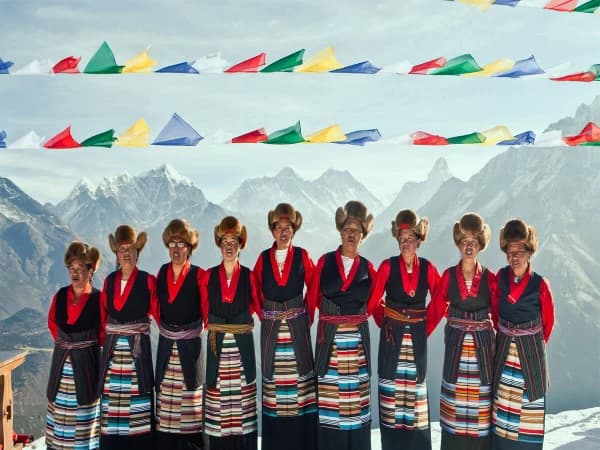
Your guide, porter, and support crew work hard in demanding, often risky conditions to keep your trip safe and memorable; a good tip is one of the simplest ways to support the local Sherpa and mountain community.
Tips are given in cash, ideally on your last day in the mountains before leaving Gorak Shep, and we accept both Nepali rupees and US dollars.
Extra Facilities and Personal Expenses
- Electricity and Charging: Electricity and charging options are available at teahouses and lodges along the trail. While the lower-region hotels may offer you free services, you may need to pay a certain fee, typically USD 3 to USD 7 per device, depending on your elevation, as lodges primarily rely on solar power for electricity.
- Wi-Fi and Mobile Network: Internet access is available in most teahouses along the trail but can be slow and unreliable. Alternatively, you can purchase Wi-Fi access through prepaid card systems like Everest Link or local SIM cards like Ncell and Nepal Telecom.
Travel with Purpose
When you travel with Global Adventure Trekking (GAT), you are also supporting local communities in the Himalayas. We are committed to responsible tourism and sustainable development.
As part of our community support initiatives, we contribute 5% of our earnings toward projects that benefit rural mountain communities through education, infrastructure improvements, and local development programs.
Our goal is not only to help you experience the Himalayas but also to ensure that local communities benefit from tourism for generations to come.
Booking, Payment, and Cancellation Policy
We recommend booking your Luxury Everest Base Camp Trek in advance, particularly if you have specific travel dates, accommodation preferences, or private helicopter arrangements.
Booking Deposit
A 20% deposit of the total trip cost is required to confirm your reservation. Once the deposit is received, our team can proceed with the necessary trip arrangements and reservations.
Balance Payment
The remaining balance must be paid after reaching Kathmandu. Our team will provide the payment instructions and explain the available payment methods when confirming your booking.
Cancellation Policy
We offer flexible cancellation for travelers who book this package. You can cancel your trip up to 60 days before the scheduled departure date without a cancellation fee.
For cancellations within 60 days of departure, cancellation charges and refund terms depend on when you cancel. They also depend on costs already committed to hotels, helicopter operators, permits, and other providers. Any non-refundable charges will be explained before your booking is confirmed. Learn more with the GAT's terms and conditions.
Confirm Your Booking Terms
Before you make your deposit, please review the final trip price with our team. Please also review the payment deadline, cancellation conditions, and any non-refundable charges. We will confirm the agreed booking terms so you know what to expect before your journey begins.
Book Your Luxury Everest Base Camp Trek
Rejuvenate with Sherpa culture, mountain trails, and stunning scenery in the Khumbu region. Enjoy the added ease of helicopter transfers at both ends of the trek. Whether you want a shared departure, a private small group, or a helicopter charter, Global Adventure Trekking can help. They can plan your 12-day Himalayan adventure.
Contact our team for availability, group departure dates, and a personalized quotation for 2027 and 2028. Book Now!