Lhasa Culture Tour: 7 Days from Kathmandu

169 reviews in TripAdvisor
26 reviews in Google
Recommended by 99% of travelers

The Lhasa Culture Tour is a 7-day trip from Kathmandu to the Tibetan capital and back, with a flight over the Himalayas in each direction. Explore Lhasa (3,650 m./11,975 ft), Gyantse (3,950 m/12,959 ft), and Shigatse (3,840 m./12,598 ft) by private vehicle, with a licensed Tibetan guide and all permits arranged in advance.

Trip Facts
Duration
7 Days
Trip Grade
Easy
Maximum Altitude
4,794 m.(15,728 ft.)
Group Size
2+
Starts
Kathmandu
Ends
Kathmandu
Activities
Lhasa Culture Tour
Best Time
Autumn and Spring
Wishlist

Lhasa Culture Tour Overview

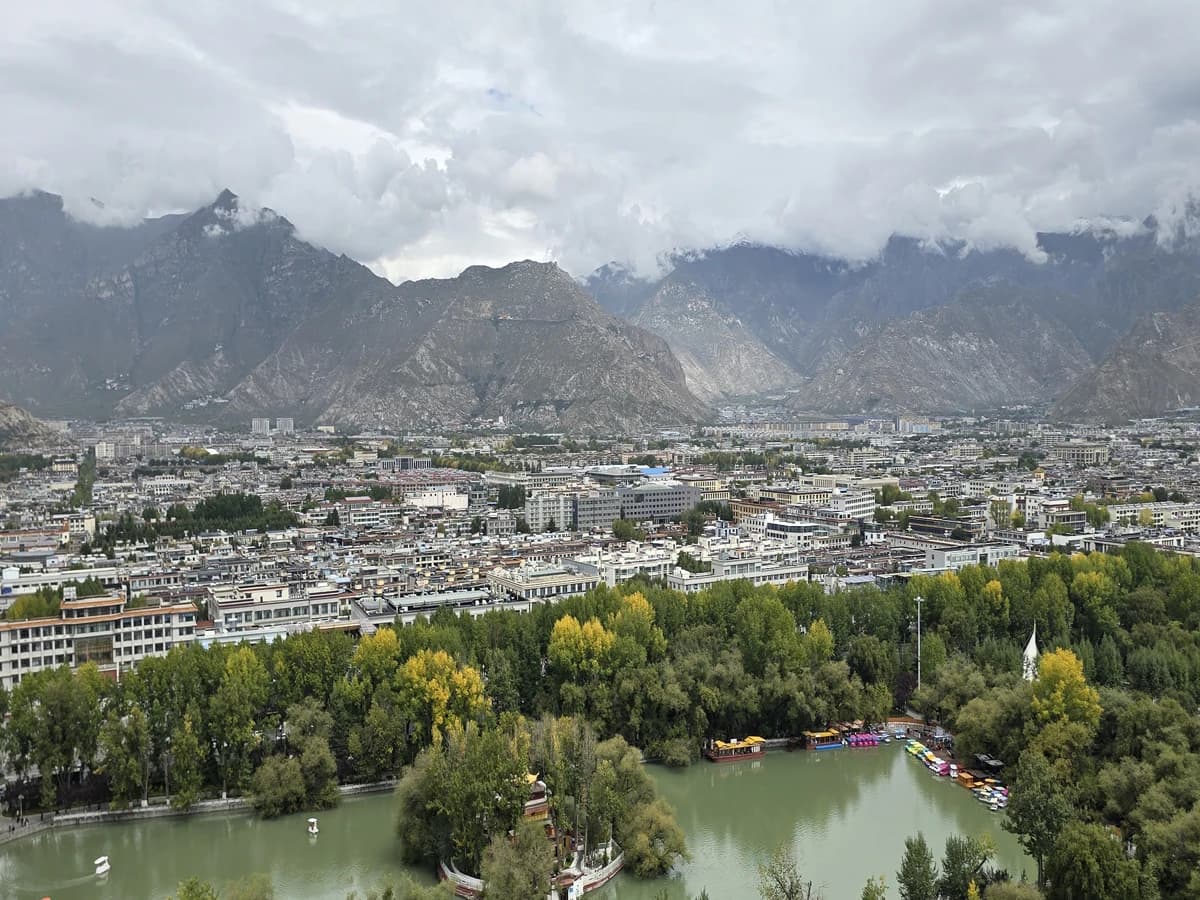
The Lhasa Culture Tour introduces Tibet through its capital and the historic towns beyond it. Lhasa has been the political and religious centre of the Tibetan plateau for more than 1,300 years. The city lies on the northern bank of the Kyichu River at 3,650 m/11,975 ft. Its palaces, temples and monasteries still hold relics, scriptures, murals and crafts from every period of Tibetan history.

This 7-day Lhasa Culture Tour goes further than the standard city programme. Three nights in Lhasa come first, so the body adjusts before the road climbs to Kamba La (4,794 m/15,728 ft). The route then continues to Gyantse and Shigatse, the two towns at the cultural heart of central Tibet, and returns to Lhasa along the Yarlung Tsangpo valley. A shorter Lhasa-only version of the Lhasa Cultural Tour is available on request.

The trip starts with a trans-Himalayan flight from Kathmandu (1,400 m/4,593 ft). The flight takes about an hour. In clear weather, Everest, Kanchenjunga, Cho Oyu and Shishapangma line up along the window. The plane then drops into the wide Yarlung Tsangpo valley near Lhasa.

Culture sits at the centre of every day. Potala Palace, Jokhang Temple and Barkhor Street show Tibetan Buddhist devotion at its most visible, as pilgrims circle the old city clockwise from early morning. Drepung and Sera, two of the three great Gelug university monasteries, add the scholarly side, including the daily monk debate at Sera. 

Further out, Gyantse Kumbum and Tashilhunpo Monastery show how the faith spread across central Tibet. Readers who want background on these traditions can start with the religion of Tibet and culture of Tibet guides.

Some background helps before arriving. Tibetan Buddhism grew from Indian Buddhist teachings, local Bon traditions, and centuries of monastic study. The Gelug school, founded by the teacher Tsongkhapa in the early 15th century, dominates the monasteries on this route. Its two most senior lamas are the Dalai Lama and the Panchen Lama. The Potala and Tashilhunpo are tied closely to each of them. The history of Tibet page traces how these institutions developed.

The landscape does equal work. Yamdrok Lake glows turquoise at 4,441 m/14,570 ft beneath snow peaks, and the Karo La Glacier sits beside the road at about 5,010 m/16,437ft. Whitewashed villages, yak herds, and prayer flags fill the stretches between the towns. The geography of Tibet page explains why the plateau looks so different from the Nepal Himalaya.

Tibet asks for more paperwork than most destinations. Every visitor entering from Nepal needs a Chinese Group Visa, a Tibet Travel Permit and a licensed guide. Global Adventure Trekking P. Ltd., a Kathmandu-based operator, arranges all of these and covers the flights, hotels, vehicle and entrance fees.

The Lhasa Cultural Tour suits first-time visitors to Tibet, culture and history enthusiasts, photographers and families with teenagers. Older travellers in good health can also join, because the pace is slow and vehicles cover most of the distance. Anyone with a serious heart, lung, or blood-pressure condition should consult a doctor before booking.

Top Experiences on the Lhasa Culture Tour

  • Fly from Kathmandu to Lhasa in about an hour, with Everest (8,849 m/29,032 ft) and other Himalayan giants outside the window
  • Climb the stairways of Potala Palace, the 13-storey former winter residence of the Dalai Lama, which rises above Lhasa at about 3,700 m/12,139 ft
  • Join pilgrims inside Jokhang Temple, the spiritual heart of Tibet, where the sacred Jowo Shakyamuni Buddha statue is kept
  • Walk the kora around Barkhor Street, spinning prayer wheels beside pilgrims and browsing stalls of handmade Tibetan crafts
  • Watch monks debate with sharp hand claps and loud questions in the courtyard of Sera Monastery
  • Explore Drepung Monastery, founded in 1416 and once among the largest monasteries in the world
  • Stroll through the gardens of Norbulingka, the summer palace of the Dalai Lamas
  • Cross Kamba La Pass (4,794 m/15,728 ft) for the first view of turquoise Yamdrok Lake (4,441 m/14,570 ft)
  • Stop beside the Karo La Glacier, which lies close to the road at about 5,010 m/16,437 ft
  • Visit Gyantse Kumbum, a stupa about 35 metres tall, begun in 1427 and filled with painted chapels
  • Walk through Tashilhunpo Monastery in Shigatse, the traditional seat of the Panchen Lama
  • Follow the Yarlung Tsangpo valley back to Lhasa through Tibetan villages and farmland
  • Sip sweet milk tea or yak butter tea in a Barkhor teahouse and taste Tibetan momos and thukpa

Lhasa Culture Tour Route Overview

The 7-day Lhasa Culture Tour includes 6 nights in Tibet. The loop through Gyantse and Shigatse covers about 620 km by road. Day 1 starts with the flight from Kathmandu to Lhasa, followed by a 60 km transfer from Gonggar Airport to the city (1 to 1.5 hours). The first afternoon is free for rest, because Lhasa lies 2,250 metres higher than Kathmandu.

Days 2 and 3 cover Lhasa. Potala Palace, Jokhang Temple and Barkhor Street fill the first full day. Drepung Monastery, Norbulingka Palace and the afternoon monk debate at Sera Monastery fill the second.

Day 4 takes you south of the city. The road crosses Kamba La (4,794 m/15,728 ft), where Yamdrok Lake comes into view. It then follows the shore and climbs to Karo La (about 5,010m/16,437ft) beside the glacier. The descent ends in Gyantse (3,950 m/12,959 ft), 260 km from Lhasa, for the night.

Day 5 begins atGyantse Kumbum and Pelkor Chöde Monastery. A 90 km drive then leads to Shigatse (3,840 m/12,598 ft), where Tashilhunpo Monastery is the main visit.

Day 6 returns to Lhasa, a drive of 270 km and 4 to 5 hours along the Yarlung Tsangpo valley. On Day 7, a transfer to Gonggar Airport and a flight back to Kathmandu close the tour.

The sequence protects the body as much as it serves the sightseeing. Three nights at 3,650 m come before any pass. Karo La, the highest point of the route, is a short roadside stop, not an overnight. The nights in Gyantse and Shigatse stay close to the altitude of Lhasa.

Cultural Sites on the Route

Site

Founded or built

What to see

Day

Potala Palace

7th century, largely rebuilt in the 17th

White and Red Palaces, chapels and golden stupas

2
Jokhang Temple

7th century

Jowo Shakyamuni statue and devoted pilgrims

2

Barkhor Street

Old pilgrimage circuit

Kora, prayer wheels and handmade crafts

2

Drepung Monastery

1416

Assembly halls and chapels on a hillside 3

Norbulingka Palace

18th century

Summer palace and gardens

3

Sera Monastery

1419

Afternoon monk debate 3

Yamdrok Lake

Natural

Turquoise water seen from Kamba La

4
Gyantse Kumbum

Begun in 1427

Stupa of about 35 metres with painted chapels

5

Tashilhunpo Monastery

1447

Gilded Maitreya statue, seat of the Panchen Lama

5

Alternative Tibet Tours

The same Tibet desk runs every route below in Kathmandu. Some trade culture for adventure, others trim days or the budget, and you can adjust all of them on the customize trip page.

Lhasa Culture Tour, Short Version – 4 Days

This is the Lhasa-only plan. It keeps the flight, the Potala, Jokhang, Barkhor, Drepung and Sera visits, and removes the drive to Gyantse and Shigatse. It suits travellers with a long weekend and a tight budget.

Tibet Everest Base Camp Tour – 8 Days

When the mountains matter as much as the monasteries, the Tibet Everest Base Camp Tour adds the northern side of Everest to the Lhasa programme.

Tibet Budget Tour – 8 Days

The Tibet Budget Tour is the lower-cost way to see central Tibet, with simpler arrangements and a longer schedule.

Tibet Overland Tour

Travellers who prefer to cross the border by road can choose the Tibet Overland Tour, which links Nepal and Tibet on the ground instead of by air.

Mt Kailash Tour – 10 Days

The Mt Kailash Tour follows the sacred pilgrimage to western Tibet. It asks for more time, stamina, and a higher budget.

Bhutan Cultural Tour

Another Himalayan Buddhist kingdom sits just east of Nepal. The Bhutan Cultural Tour pairs well with Lhasa for travellers who want to compare the two traditions.

We recommend the Lhasa Culture Tour when you want monasteries, old towns and landscapes in one week, with comfortable hotels and no long overland days. You can browse every option on the Tibet tours page.

Lhasa Culture Tour: 7 Days from Kathmandu Outline Itinerary

  • Day 01: Fly from Kathmandu (1,400 m/4,593 ft) to Lhasa (3,650 m. /11,975 ft) – 1 hr flight | 60 km drive
  • Day 02: Potala Palace, Jokhang Temple and Barkhor Street – Lhasa (3,650 m. /11,975 ft)
  • Day 03: Drepung Monastery, Norbulingka Palace and Sera Monastery Debate – Lhasa (3,650 m./11,975 ft)
  • Day 04: Lhasa to Gyantse via Yamdrok Lake and Karo La Glacier (3,950 m. /12,959 ft.) – 260 km | 5–6 hrs
  • Day 05: Gyantse Kumbum, then Shigatse (3,840 m./12,598 ft) and Tashilhunpo Monastery – 90 km | 1.5–2 hrs
  • Day 06: Shigatse to Lhasa along the Yarlung Tsangpo (3,650 m./11,975 ft) – 270 km | 4–5 hrs
  • Day 07: Fly from Lhasa (3,650 m. /11,975 ft) to Kathmandu (1,400 m. /4,593ft) – 60 km transfer | 1 hr flight

Lhasa Culture Tour: 7 Days from Kathmandu Itinerary

Your Lhasa Culture Tour starts with an early transfer from your Kathmandu hotel to Tribhuvan International Airport. The flight to Lhasa lasts about one hour. Ask for a window seat. On a clear morning, Everest (8,849m/29,032ft), Kanchenjunga, Cho Oyu and Shishapangma rise above the cloud line.

The plane descends into the Yarlung Tsangpo valley at Gonggar Airport. Your Tibetan guide meets you in the arrival hall with a Global Adventure Trekking sign. A private vehicle then covers the 60 km to Lhasa in 1 to 1.5 hours, following the river and then the Kyichu valley.

Lhasa is at 2,250 metres higher than Kathmandu, so the body needs time. After check-in, rest, drink water, and keep the afternoon slow. Potala Palace waits until tomorrow for good reason. Even a short walk can feel heavy on the first day, and a sore head at dinner is common.

Take a gentle stroll near the hotel if you feel fine, but skip alcohol and heavy meals. Your guide will brief you on the next day and collect any questions. Overnight in Lhasa.

The first full day belongs to the three great landmarks of Lhasa. After breakfast, we drive to Potala Palace, which rises above the city at about 3,700 m /12,139 ft. Built in the 7th century and largely rebuilt in the 17th, it served as the winter residence of the Dalai Lamas. UNESCO lists it as a World Heritage Site.

Entry runs on timed tickets, and the visit inside lasts about one hour. Your guide books the slot in advance. The route climbs hundreds of steps, so walk slowly and stop when you need to. The White Palace holds the living quarters and offices. The Red Palace holds chapels, golden stupas, and murals. The palace is closed on Mondays, and we plan every departure around that rule.

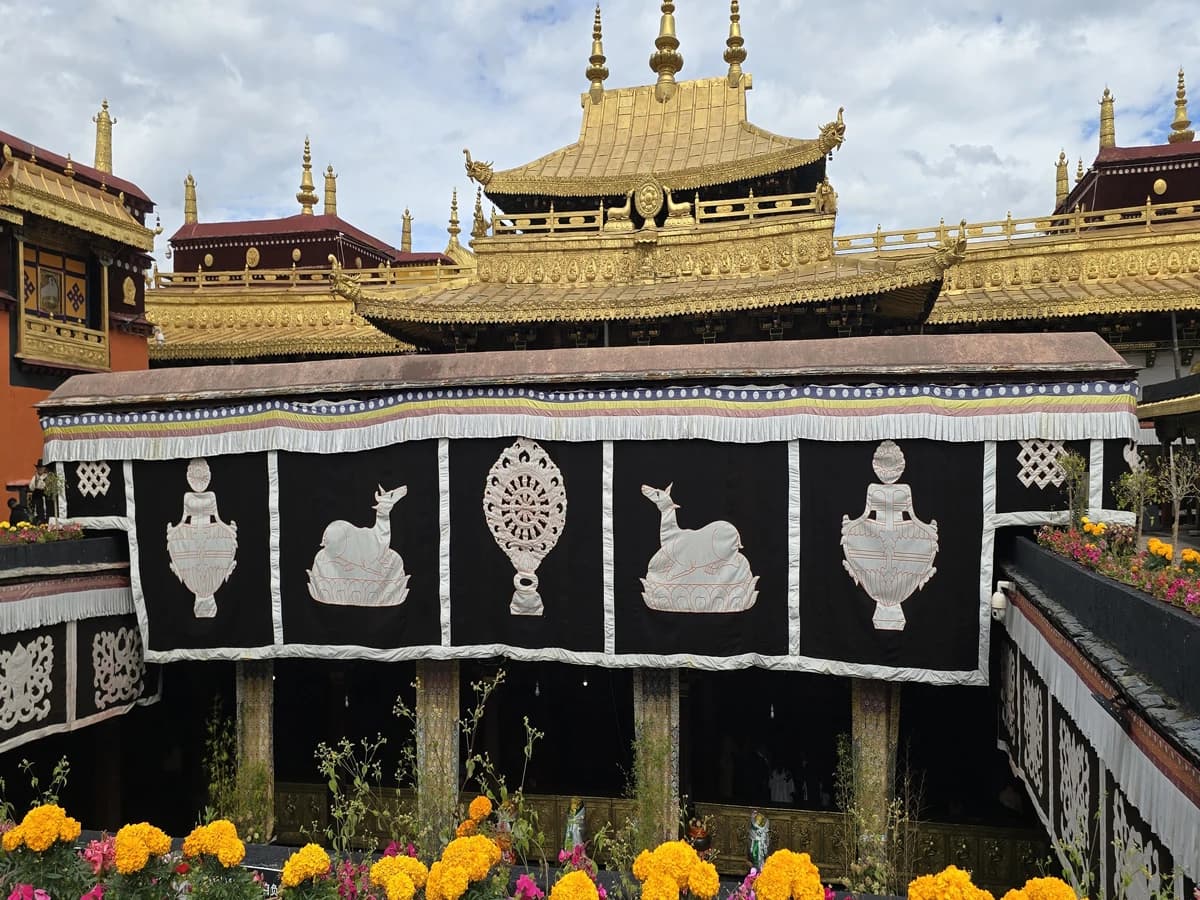
After lunch, we walk to Jokhang Temple, founded in the 7th century and the most sacred shrine in Tibet. Pilgrims prostrate on the stone slabs outside, and butter lamps flicker in dark chapels inside. The central statue of Jowo Shakyamuni draws devotees from every corner of the plateau.

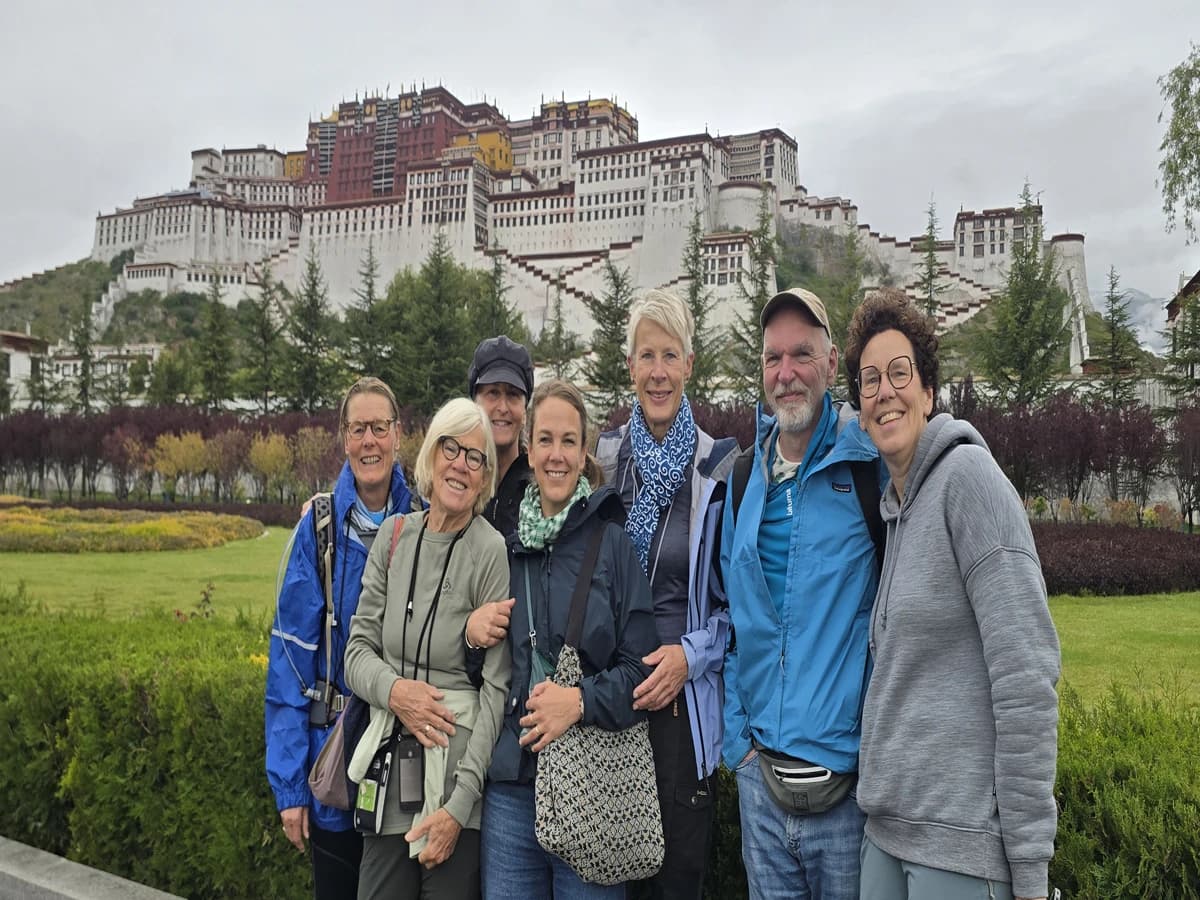
For the classic photo of the palace, stand in the square at the foot of the hill, or ask your guide for a quieter viewpoint across the road. Inside the Jokhang, queues move slowly near the main shrine. Hold your camera low, follow the guide, and keep your voice down. The late light on the Jokhang's golden roof is one of the best moments of the day.

Barkhor Street circles the Jokhang. Join the clockwise flow of pilgrims, spin the prayer wheels, and browse stalls of prayer flags, silver, thangka paintings, and incense. Stop for a glass of sweet milk tea in a teahouse. Overnight in Lhasa.

Today covers the scholarly side of Tibetan Buddhism. We drive to Drepung Monastery first, on a hillside west of the city. Founded in 1416, it once housed thousands of monks and ranked among the largest monasteries in the world. Walk through its assembly halls, chapels and kitchens, and ask your guide about the Gelug school and its colleges.

Norbulingka comes next. This summer palace and park was built in the 18th century as the Dalai Lamas' warm-season retreat. Its gardens, small palaces and painted rooms feel calm after the monastery crowds. UNESCO lists Norbulingka together with the Potala Palace.

In the afternoon, we reach Sera Monastery, founded in 1419, in time for the debate. From about 3:00 to 5:00 PM, monks gather in a gravel courtyard. One monk stands and asks sharp questions, claps his hands to punctuate each point, and the seated monk answers. Debate is closed on Sundays, and we choose departure dates with that in mind.

The debate follows a strict style. The standing monk is the questioner, and the seated monk defends a point of Buddhist logic. A clap of the hands and a stamp of the foot mark each challenge. 

Visitors stand at the edge of the courtyard, and the guide explains what the arguments are about. A short stop at Nechung Monastery, below Drepung, is possible if time allows. It was the seat of the state oracle of Tibet.

Return to the hotel for a free evening. Try momo, thukpa, or tsampa for dinner, and notice how quickly you adapt. Overnight in Lhasa.

After an early breakfast, we leave Lhasa and cross the Yarlung Tsangpo before the road turns south. The climb to Kamba La Pass (4,794m/15,728ft) is steady. At the top, Yamdrok Lake (4,441m/14,570ft) appears below, a vivid turquoise against brown hills. Nyenchen Khangsar (7,191m/23,593ft) stands behind it on clear days.

The road follows the lakeshore for more than an hour. Stop at the viewpoints, and ask the guide to point out Samding Monastery on its peninsula. Lunch comes in the small town of Nangartse, a simple local restaurant stop.

The route then climbs to Karo La (about 5,010m/16,437ft), the highest point of the tour. The Karo La Glacier lies close to the roadside, and the wind blows hard here. Take photos, then return to the vehicle after 10 to 15 minutes. Walk slowly, breathe deeply, and keep your hat on.

Carry snacks, a warm layer, and plenty of water on this long day. Phone signal fades in places along the route, so tell family at home not to worry. Ask the driver for short stops, and let the guide know at once if anyone feels unwell on the passes.

Police checkpoints check permits on this road, and your guide carries the paperwork. The descent into Gyantse (3,950m/12,959ft) takes about 1.5 hours. The old Gyantse Dzong fort watches over the town from its hilltop, and it was the scene of fighting during the British expedition of 1904.

Check in, rest, and enjoy a quiet evening in Gyantse, and overnight in Gyantse.

Start the morning at Pelkor Chöde Monastery, a walled complex on the edge of Gyantse. Its main prayer hall is lively with pilgrims. Next to it stands Gyantse Kumbum, a stupa about 35 metres tall, begun in 1427. The name means "100,000 images", and the chapels on each level hold wall paintings and statues in many styles.

Drive 90 km to Shigatse, which takes 1.5 to 2 hours. Shigatse is the second-largest city in Tibet, and Tashilhunpo Monastery dominates its hillside. The first Dalai Lama, Gendun Drup, founded it in 1447, and it remains the seat of the Panchen Lama. Inside, a gilded Maitreya statue of more than 26 metres fills one of the tallest halls in Tibet.

Allow about two hours inside Tashilhunpo. Its large halls hold giant statues and the tombs of earlier Panchen Lamas. The chapels are dim, so a small torch helps, and photography is restricted in most halls.

Follow the kora path around the monastery walls with local pilgrims. If time allows, stop to photograph the rebuilt Shigatse Dzong from the street below. Check into your hotel and rest. Overnight in Shigatse.

The drive back to Lhasa follows the Yarlung Tsangpo valley, the same river that becomes the Brahmaputra in India. The road passes farming villages, small monasteries, and wide braided river channels. In autumn, golden barley fields cover the valley floor.

Plan a tea stop in a roadside village. Ask your guide about daily life in the countryside, from yak butter making to barley harvests. Most groups reach Lhasa by early afternoon, after about 4 to 5 hours of driving.

Barkhor Street feels different in the late afternoon, with incense smoke drifting over the square in front of Jokhang and pilgrims still circling.

The rest of the day is free. Revisit Barkhor Street for last-minute gifts such as prayer flags, wooden bowls, incense, and woollen scarves. You can also book the Princess Wencheng Show, a large outdoor performance about Tibetan history. It is an optional extra, staged seasonally, and tickets depend on your dates and overnight in Lhasa.

Rise early for the transfer to Gonggar Airport, 60 km from Lhasa. Allow 1 to 1.5 hours for the drive and keep passports, permits, and boarding passes in a day bag. Your guide helps with check-in before saying goodbye.

The flight back takes about one hour. The Himalayan range appears again below the window, and the green hills of Nepal come into view as the plane descends. A Global Adventure Trekking representative meets you at Tribhuvan International Airport and transfers you to your hotel or onward flight.

Flight schedules between Lhasa and Kathmandu can change, so we advise booking your international flight home for the following day. Extra Kathmandu nights are easy to add through our hotel reservation service. If you have time, join a sightseeing tour in Nepal to cover the Kathmandu Valley.

Have Something Different in Mind?
No worries — our local expert team is ready to create a personalized itinerary to matches your interests, schedule, and travel style.

Lhasa Culture Tour: 7 Days from Kathmandu Cost Details

The final price of the 7-day Lhasa Culture Tour depends on the group size, hotel category, and travel dates. Please contact our travel experts for a detailed itinerary, a breakdown of costs, and a personalized quotation.

Includes

  • Kathmandu-Lhasa-Kathmandu air ticket
  • Chinese Group Visa and Tibet Travel Permit, plus the Alien's Travel Permit for Gyantse and Shigatse
  • Private transport by jeep, van or coaster bus, depending on group size
  • Airport pickup and drop-off in Lhasa
  • Licensed, English-speaking Tibetan guide throughout the tour
  • Twin-sharing hotels for 6 nights in Lhasa, Gyantse and Shigatse
  • Sightseeing and monastery entrance fees listed in the itinerary
  • Daily breakfast
  • All applicable taxes and service charges

Excludes

  • Lunch and dinner
  • Travel insurance of any kind
  • Hotel nights in Kathmandu before and after the tour
  • Nepal visa fee
  • Optional activities, such as the Princess Wencheng Show
  • Drinks, laundry, shopping, and other personal expenses
  • Tips for the guide and driver
  • Extra costs caused by natural calamities or other events beyond control

Dates & Availability

Select your preferred date

Nov 2026
Dec 2026
Feb 2027
Mar 2027
Apr 2027
May 2027
Aug 2027
Sep 2027
Oct 2027
Nov 2027
Dec 2027
November Departure Date(s)
Starts
Nov 21, 2026
Ends
Nov 27, 2026
Status
Guaranteed
Price
US$2860
Starts
Nov 28, 2026
Ends
Dec 04, 2026
Status
Guaranteed
Price
US$2860

Essential Information

Why Choose Global Adventure Trekking for the Lhasa Culture Tour

  • Our company is registered in Nepal and associated with the Nepal Government, Nepal Tourism Board, Nepal Mountaineering Association, Trekking Agencies' Association of Nepal, and KEEP. You can verify our legal documents online.
  • More than 169 travellers have reviewed us on TripAdvisor, 26 on Google, and 99% of them recommend us. Read their words on our client reviews page.
  • Licensed, English-speaking Tibetan guides lead every day of the tour, and a Kathmandu team stays in touch from booking to your flight home.
  • We arrange the Chinese Group Visa, the Tibet Travel Permit, and the Alien's Travel Permit, so you only send passport details.
  • Flight fare and visa fee are quoted openly, and nothing is added at the airport.
  • Our office sits in Bhagawati Bahal, Thamel Marg, Kathmandu, and you are welcome to visit before departure.
  • You can shape the trip with extra Kathmandu nights, a private vehicle, or a longer stay, through our plan your trip page.
  • The Longest Way Home, a respected independent travel site, lists us among recommended Nepal operators.
  • Learn more about the people behind the tour on our About Us and our team pages, or see why guests pick us on the Why Travel With Us page.

Good to Know

A Day on the Lhasa Culture Tour

Each day starts with breakfast at the hotel around 7:30 AM. On sightseeing days in Lhasa, we leave by 8:30 AM so that the first entry opens on time. Lunch is a relaxed local meal between 12:00 and 1:00 PM. Most visits end by 4:00 or 5:00 PM, and dinner is around 6:30 PM.

On driving days, we leave by 8:00 AM and stop often for photos. The hotel is usually reached by late afternoon. Your guide gives a short briefing for the next day each evening, and most travellers sleep early, which helps with altitude.

Who Is the Lhasa Culture Tour For?

A good fit if you:

  • Want monasteries, markets and old towns more than long walks
  • Have one week and want to see central Tibet properly
  • Travel with teenagers, parents, or friends who prefer a gentle pace
  • Are comfortable sleeping between 3,650m/11,975ft and 3,950m/12,959ft, with a doctor's approval if needed
  • Enjoy photography, history, and religious art

Think twice if you:

  • Have a heart, lung, or blood-pressure condition that a doctor has not cleared
  • Are recovering from a recent illness or surgery
  • Want a trek or a mountain-climbing trip, since our Tibet Everest Base Camp Helicopter Tour suits that better
  • Need full independence, because a licensed guide stays with the group at every site

Lhasa Cultural Tour Cost

The final price depends on group size, hotel category, and travel dates. Two large items are fixed, and the table shows where the money goes.

Cost item

Amount per person

Kathmandu to Lhasa and back flight

US$875 (subject to change)

Chinese Group Visa

US$125

Visa surcharge for passports from the USA, Canada, Argentina, and Romania

Extra US100 (US$225 in total)

Tibet Travel Permit, Alien's Travel Permit, palace and monastery entrance fees

Included

6 nights in twin-sharing hotels, private vehicle, Tibetan guide and daily breakfast

Included

The flight and the visa are already counted in the package price. They are listed separately only so that you can see the cost of a Lhasa Cultural Tour clearly. Airfares can move, which is why the flight fare says "subject to change". 

We confirm the final amount in writing before you pay a deposit. Send your dates and group size through the Plan Your Trip page for an exact quote.

Tibet Travel Permit, Group Visa and Documents for the Lhasa Culture Tour

Entry to Tibet follows a fixed order, and every step needs a licensed agency. The process looks like this:

  1. Book the tour and send documents: Share a clear scan of your passport (valid for at least six months), a passport-size photo, and basic details.
  2. We apply for the Tibet Travel Permit: Our Lhasa partner submits the request to the Tibet Tourism Bureau, and a visa invitation letter follows.
  3. We submit your passport for the Chinese Group Visa: The Chinese Embassy in Kathmandu issues it in 4 to 5 working days. The visa fee is US$125, and US$100 extra and applies to passports from the USA, Canada, Argentina, and Romania.
  4. You collect the passport with the visa: The Tibet Travel Permit stays with your guide, and officials check it at the airport and at checkpoints.
  5. Gyantse and Shigatse need the Alien's Travel Permit: Our Lhasa team arranges it for the route outside Lhasa.

Do not apply for a Chinese visa in your home country if you enter Tibet from Nepal. Such a visa is cancelled when the Group Visa is issued. Travellers from some countries may enter China without a visa, but the Tibet Travel Permit stays compulsory, so please ask us before booking. The Chinese Embassy in Nepal publishes notices about visa changes.

We suggest reaching Kathmandu at least a week before your flight, so the visa is ready on time. For the Nepal side, read our visa procedures page and our guide on how to apply for the Nepal tourist visa. The how to get to Nepal page covers flights into Kathmandu.

Altitude and Health on the Lhasa Culture Tour

Place

Altitude Role in the tour
Kathmandu 1,400 m./4,593 ft Start and end
Lhasa 3,650 m. /11,975 ft Nights 1, 2, 3, and 6

Kamba La Pass

4,794 m. /15,728 ft Road pass, Day 4
Yamdrok Lake 4,441m/14,570ft Viewpoints and lunch stop, Day 4
Karo La About 5,010 m. /16,437 ft Short stop, Day 4
Gyantse

3,950 m. /12,959 ft

Night 4
Shigatse

3,840 m./12,598 ft

Night 5

Common symptoms include headache, tiredness, poor sleep, nausea, and shortness of breath. Most settle in a day or two. Drink three to four litres of water daily, walk slowly, and skip alcohol and smoking for the first two days. 

Ask your doctor about preventive medicine before you travel. If a headache worsens, or breathing feels hard at rest, tell your guide at once.

Your first 24 hours in Lhasa:

  • Keep the afternoon slow and walk at half your usual pace
  • Sip water often, even if you do not feel thirsty
  • Eat a light dinner and skip alcohol
  • Sleep with your head slightly raised if a headache appears
  • Mention any symptoms to your guide before bed

Going down is the best treatment, and the route allows it. The final flight to Kathmandu drops 2,250 metres within an hour. For more on the plateau, see the climate of Tibet page and the Tibet travel info hub.

Best Time for the Lhasa Culture Tour

Lhasa lies in a dry rain shadow, so the tour runs for much of the year. April to October gives the most comfortable weather and the longest opening hours.

Season Months Daytime Night What to expect
Spring April to May 17–21°C (63–70°F) 2–6°C (36–43°F)

Clear, mild days and fewer crowds than summer

Summer

June to August

22–24°C (72–75°F)

9–11°C (48–52°F)

Warmest weather, green valleys, short rain showers, and the busiest season

Autumn September to October

18–21°C (64–70°F)

2–8°C (36–46°F)

Blue skies, sharp mountain views and golden barley fields

Winter

November to March

8–13°C (46–55°F)

-8 to -3°C (18 to 27°F)

Cold, dry, and quiet, with shorter opening hours at some sites

Lhasa lies in a dry rain shadow, so the tour runs for much of the year. April to October gives the 

most comfortable weather and the longest opening hours. These are typical averages, and they vary by year. Potala Palace keeps summer hours from May 1 to October 31 and winter hours from November 1 to April 30. The climate of Tibet page has more detail.

Surprising Realities on the Lhasa Culture Tour

After guiding many groups through Tibet, we see the same surprises each season. These are the ones worth knowing before you fly.

  • Potala Palace is closed on Mondays: Since November 2025, the palace has been closed on Mondays. Tickets are timed, and the visit inside lasts about one hour. We plan departures so that Day 2 never falls on a Monday.
  • The Sera debate does not run on Sundays: Monks debate in the afternoon, from about 3:00 to 5:00 PM, Monday to Saturday. A Sunday visit means a quiet courtyard. We avoid departures that put Day 3 on a Sunday.
  • Day 1 is for rest, not sightseeing: The flight lifts you 2,250 metres in about an hour. Even fit travellers feel slow on arrival. This is why the first sights wait until Day 2.
  • Karo La is much higher than any hotel on the route: The pass at about 5,010m/16,437ft sits more than 1,000 metres above Gyantse. Stops there stay short for that reason. Keep a hat and windproof jacket within reach.
  • Photography has rules: Most courtyards and exteriors allow photos. Many chapels ban them, and some charge a camera fee. Your guide explains the rule at each stop, and it is polite to ask before photographing monks or pilgrims.
  • Many apps and websites do not work: Google, WhatsApp, Facebook and Instagram are blocked in mainland China, including Tibet, unless you use a VPN or an international roaming eSIM. Set this up in Kathmandu before you fly.
  • Cash and cards behave differently: Mobile payments dominate in Tibet, and foreign cards are accepted in few places. Carry some Chinese yuan for tea, snacks, souvenirs, and tips.
  • The guide stays with the group at all sites: Chinese rules require a licensed guide for foreign visitors. Free time inside Lhasa is fine, such as an evening walk around Barkhor Street, but trips outside the permitted route are not allowed.
  • The sun is stronger than expected: UV is high at this altitude, and the air is very dry. Sunscreen, sunglasses, and lip balm matter even on cool days.
  • Flight fares and schedules can change: The Kathmandu to Lhasa fare is quoted at US$875 per person and is subject to change. Flight times can also move. This is why we suggest a buffer night in Kathmandu after the tour.

Local Tibetan Life on the Lhasa Culture Tour

Culture here is not only inside the monasteries. Much of it happens in teahouses, on the kora circuits and in roadside villages. In Lhasa's old teahouses, locals play cards and share flasks of sweet milk tea. 

Pilgrims on Barkhor Street carry prayer wheels, rosaries, and small containers of butter for the lamps. On Day 6, the drive along the Yarlung Tsangpo passes farming villages, where you often see yak dung cakes drying on walls for fuel.

Your guide can explain what you see and translate a few phrases. Ask about a visit to a local family home, which depends on the route and the day. Greet people with tashi delek, smile before you photograph, and accept tea with both hands.

Departure Dates and Group Size

Departure Dates

The Lhasa Culture Tour runs on request rather than on a fixed calendar. Tell us your preferred arrival date in Kathmandu, and we build the tour around it. April to October is the most popular window, and May to October fills faster because Potala Palace tickets and flight seats are limited.

Two weekday rules apply to every departure:

Flight to Lhasa (Day 1) Problem

Result

Sunday

Day 2 (Potala Palace) falls on Monday, when it is closed

Avoid

Friday

Day 3 (Sera debate) falls on Sunday, when there is no debate

Avoid

Monday to Thursday, Saturday

None Best choice

As the Chinese Group Visa takes 4 to 5 working days and the permit needs a set date, we suggest sending your dates at least four weeks ahead. Last-minute bookings are not accepted for Tibet tours. Tibet permits are issued for set dates, so choose dates you are sure of.

Group Size

  • Minimum: 2 travellers. Solo travellers are welcome, and we confirm how your Group Visa is arranged when you contact us.
  • Vehicle: A jeep, van or coaster bus, depending on the size of your group.
  • Guide: One licensed, English-speaking Tibetan guide stays with the group at every site.
  • Rooms: Twin sharing. A single-room supplement applies if you want a private room or have no one to share with.
  • Private groups: Families and friends can travel as their own private group on dates they choose.

Kathmandu to Lhasa Flight

  • Booking: We book the Kathmandu–Lhasa–Kathmandu tickets for you as part of the package. Your name must match your passport exactly, so send a clear passport scan when you book.
  • Fixed once issued: The ticket, Group Visa, and Tibet Travel Permit all carry the same dates. A date change after issue means new paperwork, so confirm your dates before we apply.
  • Flight days: Flights between Kathmandu and Lhasa don’t run every day. We confirm the exact day, airline, and departure time before you pay the balance.
  • Window seat: On the way to Lhasa, the Himalayan peaks are usually on the right side of the plane. On the way back, they are on the left. Ask at check-in, but seat choice is not guaranteed.
  • Check-in: Be at Tribhuvan International Airport about three hours before departure. Keep your passport, Group Visa, and boarding pass in your hand luggage. Your Tibet Travel Permit stays with your guide in Lhasa. 
  • Baggage: Limits are set by the airline and are usually tighter than on domestic flights. Pack soft bags.
  • Weather: Flights over the Himalayas can occasionally be delayed. Keep a buffer night in Kathmandu after the tour. If a pre-tour or post-tour flight is cancelled, extra hotel and food costs are the traveller’s responsibility under our Terms & Conditions.

Accommodation on the Lhasa Culture Tour

Nights Place Altitude
1, 2, 3 Lhasa 3,650 m./11,975 ft
4 Gyantse 3,950 m./12,959 ft
5 Shigatse

3,840 m./12,598 ft

6 Lhasa 3,650 m./11,975 ft
  • Location: Hotels are central, so you can walk to restaurants and, in Lhasa, to Barkhor Street in the evening.
  • Gyantse and Shigatse: These are smaller towns. Expect simpler rooms and fewer dining choices than in Lhasa. Heating and hot water are reliable in the main hotels, but Wi-Fi can be slow. 
  • Sharing and supplement: Rooms are twin-sharing. Travellers without a roommate pay a single-room supplement. Tell us when you book.
  • Altitude comfort: Ask for a lower floor if climbing stairs bothers you. Sleeping with your head slightly raised helps if you get a headache. Portable oxygen can be arranged on request.
  • Check-in: Standard check-in is in the afternoon. The Day 1 airport transfer usually lets you reach the hotel in time to rest.
  • Kathmandu nights: Hotel nights in Kathmandu before and after the tour are not included. We can reserve them through our hotel reservation service.

Packing List for Lhasa Tour

Documents

  • Passport valid for six months, plus two photocopies
  • Printed copies of your travel insurance policy and emergency numbers
  • Passport-size photos (two spare)

Clothing

  • Thermal base layers for mornings, evenings, and Karo La
  • Gloves and a warm beanie, even in summer
  • Scarf or buff against wind and dust
  • Long trousers and a top that covers shoulders and knees for monasteries
  • Slip-on shoes or sandals for hotel rooms

Health and altitude

  • Altitude medicine, if your doctor prescribes it
  • Painkillers, rehydration salts and stomach medicine
  • Moisturiser and saline nasal spray, because the air is very dry
  • Hand sanitiser and wet wipes

Useful extras

  • Small torch or headlamp for dim chapels
  • Reusable bottle (hotels give boiled water)
  • Light snacks such as nuts, biscuits or energy bars
  • Zip bags to protect electronics from dust
  • Chinese yuan in small notes

Leave at home

  • Drones, which are not allowed
  • Political books, flags or printed material
  • Photos of religious leaders that could cause problems at checkpoints

Travel Insurance for Tibet

Our Terms & Conditions strongly recommend comprehensive travel insurance for every guest. Buy it before you pay your balance, because most trip-cancellation cover only starts from the day you buy the policy.

A good Tibet policy covers

  • Emergency medical treatment and hospital stays
  • Emergency evacuation and repatriation
  • Coverage to at least 5,000m, which includes Karo La
  • Trip cancellation and interruption
  • Delayed or cancelled flights
  • Lost, stolen or damaged baggage and personal accidents

Check before you buy

  • That the policy covers travel to Tibet and mainland China without excluding the region
  • That altitude is not excluded
  • Pre-existing conditions: heart, lung and blood-pressure conditions are often excluded unless declared
  • Whether you pay first and claim later, or the insurer pays the hospital directly

Good to know

  • We are not liable for lost or damaged baggage, even when it is carried by our vehicle.
  • Any extra cost from sickness, flight cancellation, road closure or political disruption is the traveller’s responsibility on the spot. Insurance is how you recover it.
  • Keep your policy number and the insurer’s 24-hour emergency line in your phone and on paper.

Money, Phones and Internet in Tibet

Item Rule
Deposit 20% to confirm the booking
Balance Paid in full before departure, on arrival in Kathmandu

Card payment

5% handling charge

5% handling charge

No handling charge

Bank transfer US dollar account, details on request

Money on the trip

  • Lunch, dinner, drinks, tips, and shopping are not included, so budget for them in yuan.
  • Mobile wallets such as Alipay and WeChat Pay can link some foreign cards. Set this up before you fly and don’t rely on it as your only way to pay.
  • Tips are not included. Guides and drivers appreciate a tip at the end of the tour.
  • Don’t carry large amounts of cash. Keep notes in small denominations for tea, snacks, and Barkhor stalls.

Phones and internet

  • Download offline maps, a translation app, and your insurance documents before you leave Kathmandu.
  • Hotel Wi-Fi is usually fine in Lhasa and slower in Gyantse and Shigatse.
  • Mobile signal fades on the high passes, so tell family at home that you may be out of contact on Day 4.
  • Bring a power bank, because cold weather drains batteries faster.

Cancellation and Refund Policy

Your booking is covered by our Terms & Conditions. The key points for the Lhasa Culture Tour:

Deposit: a refundable deposit of 20% confirms your booking.

If you cancel: send written notice. The cancellation charge is a percentage of the trip price:

Time before departure

Charge

15 to 30 days

30%

10 to 15 days

40%

8 to 10 days

75%

1 to 7 days

100%

Other rules

  • Postponing: You can postpone a trip without paying an extra fee.
  • Dropping out mid-tour: No refund is made for unused parts of the itinerary.
  • If we cancel: If we cancel for unforeseen reasons such as war, natural disaster, or severe weather, we offer a trip of similar standard. If you decline it, we refund all money paid to us. Other costs you paid, such as visa or flights bought elsewhere, are your responsibility.
  • Tibet paperwork: The permit and Group Visa are issued for fixed dates, so these costs may not be recoverable once the application is made. [confirm with the team]
  • Route changes: The trip may change because of landslides, road blocks, floods, snow, flight cancellation or illness. Extra costs are paid on the spot by the traveller.
  • Insurance: Trip-cancellation insurance is the safest way to protect your deposit and payments.

Extend Your Trip

Stay on in Nepal

  • Chitwan Jungle Safari Tour, 3 days: Rino, deer, and birdlife on a short break from the city. Luxury Chitwan Safari and the 3 Nights 4 Days Bardia National Park Tour are also on the site.
  • Easy and Short Treks: A gentle trek after Tibet, where the altitude drops and the air is thicker.
  • Adventure activities: Paragliding, rafting, or bungy, if you want something active after a culture-heavy week.
  • Hotels and sightseeing: The Kathmandu Valley’s UNESCO sites, booked through our hotel reservation service.

Go further in the Himalaya

  • Bhutan Short Tour, 4 days: Fly from Kathmandu to Paro after Lhasa and compare two Himalayan Buddhist cultures.
  • 7 Days Bhutan Tour or Bhutan at a Glance, 5 days: Longer options for the same idea.
  • Luxury Nepal and Bhutan Tour Package, 13 days: A higher-comfort choice.
  • Tibet Everest Base Camp Tour: For travellers who want the northern side of Everest on a separate trip.

How to add it

  • Extra Lhasa days must be requested before the permit is issued.
  • Nepal and Bhutan extensions can be added at any time.
  • Send your ideas through the Customize Trip page, and we will quote the full plan.

Responsible Travel in Tibet

Small habits protect the places you came to see.

  • Carry a reusable bottle and fill it with boiled water at the hotel
  • Buy crafts and snacks from local shops and stalls, and pay a fair price
  • Stay quiet in prayer halls, switch off your phone, and follow the guide's rules
  • Walk clockwise, keep to marked paths, and leave no litter at lakes and passes
  • Ask before taking photos of people, and accept a refusal with a smile
  • Leave offerings and butter-lamp donations only in the boxes provided

Food and Drink on the Lhasa Culture Tour

Breakfast comes with the hotel. For lunch and dinner, the guide suggests local restaurants, and the group orders what it likes. These Tibetan dishes are worth trying:

  • Momo: Steamed dumplings filled with yak meat, mutton, or vegetables
  • Thukpa: A hot noodle soup that helps on cold mornings
  • Tsampa: Roasted barley flour, usually mixed with butter tea
  • Butter tea: Salty tea churned with yak butter, an acquired taste
  • Sweet milk tea (cha ngamo): The tea served in Lhasa's teahouses
  • Yak stews and stir-fries: Hearty meals after a day of sightseeing

Vegetarian and vegan dishes are easy to find in Lhasa. Tell the guide about allergies on Day 1. Drink bottled or boiled water only, and keep meals light for the first two days while the body adjusts.

Essential Lhasa Culture Tour Guide

  • Book Early:

Potala Palace tickets are limited, and the Chinese Group Visa takes 4 to 5 working days. Early booking, ideally four weeks or more before departure, protects both. May to October fills faster.

  • Reach Kathmandu a Week Early:

The visa is processed in Kathmandu, and your passport stays at the embassy for a few days. Arriving early leaves room for any delay. Use the days for a sightseeing tour in Nepal, and book rooms through our hotel reservation service.

  • Add a Buffer Night After the Tour:

Flights from Lhasa can shift by a few hours. A free night in Kathmandu protects your international connection. If you prefer to fill the day, our multi-day tours and one-day tours and activities are easy to add.

  •   Get the Right Travel Insurance:

The policy should cover medical care and evacuation at altitudes above 5,000 metres, plus trip cancellation. Check the fine print before you buy. Insurance is not included in the package, so arrange it before departure.

  • Pack in Layers

Mornings and nights are cold even in summer, and midday sun is strong. A simple checklist:

  1. Warm jacket, fleece and a windproof outer layer
  2. Sun hat, sunglasses, sunscreen and lip balm
  3. Comfortable walking shoes and warm socks
  4. Daypack, reusable water bottle and snacks
  5. Personal medicines and a small medical kit
  6. Power bank and a universal adapter (China uses Type A, C and I sockets)
  • Know the Hotels

Hotels are in the 3-star category, with twin-sharing rooms, attached bathrooms, heating and Wi-Fi. They sit in central areas of Lhasa, Gyantse and Shigatse. We confirm the properties at booking.

Eat Local, Eat Light: Tibetan food includes momos, thukpa noodle soup, tsampa, yak butter tea and sweet milk tea. Chinese, Nepali, and Indian restaurants are common in Lhasa. Choose light meals on the first two days, and drink plenty of water.

  • Respect Local Customs:

Walk clockwise around temples, stupas, and mani walls. Dress modestly in monasteries, remove hats indoors, and never touch religious objects. Avoid political discussions, and follow your guide's instructions at checkpoints. Drones are not allowed

  •  Carry Documents and Cash:

Keep your passport, permit copies, and boarding passes in a day bag. Carry Chinese yuan for small purchases, since foreign cards work in few places.

Ready to Book Your Lhasa Culture Tour?

Lhasa rewards slow, curious travel. This 7-day Lhasa Cultural Tour gives monasteries, old towns, and high lakes a week of unhurried time. Send your dates and group size through the Plan Your Trip page, ask for changes on the Customize Trip page, or reach the team on the Contact Us page.

Call or WhatsApp +977 9841527688, or visit our office at Bhagawati Bahal, Thamel Marg, Kathmandu. You can also see more pictures and stories from past trips in our photo galleries, travel videos, and travel stories. To plan the Nepal side of your trip, start with the Tibet tours page, then read about the history of Tibet. Are you ready to book your Lhasa Culture Tour now? Here is the link to book it
Lhasa Culture Tour: 7 Days from Kathmandu FAQs

No. Chinese rules require foreign visitors to book a licensed travel agency that arranges the permit, guide, and vehicle. Travellers entering from Nepal also need a Chinese Group Visa. The Lhasa Cultural Tour covers all of this, so you only send documents and travel.

No. Only a licensed Tibet-based agency can apply for the permit on a traveller's behalf. We work with our Lhasa partner once your passport details arrive, and we confirm the permit status with you before departure.

Yes, for a few working days. The Chinese Embassy in Kathmandu keeps the original passport during processing, which usually takes 4 to 5 working days. You can still walk around Kathmandu with a passport copy, but you cannot use the passport for other international travel until it comes back.

Solo travellers are welcome. The Group Visa is issued for a group, so we confirm how your booking is arranged when you contact us. A single-room supplement may apply if you want a private room.

The flight takes about one hour. It runs along the Himalayan range and, in clear weather, shows Everest (8,849m/29,032ft) and Kanchenjunga. Flights usually leave in the morning, and exact times are confirmed before departure.

Yes, but not on this itinerary. The Lhasa Cultural Tour flies both ways to save time and avoid long border road days. An overland crossing from Nepal is possible on our Tibet Overland Tour, and trains reach Lhasa from mainland China.

The airport is about 60 km from the city. The transfer takes 1 to 1.5 hours by private vehicle. Your guide meets you in the arrival hall, and the driver helps with luggage.

Lhasa follows China Standard Time, which is UTC+8. Nepal is on UTC+5:45, so Lhasa is 2 hours and 15 minutes ahead of Kathmandu. Flight tickets show local times, so allow for the difference when you plan connections.

No. The palace is closed on Mondays and open Tuesday to Sunday. Summer hours run from 9:00 AM to 3:40 PM, and winter hours from 9:30 AM to 3:20 PM. We plan departure dates so that the palace visit never falls on a Monday.

The debating courtyard is busiest from about 3:00 to 5:00 PM, Monday to Saturday. Sunday is a quiet day. We place Sera in the afternoon of Day 3 and avoid Sunday departures for that reason.

Three full days cover the main sights comfortably, including one day for rest. The 7-day Lhasa Cultural Tour spends 4 of its 6 Tibet nights in Lhasa, which keeps the pace slow. A 4-day Lhasa-only version is available on request.

Photos are fine in most courtyards and outdoor areas. Many chapels ban them, and some charge a camera fee. Please ask before photographing monks or pilgrims.

Yes. The Princess Wencheng Show, a large outdoor performance about Tibetan history, is staged seasonally. Tickets are an optional extra. Ask us when booking so we can plan the evening of Day 6.

No. This itinerary stays on the Lhasa, Gyantse and Shigatse circuit and does not include the Tibetan side of Everest. Travellers who want both can choose the Tibet Everest Base Camp Tour, which adds the northern face of Everest to the Lhasa programme.

Yes, if the dates fit. Tibetan festivals follow the lunar calendar, so the dates change each year. Saga Dawa usually falls around May or June, and the Shoton Festival around August. Tell us your preferred month, and we'll check the dates before you book, since festival days draw crowds and can change opening hours.

For most culture lovers, yes. In seven days, you see Potala Palace, Jokhang Temple, two great monasteries, Yamdrok Lake and the old towns of Gyantse and Shigatse, without long walking days. You can read what past travellers say on our client reviews page.

Lhasa is at 3,650 m/11,975 ft, about 2,250 metres higher than Kathmandu. Potala Palace rises to roughly 3,700 m/12,139 ft. Gyantse and Shigatse lie at 3,950 m/12,959 ft and 3,840 m/12,598 ft.

Rest on Day 1, drink three to four litres of water daily, and walk slowly. Skip alcohol and smoking for the first two days. Ask your doctor about preventive medicine before you travel, and tell your guide at once if a headache or nausea gets worse.

Karo La reaches about 5,010 m/16,437 ft, the highest point on the route. The vehicle stops there for 10 to 15 minutes. Most travellers feel cold and a little breathless, then descend to Gyantse (3,950 m/12,959 ft) for the night.

Portable oxygen can be arranged on request. Please ask us before departure, and we will confirm the arrangement for your group.

Yes, when a doctor confirms they are fit for 3,650 m. The pace is slow, and vehicles cover most of the distance. Travellers with heart, lung, or blood-pressure conditions should get medical advice first.

Hotels are in the 3-star category, with twin-sharing rooms, attached bathrooms, heating, and Wi-Fi. They sit in central areas, close to restaurants. We confirm the properties at booking.

Dress in layers, because mornings are cold and midday is sunny. Cover your shoulders and knees in monasteries, and remove your hat before entering a prayer hall. Comfortable walking shoes matter more than fashion on stone steps and cobbled lanes.

Yes. Lhasa's restaurants serve vegetable momos, noodle soups, rice dishes, and Nepali and Indian vegetarian meals. Vegan and gluten-free choices are easier in Lhasa than in Gyantse or Shigatse, so tell your guide on Day 1.

Many Western apps, including Google, WhatsApp, Facebook, and Instagram, do not work in mainland China without a VPN or an international roaming eSIM. Set this up in Kathmandu before you fly. Hotels offer Wi-Fi, but speeds vary outside Lhasa.

Street crime in Lhasa is low, and most visitors feel comfortable around Barkhor Street. The main risks are altitude and breaking local rules. Follow your guide's instructions, avoid political discussions, and carry your passport when asked.

The tour flies between Kathmandu and Lhasa, so land-border road closures do not affect it. Our team confirms conditions on the Gyantse and Shigatse route before each departure. Our update, Is Nepal Safe for Trekking After the 2026 Nepal-Tibet Floods?, explains the situation in detail.

You can exchange money at Bank of China branches in Lhasa with your passport, but queues can be long. ATMs accept some international cards, and results vary. We suggest carrying enough Chinese yuan for small purchases before you fly.

We suggest at least four weeks ahead. The Group Visa takes 4 to 5 working days in Kathmandu, and Potala Palace tickets are limited. For May to October, book earlier.

Tibet permits are issued for set dates and routes, so a change after issuance means a new application. Flight schedules and fares can also change. Tell us as early as possible, and we'll rebook what we can. The terms and conditions page explains the details, and the general FAQs cover booking basics.

Extra Kathmandu nights are easy to add through our hotel reservation service. Extra Lhasa days must be built into the permit before it is issued, so tell us when you book. Other changes go through the customize trip page.

You May Also Like

noimage

Tibet Budget Tour

Price FromUS$1190
8 Days
Walk the Path of Enlightenment
Buddhist Pilgrimage Tour

Buddhist Pilgrimage Tour

Price FromUS$515US$1126
6 Days
Need Help? Call Us+977 9841527688