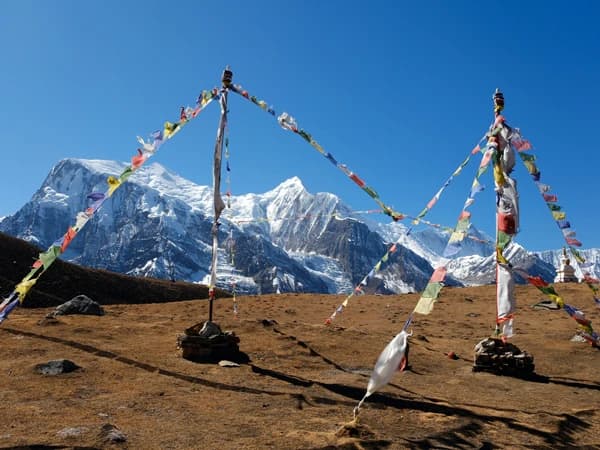
Everest Base Camp Trek for Indian Citizens: 12 Days

169 reviews
26 reviews
Recommended by 99% of travelers

The Everest Base Camp Trek for Indian Citizens is a 12-day classic Himalayan adventure that takes you on foot through the spectacular Khumbu region to the base of Mount Everest, especially designed for Indian guests. Each year many people attempt the walk to the legendary base of the world’s highest mountain, Mt. Everest (8,848.86 m/29,031 ft.). 

This famous trek covers the route from Kathmandu to Lukla, Namche Bazaar, Tengboche, Dingboche, Lobuche, Gorak Shep, Kala Patthar viewpoint, and Everest Base Camp, with a well-planned itinerary, acclimatization, cost, permits, logistics, meals, accommodation, guides, and all the necessary trekking essentials. Whether you are traveling from India, living abroad, or visiting Nepal from another SAARC country, this trek offers a practical way to experience the Everest region.  

Trip Facts
Duration
12 Days
Trip Grade
Difficult
Maximum Altitude
5,550 m./18,209 ft.
Group Size
1 to 12
Starts
Kathmandu
Ends
Kathmandu
Activities
Trekking and Hiking
Best Time
Autumn and Spring
Wishlist

About the Everest Base Camp Trek for Indian Citizens       

The Everest Base Camp Trek for Indian Citizens is an opportunity to experience the Himalayas far beyond what photographs and stories can convey. The journey takes you deep into the Khumbu region, where enormous mountain peaks, quiet and charming Sherpa villages, Buddhist monasteries, ancient trails, and unmatched landscapes accompany you every day. The Everest Base Camp Trek for Indian travelers begins in Kathmandu, then flies to Lukla and follows the classic trail to the foot of Mount Everest.     

The trek starts in Lukla, then Phakding on the 12-Day Everest Base Camp Trek for Indian Citizens; it follows the Dudh Koshi Valley before gradually climbing toward Namche Bazaar (3,440 m), the lively gateway to the Everest region. The walk through forests of Laligurans (rhododendron: national flower of Nepal), pine, and fir is especially enjoyable in Basanta Ritu (spring season), while hanging bridges, fluttering prayer flags, and rushing mountain rivers add character to the trails. As you enter Sagarmatha National Park, the landscape becomes increasingly wild, and the mountain starts to dominate the horizon.     

An important part of the Everest Base Camp Trek for Indian Citizens Package is the time spent acclimatizing at two major stops, Namche and Dingboche, allowing your body to steadily adjust to the increasing altitude before continuing to Lobuche, Gorak Shep, and Everest Base Camp. As you make your way on the Everest Base Camp Trek for Indian Citizens Itinerary, you pass through Tengboche, home to the popular Dawa Choling Gompa (Tengboche Monastery), before reaching Dingboche and the remote settlement of the upper Khumbu, where magnificent views of Everest (8,848.86 m/29,031 ft.), Lhotse (8,516 m/27,940 ft.), Nhuptse (7,861 m/25,791 ft.), Ama Dablam (6,812 m/22,349 ft.), and Pumori (7,161 m/23,494 ft.) become increasingly impressive.       

Reaching approximately 5,364 m (Everest Base Camp) is the defining moment of the Everest Base Camp Trek for SAARC Nationals. The true mesmerizing moment for many is watching the sunrise, where the sun illuminates the surrounding snow-capped peaks after a challenging ascent. After days of walking through the odysseys of Nepal’s mountains, you finally have a sense of accomplishment, breathe, and take in the scale of the Himalayas around you.   

The Everest Base Camp Trek from India is also a cultural and spiritual journey in the Everest region, known as the historical home of the Sherpa people. For many Indian visitors, where faith, traditions, and sacred places are an important part of life, the Buddhist culture of the Khumbu can feel both familiar and wonderfully new. You’ll encounter mani walls, prayer wheels, colorful prayer flags, gompas, and the quiet rituals of Sherpa communities.       

This meticulously designed Everest Base Camp Trek for Indian Citizens from Kathmandu package takes care of SAARC nationals trekking permits, the best available lodges, meals, Lukla flights, guide support, and acclimatization arrangements. Whether you’re planning an Everest Base Camp Trek for Indian Citizens 2026 or  Everest Base Camp Trek for Indian Citizens 2027, the focus is to provide you enough support to enjoy the trail rather than worry about every tiny logistical detail. And if you’re looking for a more comfortable way to the same legendary trail, you can also explore our Luxury Everest Base Camp Trek with Helicopter, which combines the classic Himalayan trekking experience with upgraded comfort and a scenic helicopter return from the Everest region.      

The Everest Base Camp journey is challenging, but that challenge is part of what makes it meaningful. You arrive in the mountains with a destination in mind; still, you’ll return with much more: memories of quaint Sherpa valleys, centuries-old monasteries, peaceful trails, cold mornings, tired legs, warm smiles, pleasant hospitality, calm people, amazing traditions and cultures with customs, and the undeniable feeling of standing beneath Everest. Talk to our trekking expert for more detailse about the availability and departure dates for the 12 Days Everest Base Camp Trek for Indian Citizens in 2026 and 2027 

Why Is Everest Base Camp (EBC) Trek Special for Indian Travelers

For many Indian travelers, Nepal is close enough to feel familiar and different enough to feel like a real adventure. You do not spend days dealing with complicated visa procedures. Coming from India’s warmer and more humid plains, the crisp mountain air of the Everest region can reflect a refreshing change, offering a chance to leave behind the heat and immerse yourself in the cool and quiet atmosphere of the Himalayas. You can hear familiar languages, find food that feels comforting after a long day on the trail, and still wake up to landscapes that seem worlds away from everyday life. 

Then the mountains gradually take over. The green hills around Lukla give way to pine forests, rare wild plants, enchanting villages, lovely glacial lakes, different climate zones, and mantras written on prayer flags flutter above suspension bridges. Along the way, the EBC Trek for Indians offers mani walls carved with Buddhist mantras, prayer wheels, chortens, and monasteries, and yaks carry supplies. Mount Everest itself is revered as Chomolungma, the “Goddess Mother of the World.” Most of the Indian people grew up around temples, pilgrimage sites, sacred rivers, rituals, and traditions that connect spirituality with nature. These experiences can connect familiality with spirit while introducing you to different Himalayan traditions. 

Walk in the Footsteps of Indian Everest Legends

India has its own remarkable chapter in Everest history. In 1965, India’s first successful Everest expedition placed nine climbers on the summit. Avtar Singh Cheema became the first Indian to reach the top, while Nawang Gombu Sherpa, a member of the expedition, became the first person to summit Everest twice. Nearly two decades later, Bachendri Pal became the first Indian woman to summit Everest in 1984, opening an inspiring new chapter for Indian mountaineering.       

You do not have to climb Everest to feel connected to that history. When you walk through the Khumbu region’s mountain trails toward Base Camp, you are entering the same extraordinary mountain environment that has inspired generations of Indian climbers. For some trekkers, that knowledge adds a quiet sense of pride to every step of the Everest Base Camp trekking journey.  

A Spiritual Journey Beyond the Mountains

For Indian and NRI (Non-Resident Indian) travelers, the Everest journey can begin long before you reach the mountains. Nepal offers a spiritual connection that is both familiar and deeply Himalayan. Witness the night of Pashupatinath Aarati by the sacred Bagmati River. Before the Everest Base Camp trek, you can visit Swayambhunath and Bouddhanath in Kathmandu for Buddhist traditions and local foods. 

During this trek, Indian people can explore Nepal for the spiritual insights they can discover at the Muktinath Darsan along with the EBC trek for both Hindus and Buddhists if they have extra time. The Himalayas also hold a profound place in Indian traditions and ancient scriptures, from the Mahabharata to the Shiva Purana. Experiencing these sacred landscapes and Sherpa Buddhist traditions can add a meaningful, rooted dimension to your trek.    

A Nepal Trek without a Tourist Visa

One of the biggest advantages for Indian tourists is that they do not need a tourist visa to enter Nepal. For air travel between India and Nepal, you should carry a valid Indian passport or the original Voter ID card issued by the Election Commission of India.

An Aadhaar card is not accepted as a travel document for Nepal, so it is important to arrange the correct identification before any journey in Nepal. Although a Voter ID card is accepted, carrying a passport is recommended for smoother travel and the immigration process.    

Easy Access Between India and Nepal  

Indian travelers have an advantage for visiting Nepal: the journey can begin without the visa for the Everest Base Camp Trek for Indians, thereby excluding the visa formalities required of most international visitors. The close relationship between India and Nepal has long supported relatively free movement between the two countries, including established land routes and regular air connections. 

This makes it easier to turn an idea of trekking in the Himalayas into a real journey, whether you fly directly to Kathmandu or enter Nepal overland before continuing toward the Everest region. And if you’re already in Nepal for vacation or somewhere like Ghandruk, Bandipur, or the Ghorepani Poon Hill hike, and simply want to join the Everest Base Camp Trek for Indian Citizens from Pokhara, it is possible to join it in Nepal.       

SAARC Benefits for Indians and SAARC Nationals  

As SAARC nationals, Indian people can benefit from lower rates on certain Nepal trekking and conservation fees. Similarly, travelers from SAARC member countries can benefit from the fact that for the Everest Base Camp Trek, the applicable Sagarmatha National Park entry fee is lower for SAARC nationals than for other foreign visitors, which is NPR 1,500 for SAARC nationals and NPR 3,000 for foreign nationals. Depending on current regulations, SAARC rates also apply to certain trekking-related fees, such as TIMS (NPR 1,000 for SAARC national applicants). 

To receive the applicable SAARC rate, carry a valid Indian passport or original Election Commission of India Voter ID card as proof of nationality. Costs and regulations can change, so the latest government rates should be confirmed when arranging your trekking. 

Familiar Food Along the Trail

Indians do not need to leave familiar flavors behind when you head into the Himalayas. Teahouses along the EBC route commonly serve dal bhat, vegetables, noodles, potatoes, rice, roti, soups, and other South Asian-style dishes, which are perfectly fit for every Indian. 

Vegetarian travelers generally have several choices because in the Himalayas of Nepal, they believe in the consumption of locally grown vegetables and foods rather than processed and meat products. 

Jain food requirements are also available or can be arranged, but they should communicate their needs before the trek.         

No Major Barrier to Language

The Hindi language is widely understood in Kathmandu and is commonly spoken or understood by many guides, lodge owners, and tourism workers along the Everest trails. This means everyday communication, from ordering meals, asking for directions, and discussing trek arrangements, is easier for Indian tourists. While English and Nepali are also widely used in tourism, you will often find that basic communication feels comfortable and familiar.    

Easy Payments with INR and UPI

Indian explorers can take advantage of using INR (Indian Rupees) in Nepal, while Nepal’s growing UPI networks make digital payments easier in many places. The Nepal Tourism Board (NTB) says Indian visitors can use UPI-enabled apps such as Google Pay, PhonePe, and BHIM at participating Fonepay merchants. 

For the Everest trek, it is not fully promised that UPI and INR will work everywhere in the remote mountain areas. It is best to carry Nepalese rupees for personal use during the trek.       

From Familiar Beginnings to the Foot of Everest 

Nepal is close to home for every Indian citizen, which is a special fact for this EBC Trek for Indian tourists. Once you leave Kathmandu for the Everest journey, you step into another world, where the busy streets transform into Sherpa villages, alpine woodlands, flying lungtas, ravishing rivers, and large mountain valleys. Each day is different from yesterday’s. 

By the time you reach Base Camp of Everest, standing there in front of Everest, you realize the trek was never just about the destination. It was about the small things: the smile, happy mountain people, naturally blessed places, warm meals, hot drinks after an exhausting trekking day, chanting and meditating environments, and a simple gesture of feeling that challenging hike was completed. You just don’t take snaps of memories of Everest; you actually experience it, and this chapter is a must to add to life’s book.      

Everest Base Camp Trek Highlights: For Indian Nationals

  • 12-day EBC adventure through the mountain landscapes of Khumbu
  • No Nepal tourist visa needed for Indian citizens
  • SAARC benefits on applicable trekking fees
  • Scenic flight to Lukla and classic Everest trail
  • Namche Bazaar and Khumjung Sherpa village experience
  • Tengboche monastery and deeply rooted Tibetan-Buddhist culture
  • Two acclimatization days at Namche and Dingboche
  • Reach the iconic Everest Base Camp at 5,364 meters
  • Glorious sunrise views at Kala Patthar at 5,545 meters
  • Astonishing views of Everest, Lhotse, Nuptse, and Ama Dablam
  • Indian, vegetarian, Jain, and dietary food options 
  • Locally experienced and Hindi language-speaking guide support
  • Experience teahouse stays in traditional mountain villages
  • Meaningful cultural and spiritual encounters
  • A chance to walk in the footsteps of Indian Everest legends   

Major Attractions on the Everest Base Camp Trek

The trek is about much more than reaching one destination. Several places along the route become memorable in their own way. The wonderful Everest Region’s beauty is 

Lukla

Lukla is the main gateway to the Everest region, at an altitude of around 2,860 meters (9,383 feet) in northeastern Nepal, and is the point where the classic trekking route begins and ends on foot. Lukla is famous for its airport, Tenzing Hillary Airport, also known as Lukla Airport.  

Namche Bazaar

Namche is the lively commercial, cultural, and trading hub of the Khumbu region. Namche Bazaar’s altitude is 3,440 meters (11,286 feet), and it is especially known as a horse-shoe-shaped amphitheater mountain place. You can explore local shops, local bakeries, cafés, the Sherpa Museum, and nearby viewpoints during the acclimatization day.

Everest View Hotel (3,880 meters) and Khumjung Village (3,790 meters)

The optional hike toward Everest View Hotel offers broad Himalayan views of Mt. Everest, Lhotse, Nuptse, Thamserku, Kusum Kanguru, and other surrounding mountains. It was built in 1971. 

While charming, Khumjung Village gives you a closer look at traditional Sherpa village life along with greenery, exploration of Khumjung Monastery, and the Hillary School.

Tengboche Monastery (3,867 meters)

Tengboche is one of the most important spiritual and cultural stops on the trail. The monastery, locally known as Dawa Choling Gompa, gives you a mountain setting, prayer flags snapping, and outside views that create one of the most atmospheric moments of the trek. The major highlights of the monastery are the Mani Rimdu Festival, which is held according to the Tibetan lunar calendar; trekkers can receive blessings with Khata (printed silk scarf blessing) and daily rituals. 

Dingboche Village

Dingboche marks the transition into the higher alpine environment at 4,410 meters (14,468 feet). The wide valley, stone-walled fields, and striking towering peaks make it a popular second acclimatization stop for the Everest trek.

Everest Memorial (4,830 meters)

The Everest Memorial is also known as the Chukpi Lhara Memorial. Near Thukla, memorials honor climbers, guides, and mountaineers who lost their lives in the Everest region. It is a quiet and emotional part of the journey.

Everest Base Camp (5,364 meters)

At around 5,364 meters on the edge of the Khumbu Glacier, Everest Base Camp is the defining destination of the trek. The Khumbu Glacier and dramatic mountain landscape make reaching this point an unbeatable achievement.

Kala Patthar (5,545 meters)

At approximately 5,545 m, Kala Patthar (Black Rock) provides one of the finest close-up views of Everest and the nearer snowy mountains. The early-morning climb is demanding, but the changing light over the Himalayas can make it one of the most amazing times of the trek. The sunrise hike is the best for the Kala Patthar. It gives you the 360-degree giant Himalayan views from this viewpoint, and they are Mount Everest (8,848.86 m), Nuptse (7,861 m), Lhotse (8,516 m), Pumori (7,161 m), Ama Dablam (6,812 m), Changtse (7,543 m), Lingtren (6,714 m), Khumbutse (6,636 m), and other notable 8,000-meter-high mountains.  

Everest Base Camp Trek for Indian Citizens: 12 Days Day-by-Day Itinerary

  • Day 01: Fly from Kathmandu to Lukla and Trek to Phakding: 2610 m/8,563 ft. (8 km/5 miles), 3-4 hrs
  • Day 02: Trek from Phakding to Namche Bazaar: 3,440 m/11,286 ft. (Approx. 11 km/7 miles), 5-6 hrs
  • Day 03: Acclimatization Day at Namche Bazaar: Opt. Hikes to Everest View Hotel/Khumjung Village: 3,440 m/12,730 ft. (Approx. 4 km/2.5 miles), 3-4 hrs
  • Day 04: Trek from Namche Bazaar to Tengboche: 3,867 m/12,684 ft. (Approx. 10 km/6 miles) 4-5 hrs
  • Day 05: Trek from Tengboche to Dingboche: 4,410 m/14,469 ft. (Approx. 11 km/7 miles) 4-6 hrs
  • Day 06: Acclimatization Day at Dingboche: Opt. Hikes Nangkartshang Peak/Chhukung Valley, 5,100 m/16,728 ft. (Approx. 5 km/3.1 miles), 3-4 hrs
  • Day 07: Trek from Dingboche to Lobuche: 4,910 m/16,109 ft. (Approx. 8 km/5 miles), 5-6 hrs
  • Day 08: Trek from Lobuche to Gorak Shep and Hike to Everest Base Camp: 5,364 m/17,598 ft. (Approx. 12-15 km/7.5-9.3 miles), 7-8 hrs
  • Day 09: Morning Hike to Kala Patthar and Trek to Pheriche: 5,545 m/18,192 ft. (Approx. 11-13 km/6.8-8.1 miles), 6-8 hrs
  • Day 10: Trek from Pheriche to Namche Bazaar: 3,440 m/11,286 ft. (Approx. 10-11 km/6.2-6.8 miles), 5-6 hrs
  • Day 11: Trek from Namche Bazaar to Lukla: 2,860 m/9,383 ft. (Approx. 18 km/11.2 miles), 6-8 hrs
  • Day 12: Fly from Lukla to Kathmandu: 1,400 m/4,593 ft. (Approx. 138 km/86 miles), Approx. 30-35 minutes

Everest Base Camp Trek for Indian Citizens: 12 Days Itinerary

Your 12 Days Everest Base Camp Trek for Indian Citizens itinerary begins with a scenic flight from Kathmandu to Lukla. Ususally many trekkers start their journey with a sighseeing tour in Kathmandu withUNESCO World Heritage Sites tour or some of them after returning from the trek. Depending on the season and flight operations, you may fly directly from Kathmandu or travel by road in a private vehicle or tourist vehicle to Manthali (Ramechhap), then catch a quick flight to Lukla. 

After a short, interesting 25-to 30-minute flight and landing at Tenzing-Hillary Airport (one of the most exhilarating flight experiences in Nepal), it’s time to descend on foot to Phakding with your GAT guide. The three- to four-hour walk down to Phakding offers pine and cedar forests along the Dudh Koshi River. Enjoy a delicious Nepali meal at dinner, and spend your first trek night at a Phakding teahouse.  

Note: Lukla Flight Information

During peak seasons, flights to Lukla may operate from Manthali Airport in Ramechhap rather than Kathmandu due to increased air traffic at Tribhuvan International Airport (TIA). In this case, you will travel by road in a shared hiace or a private jeep from Kathmandu to Manthali, which usually takes around 4 to 5 hours depending on the road and traffic conditions. If you prefer to avoid the overland transfer, a private or shared helicopter to Lukla may be available at an additional cost, subject to weather, availability, and operational conditions. Please contact our representative for the current helicopter fares and arrangements.             

On your second day of the Everest trek, the 5-to 6-hour ascent from Phakding toward Namche Bazaar awaits after a hearty breakfast. Namche Bazaar is the lively Sherpa town and one of the most memorable stops for mountaineers and trekkers. Each step leads you through challenges, breathtaking scenery, and fresh air. 

At Monjo, we enter Sagarmatha National Park, a UNESCO World Heritage Site, which is known for its remarkable alpine environment and diverse flora and fauna. The trail then continues all the way to Jorsale before reaching the most popular Hillary Suspension Bridge. From here, the climb becomes steeper, but the excitement of knowing that Namche is getting closer motivates you to move.

After the final uphill stretch, Namche Bazaar is not just a resting point; you can roam around at cafes, local markets, and trekking shops along with happy Sherpa faces. 

Today is an important day of the trek. We keep the day for acclimatizing rest to adjust our bodies to the high altitude and thinner mountain air before climbing higher. A rest day can be well spent if we do a gentle optional hike with hydration and a slow pace to get along with the environment. 

After breakfast, you can hike to the Everest View Hotel or Khumjung Village, or both can be added to your optional hikes list on the acclimatization rest day. Everest View Hotel is a widely recognized viewpoint in the Khumbu. The viewpoint trail opens up with beautiful scenery of Everest, Lhotse, Ama Dablam, Nuptse, and other Himalayan peaks appearing across the valley when the weather is supportive. Similarly, Khumjung Valley highlights a closer look at traditional Sherpa life, carved stones with Buddhist mantras, local-style housing, monasteries, Edmund Hillary School, Kunde Hospital, and the vibe of a generational-shaped community in the mountains of Nepal.        

After stretching your legs, you can browse the local shops, visit the Sherpa Museum, enjoy hot drinks, or simply sit outside and watch the mountains at the end of the slower acclimatization day of the Everest trek for Indians. 

Today is the fourth day of your Everest trekking for Indian tourists. After a relaxed breakfast in Namche, you set off to reach Tengboche, a loving and spiritually significant stop on the Everest Base Camp trail. The trail descends with the rhythm of nature’s gifts, like rhododendron and pine forests till reaching Punki Tenka. The pause at Punki Tenka makes you believe in the real healing sounds of cascading rivers.  

From here, the path becomes steeper as you approach Tengboche, and the effort is worth it because the trees open and the wide snow-covered peaks come into view. At Tengboche, you’ll explore the ancient Tengboche monastery, locally known as Dawa Choling Monastery. You can see the monks wearing red capes, chanting mantras, performing puja, and the mani wheels whirling; these are the actual moments you’re going to love. Spend the mesmerizing night at Tengboche’s family-run guest house. 

The early-morning wake-up on the 5th day of your Everest base camp trip with the gentle steps for Indian people in Tengboche gives you a dreamlike Himalayan sunrise. The first rays of the sun touching Ama Dablam and other peaks can make it unforgettable. You descend from Tengboche to Dingboche after a freshly cooked breakfast.

Pass through the Imja Khola before proceeding to Pangboche, one of the oldest and most traditional Sherpa hamlets in the Khumbu, and the trail then winds through open mountain terrain. And from here you can see Ama Dablam’s towering peak; some of the trekkers love to climb up to Ama Dablam Base Camp Trek while combining the Everest trek.    

As we climb again toward Dingboche at 4,410 m, the landscapes start to change; the forests slowly thin out and give way to wide alpine valleys and rocky slopes. You may begin to feel the lighter mountain air here, so you have to walk without rush, walk slowly, drink enough water for hydration, and most importantly, always listen to your body. Dingboche is a fantastic place to stay. 

After two days of climbing, after your first acclimatizing day, today is your second acclimatization stop on day 6 of the Everest Base Camp Trek for the Indians, which means a rest day before heading higher. But a rest acclimatizing day does not mean sitting around the lodge. We take a short hike to Nagarjun Hill, especially known as Nangkartshang Peak at 5,100 meters. We follow the principle “climb high, sleep low.”

This optional hike to Nagarjun Hill is designed to match the altitude gain, and it helps to adjust to the increased altitude. The views are effortlessly beautiful to please our eyes after this side hike. Another amazing side hike is Chhukung Valley, a gentle hike through the upper Imja Valley of the Everest region. The trail goes through the yak pastures, glacial streams, and enormous mountain walls. 

Your GAT guide will help you to choose or decide which side hike is best for you according to your energy, altitude response, and weather. 

Today, the area begins to feel much more alpine as you leave Dingboche behind and make your way to Lobuche. The trail starts slowly to the Dughla (Thukla) valley. After the Dughla, you’ll face a short but steep climb to Thukla Pass. At the top, you’ll reach one of the most moving places on the Everest Base Camp Trek: the Everest Memorial Area. Stone monuments and memorials stand here in memory of climbers, guides, and other members of the mountaineering community who lost their lives in the Everest region treks. Pause for a moment to experience the silence in this way. 
From the memorial trail, now it’s time to move forward across moraine terrain to Lobuche with striking views of Pumori, Khumbutse, and other peaks. By the time you reach Lobuche, Everest Base Camp feels closer than yesterday. You’ll settle in a mountain teahouse for the night, have dinner, and rest for tomorrow’s important and exciting walk toward Gorak Shep and Everest Base Camp. 

One of the best days of this trek for Indian national trekkers is the eighth day of the Everest journey. From Lobuche, the trail begins to move deeper into the high Himalayan lands as you make your way to the Gorak Shep, the last settlement before Everest Base Camp. This trail follows the rugged moraine of the Khumbu Glacier, with rocky and uneven sections requiring a slow pace. 

After hours of walking, we finally reached Everest Base Camp. This time makes you sink into every space around: the prayer flags and giant stones with Everest Base Camp written on them. Everest itself isn’t necessarily visible from Base Camp, but the nearby Khumbu landscapes and the popular Khumbu Icefall create an unimaginable backdrop. Let’s celebrate the achievement here, take photographs of the joy, and retrace the trail back to Gorak Shep, where you’ll spend the night. After such a demanding and tiring day, refresh yourself with hot showers and take a warm, fresh dinner, and make yourself comfortable in bed. 

Wake up before dawn today around 2 or 3 am, as your guide suggests for the memorable hike from Gorak Shep (5,164 m) to Kala Patthar (5,545 m). The climb is short in distance but challenging because of the altitude and steep terrain. The must-see part from the Kala Patthar viewpoint is the shining golden sunrays on the top of the snowy Mount Everest and other magnificent mountains like Nuptse and Pumori. The experience itself is speechless, which can only be felt. 

After spending time at Kala Patthar, descend to Gorak Shep for breakfast and collect your belongings, then proceed back downhill to Lobuche and Dhugla before reaching Pheriche (around 4,240 m). 

Note: After trekking to Pheriche, descending trails are the same as your ascent. If you wish to escape the walking back journey from Gorak Shep to Kathmandu, it is possible with a helicopter return with our package Everest Base Camp Trek with Helicopter Return. 

After exploring Everest Base Camp and Kala Patthar, we begin our return journey to Lukla. After breakfast at the local teahouse, we say goodbye to Pheriche and begin our descent to the Khumbu Valley. From here, we pass through green forest trails, stone paths, and suspension bridges, with some uphill sections, while reaching Pangboche and then Tengboche. 

From Tengboche, we start to walk down the path and reach Kyangjuma via Punki Tenga. And finally, we reach our destination, Namche Bazaar. 

After breakfast in your best mountain teahouse in Namche Bazaar, time to hit the descent trail to Lukla via Dudh Koshi Valley. We first make our way to Monjo from Namche, where we leave Sagarmatha National Park. All the way down, walking takes us to Phakding before climbing toward Lukla.   

After reaching Lukla, we settle in our local mountainous guesthouse and celebrate the successful completion of the Kala Patthar and Everest Base Camp trek. This is a special evening in Lukla to share stories and enjoy the moments with some songs, dances, and laughter together as the Everest Base Camp Trek from India to Nepal comes to an end from here.

If you’re looking for more mountain trekking experience in Nepal just like Everest, you can combine your journey with the Gokyo Lake Trek, which takes you through the beautiful turquoise blue glacial Gokyo Lakes and spectacular mountain viewpoints.     

Your Everest Base Camp Trek Package for Indian adventure is a wrap-up from here after the mountain flight from Lukla to Kathmandu. As the aircraft leaves, enjoy every changing scenery from the window as the high mountain terrain slowly gives way to dense greener hills and the Kathmandu Valley. 

Note: A helicopter return from Lukla to Kathmandu can be arranged at an additional fee for ease and convenience on an Everest return journey for Indian citizens. Aerial transfer through a helicopter is subject to weather and availability. Consult with GAT for the helicopter booking.   

Hotel accommodation is not included in this package, but we can arrange it upon request at an additional cost as per your style. After your trek’s final experience, you can join in for the next adventure with us, like the Chitwan Jungle Safari Tour or Luxury Chitwan Jungle Safari Tour for the best jeep safaris, canoe rides, naturally gifted landscapes, and a wildlife conservation area, if you have extra vacation time in Nepal. 

More Everest Treks to Consider  

For every Indian, the Everest Base Camp journey can also be a starting point to explore the Everest region of Khumbu. If you’re looking for a higher level of adventure, different routes, and a quieter trekking experience, consider these Everest region treks: 

Everest High Pass Trek: A challenging route for experienced Indian trekkers, crossing Kongma La, Cho La, and Renjo La while exploring some of the most splendid landscapes of the Everest region. 

Gokyo Lake via Renjo La Pass Trek: Explore the strikingly beautiful crystal-clear Gokyo Lakes and cross Renjo La Pass while enjoying panoramic views of Everest and neighboring Himalayan peaks, just like in Indian cinemas.         

Everest View Trek: A shorter option for Indian travelers who want to experience the Sherpa culture, mountain scenery, and Everest views without undertaking the full base camp trek.

Everest Panorama Trek: One of the best scenic journeys through the lower Khumbu region, offering impressive Himalayan views and cultural experiences at a more relaxed pace for Indian visitors. 

Gokyo Lake Trek In Nepal: The Gokyo Lake Trek is a serene journey takes you to the world’s highest freshwater lakes across the Sagarmatha National Park. Enjoy breathtaking panoramic views of Everest, Lhotse, Cho Oyu, and other majestic peaks.

Short Everest Base Camp Trek: A short Everest trek experience within ten days. Same trails, terrain, Sherpa culure and tradition, mountain views, but in a short time frame. 

Luxury Everest Base Camp Trek with Helicopter: An Everest mountain seeing experience with a helicopter and top-notch hotel accommodations. Trek with helicopter return is an easy, accessible, smooth, and enjoyable journey throth the Khumbu region.

Luxury Everest Base Camp Helicopter Tour with Kala Patthar Landing: A one-day Everest journey through helicopter in the Khumbu area. An breathtakinh arieal views-along with an eye-pleasing mountain views.

Everest Base Camp Cho La Pass Trek: The Everest Base Camp Cho La Pass Trek is a thrilling mountain adventure that combines the Everest Base Camp Trek with the Gokyo Valley by crossing the Cho La Pass (5,420 m). 

Have Something Different in Mind?
No worries — our local expert team is ready to create a personalized itinerary to matches your interests, schedule, and travel style.

Everest Base Camp Trek for Indian Citizens: 12 Days Cost Details

The cost of the Everest Base Camp Trek for Indian nationals can vary with the trekking season, group size, and the number of trekking days along with accommodation preferences and hotel upgrades. Total price may also change depending on the services such as Lukla flights, permits, meals, guides and porters. If you’re looking to make the trek more budget friendly, consider traveling off-season, traveling in a larger group and choosing a standard accommodation.

Includes

Transportation:

  • All ground transportation (including Ramechap round-trip), as per the itinerary, by public and private shared vehicle

Everest Base Camp Trek Permits and Expenses:

  • Sagarmatha Conservation Entry Permit
  • Khumbu Pasang Lhamu Rural Municipality Permit
  • TIMS Card
  • Salary, including insurance, equipment, accommodation, and food for your guide

Accommodations:

  • 11-night best available teahouse accommodation during the trek as per the itinerary

Meals:

  • Full-board meals (Breakfast, Lunch, and Dinner) 
  • Seasonal fresh fruits

Additional Gear:

  • Sleeping bag and down jacket, if required (refundable after trek)
  • Company Duffel Bag, Cap, and T-shirt
  • Everest Base Camp Trekking Map

Guides:

  • Government-certified, well-experienced guide from Global Adventure Trekking (GAT)

Excludes

International Flights and Visa Fees:

  • International flights to and from Nepal

Additional Expenses:

  • Entry fees for museums, monasteries, or donations while trekking
  • Rescue and Evacuation:
  • Emergency evacuation by helicopter

Accommodation and Services:

  • Accommodation in Kathmandu (can be arranged upon request with additional costs)
  • Extra-night hotel and food in Kathmandu in case of an earlier return from the mountain than the scheduled date. 
  • Laundry, towels, hot showers, internet access, recharging of batteries, and other items of a personal nature

Transportation:

  • Airport pick-up and drop-off by private vehicle (international and domestic)
  • Alternative transportation in case of heavy rain, landslides, strikes, road blockades, etc.

Meals:

  • Meals other than those listed in inclusions (hot and cold, alcoholic and non-alcoholic drinks)

Guides and Porter Expenses:

  • Porters (20-22 kg max weight limit)
  • Tips for the guide and the porter   

Add-ons & Options

Make your Everest Base Camp Trek for Indian citizens more comfortable with these add-on options. 

Porter Service:

You can hire a porter if you want to have someone carry your extra bags while you enjoy your hike, for an extra USD 240 per porter. The price will include lodging, meals, and the porter's daily pay. A porter can be shared by two hikers, who can carry up to 20 or 22 kg; the weight is shared between two trekkers, and the expense can also be divided. 

Note: Hiring a porter from a licensed trekking agency is strongly advised; be sure they are insured and properly equipped.

Hotel Stay in Kathmandu: 

You can stay in Kathmandu with accommodations that match your style, comfort, and budget. You can choose from standard, comfortable, premium, or luxury hotel options. GAT can arrange the best suitable hotels in Kathmandu before and after your EBC trek. Contact us for the price details.    

Helicopter Service: 

For a faster and easier way to experience the Everest Base Camp trek, you can go with a helicopter return from Lukla Airport to Kathmandu, or you can upgrade your Everest experience with a private helicopter or share a helicopter transfer from Kathmandu as well. Helicopter excursions can give the unforgettable aerial views of the Everest trail along with Khumbu region

Helicopter service may be subject to availability during peak season, and for the latest cost, do enquire with GAT. 

All these add-on options are available for your convenience.For the full details about cost and services. We are available 24/7.Please Contact Us.

Dates & Availability

Select your preferred date

Sep 2026
Oct 2026
Nov 2026
Dec 2026
Feb 2027
Mar 2027
Apr 2027
May 2027
Aug 2027
Sep 2027
Oct 2027
Nov 2027
Dec 2027
September Departure Date(s)
Starts
Sep 09, 2026
Ends
Sep 20, 2026
Status
Guaranteed
Price
US$803US$1300
Starts
Sep 19, 2026
Ends
Sep 30, 2026
Status
Guaranteed
Price
US$803US$1300
Starts
Sep 29, 2026
Ends
Oct 10, 2026
Status
Guaranteed
Price
US$803US$1300

We have fixed the specific dates for our 12-Day Everest Base Camp Trek for Indian Citizens. However, if our scheduled dates are not suitable with your travel plans, we are happy to arrange a private departure on a date that best suits your schedule. Discuss your perfect time to leave with our team and we will tailor make your Everest Base Camp adventure for you.

Essential Information

Cost of Everest Base Camp Trek for Indian Citizens: 2026/27

The Everest Base Camp Trek for Indian Citizens Costs may vary according to:

  • Number of trekkers
  • Private or group departure
  • Travel season
  • Kathmandu hotel category
  • Lukla flight arrangements
  • Porter requirements
  • Additional hotel nights
  • Personal upgrades
  • Helicopter services

Everest Base Camp Trek price for Indians

Group Size

Everest Base Camp Trek Price Per Person in USD

Everest Base Camp Trek Price Per Person in INR 

1 Indian Traveler

USD 1,196

INR 111,500

2-5 Indian Travelers

USD 949

INR 88,687

6-12 Indian Travelers

USD 803 INR 75,281

Traveling with a larger group can significantly reduce the price per person, along with all the enjoyment of the same trekking experiences, accommodations, guide support, logistics, and other arrangements included in this package. 

Note: Prices are subject to change due to fluctuations in the USD-INR exchange rate and changes in local trekking costs. Please confirm the latest price with us when making your booking. Get the Latest EBC Trek Price and Availability!

Nepal Everest Base Camp Trek for Indians 2026/2027: Early Bird Offers

Planning your Everest Base Camp Trek journey from India to Everest for 2026 or 2027 early can help you secure your preferred departure date, especially during the busy spring and autumn seasons. Our early booking offer is designed for travelers who want to plan and receive applicable booking benefits.

Everest Base Camp Trek for Indian People: Early Bird Booking Benefits

  • Up to 10% early booking discount
  • Book 6–12 months in advance: Receive up to 10% off, subject to the applicable booking terms.
  • Book 3–6 months in advance: Receive up to 5% off, subject to the applicable booking terms.
  • Priority departure and arrangement assistance during busy trekking seasons.
  • Optional trip upgrades and customized arrangements according to availability.
  • Secure Your 2026/2027 Everest Adventure

Early planning is particularly useful if you are traveling with family or friends, need a Hindi-speaking guide, want a female guide, require specific dietary arrangements, or would like to add a Kathmandu hotel stay, porter service (add-on options), or helicopter return from Lukla.

Reserve your preferred Everest Base Camp Trek 2026/2027 departure early, and start planning your Himalayan adventure with confidence.Book Now!

Important Note: Early bird offers, discounts, cancellation conditions, and additional benefits are subject to the applicable booking terms and may vary by departure date and availability. Please check our Terms and Conditions or contact us for the current offer before booking.

Permits, Documents, and Travel Insurance: Everest Base Camp Trek for Indians  

A tourist visa for Indian citizens isn’t required to enter Nepal, but every Indian visitor should carry an accepted identity document for the EBC journey, and most importantly, an Aadhaar card is not accepted at checkpoints. For the Everest Base Camp Trek for Indians, the main documents and permits include: 

Required Documents: Everest Base Camp Trek for Indians

Valid Indian Passport or Original Voter ID: Every Indian citizen can use a valid Indian passport or the original Voter ID issued by the Election Commission of India for travel to Nepal for any purpose. It is advised to carry your passport whenever possible for smoother identification and travel procedures. 

Passport-Size Photos: 2-4 passport-size photos for the permit issue.

Travel Insurance: High-altitude coverage travel insurance is a must for emergency helicopter evacuation and medical treatments during the Everest Trekking. This is an essential and supportive factor for your travel. 

Personal Medical Prescriptions: If you have any personal medical prescriptions, then it’s important to carry them along the trek. 

Permits Details for the Indians: Everest Base Camp Trek Nepal 

Sagarmatha National Park Entry Permit: The Everest Base Camp route passes through Sagarmatha National Park, and the current entry fee for SAARC Nationals, including Indian citizens, is NPR 1,500 (approx. USD 10 and INR 940) per person. 

Khumbu Pasang Lhamu Rural Municipality Trek-Card: A Khumbu Pasang Lhamu Rural Municipality Trek-Card is a local registration required for trekkers entering the Everest region. This permit is issued through the Tourist Information Center in Lukla. The current local entry fee for SAARC Nationals and Indians is NPR 2,000 (approx. USD 13 and INR 1,250) per person. 

TIMS Card: The applicable TIMS (Trekker’s Information Management System) registration is required for standard Everest Base Camp trekking in the Everest region. A TIMS card is when you’re combining an EBC trek with the Annapurna Circuit Trek, Langtang Valley Trek, Annapurna Base Camp Trek, or Manaslu Circuit Trek, the price of the TIMS Card is NPR 1,000 for SAARC nationals and NPR 2,000 for international trekkers, which means approximately USD 8 and INR 625 for SAARC nationals.       

Note: The EBC trek must be done with a licensed guide, and all the required permit costs and local registration fees are included in our package price, so you do not need to pay them separately.            

Travel Insurance for the Everest Trekking: Staying Safe at 5,000 Meters 

Travel insurance is one of the most important preparations for the Everest Base Camp Trek for Indian people. Because the route reaches above 5,000 meters, your travel insurance policy should cover trekking at the altitude of your Everest Base Camp Trek itinerary.

What Should Your Travel Insurance Cover?

Choose a policy that covers:

  • High-altitude trekking coverage above 5,000 meters
  • Emergency medical treatment
  • Helicopter evacuation for emergencies
  • Hospitalization and emergency transportation
  • Trip cancellation or interruption where needed
  • Flight delays or cancellations, which are included in the policy

Note: Always check the maximum altitude covered by your insurance. A standard travel policy may not automatically cover trekking at Everest Base Camp or Kala Patthar.     

EBC Trail Regulations

Before starting your trek, it is important to understand a few regulations that apply to trekking and recreational activities in the Everest region.

Is Solo Trekking Allowed on the EBC Route?

Solo travelers can trek the EBC trek, but with a licensed trekking guide and a registered trekking agency. Individual travelers should therefore arrange the trek through a government-registered trekking agency and trek with a licensed guide rather than attempting the standard EBC route independently.

Our package includes the required guide support and applicable trekking arrangements, so you can focus on enjoying the trail without having to manage the registration process yourself.

Is drone flying possible during the Everest Base Camp Trek?

Drone use in Nepal is regulated, and you should not fly a drone on the Everest trail without obtaining the required approvals. Drone registration with the Civil Aviation Authority of Nepal (CAAN) and additional permissions or security clearances may be required depending on the operator, location, and purpose of the flight. CAAN states that foreign nationals intending to operate drones in Nepal must obtain temporary drone registration and provide the required travel and operation documents.

The Everest region also includes protected and sensitive areas, so approval should be confirmed before carrying out any planned drone operation. Do not assume that owning a registered drone means permission to fly it anywhere along the EBC route.

Important Note: Drone, trekking, aviation, and local regulations can change. We recommend checking the latest requirements with us or the relevant Nepal authorities before your departure.

Best Time to Trek to Everest Base Camp from India

Nepal traditionally follows six seasons in a year, but for trekking to Everest Base Camp, the year is generally easier to understand through four practical trekking periods. The best time to trek to Everest Base Camp from India is autumn and spring in Nepal, because it offers the best combination of weather, trail conditions, and trekking atmosphere. 

Autumn Season (Sharad Ritu): October to November 

Autumn is the most popular season for trekking. The monsoon has usually cleared the atmosphere, leaving crisp mornings, dry trails, and some of the clearest views of mountains. Temperatures are suitable for walking at lower elevations during the day around 0℃ to 10℃, but the cold becomes more noticeable as you climb up. At the higher elevations, nighttime temperatures can fall below -10℃, which is freezing, particularly in November. 

Autumn is also a culturally lively time in Nepal, with festivals such as Dashain and Tihar often taking place during this period. The trade-off is that October and November are peak trekking months, so flights to Lukla, trails, and teahouses can be considerably busy.              

Spring Season (Basanta Ritu): March to May

Spring is another excellent and main season for the Everest Base Camp Trek. As winter fades, the lower hills begin to turn colorful with blooming rhododendrons as the weather gradually becomes warmer. 

Daytime temperatures at lower elevations can be pleasantly mild, but at the higher sections of the trail they remain cold, mostly after sunset, with around 0℃ to 10℃, but nighttime can be freezing cold. Mornings are often clear and rewarding for mountain views, although clouds can develop during the afternoon. 

Everest Base Camp in spring is a completely different atmosphere. Expedition tents, climbers, guides, and support teams bring activity to otherwise remote mountain landscapes. If you enjoy warmer walking conditions, blooming hills, and the excitement of climbing season, spring can be a special choice. 

Winter Season (Hemanta to Shishir Ritu): December to February

Winter transforms the Everest region into a much quieter setting. There are fewer trekkers on the trail, and clear winter days can offer the best mountain sightseeing. However, the cold becomes a serious consideration as you move toward higher elevations. 

Daytime temperatures can remain around freezing or slightly above at higher elevations. Nighttime temperatures may fall to around -15℃ to -20℃ or less depending on altitude and weather conditions. Snowfall can also make the trail difficult, and some high-altitude remote teahouses may close or offer limited services. 

The Everest Base Camp trek in winter is possible, but it is still better suited to experienced trekkers with appropriate cold-weather equipment and who are comfortable dealing with changing mountain conditions.                 

Monsoon Season (Barsha Ritu): June to August

The monsoon is the least predictable period for the Everest region trek. Even though the Everest region receives less rainfall than many other parts of Nepal because of its location in the Himalayan rain shadow, lower sections of the route can still experience rain, wetness and slippery trails, dark clouds, and lower visibility.    

Temperatures are warmer than in winter, but the major concern is not related to cold. Weather-related disruptions to the Lukla flights can become a common issue during this season. The trek is still possible but advised to avoid it for safety. 

Is the 12-Day Everest Base Camp Trek Right for You?

This 12-day Everest Base Camp Trek for Indian Citizens is suitable for travelers who want the classic EBC experience but have limited time. It is particularly suitable for Indian first-time Himalayan trekkers, couples, friends, small families, solo travelers, Indian vegetarian travelers, travelers looking for a Nepal trekking package, people who want a compact EBC itinerary, and travelers comfortable with long walking days.

Who Should Prepare More Carefully?

You may need additional preparation if you have little trekking experience, are not used to walking for several hours, or have concerns about exercising at high altitude. The trek should not be approached as a race. A steady pace, proper acclimatization, suitable equipment, and awareness of your own condition are much more important than speed.

Difficulty, Altitude, and Acclimatization on the EBC Trek

The twelve-day Everest Base Camp Trek for Indians 2026 is a moderately challenging high-altitude trek, but you do not need any mountaineering experience or technical climbing skills like an athlete to complete the standard route. The greater difficulty of the trek is the combination of long walking days for 5 to 7 hours on average every day with steep ascents, cold temperatures, and gradually decreasing oxygen levels. This might be a little challenging for first-time Indian hikers on the Everest experience.      

The trail climbs steadily to Phakding, Namche Bazaar, Tengboche, Dingboche, Lobuche, and Gorak Shep from Lukla before reaching Everest Base Camp at around 5,364 m. The highest point of the itinerary is Kala Patthar at 5,545 m, where the crisp air can make even a short climb feel demanding. 

How Difficult Is the Everest Base Camp Trek for Indians?

Your nationality does not determine your ability to complete the trek. Fitness, preparation, pacing, previous trekking experience, and how your body responds to altitude matter much more. Indian travelers coming from lower-elevation cities may need time to adjust to the Himalayan environment, particularly from Namche onward, but it is achievable. Some of the Indian visitors do not have enough time to visit Everest for 12 days; in that case, we have an option of a Luxury Everest Base Camp Helicopter Tour with Kala Patthar Landing. This is a one-day Everest experience without strenuous trekking days.    

Can First-Time Indian Trekkers Complete EBC?

Many first-time trekkers can complete the route with proper preparation, sensible pacing, and an itinerary that allows enough time for acclimatization. The most important thing is not to treat the trek like a race. Your guide may walk slower than you expect at first. That is intentional. At altitude, conserving energy is part of trekking intelligently.

How to Prepare for Everest Base Camp from India?

Start training around 8 to 12 weeks before the EBC trek.

Always focus on:

  • Long walks
  • Stair climbing
  • Hiking
  • Cardio
  • Leg strength
  • Core strength
  • Balance
  • Weekend hikes with a backpack

If possible, try to increase the length of your walks gradually rather than suddenly attempting very long distances.

Why Acclimatization Matters during Everest Trekking

Trekkers need time to adjust their bodies to lower oxygen levels after gaining altitude. That is the reason why the itinerary includes acclimatization days at Namche Bazaar and Dingboche rather than walking fast to reach the highest destination.    

During these days, you may take some time for optional short hiking spots, exploring the surrounding atmosphere and local people’s livelihood, or keep some time for rest while hydrating yourself.    

What Can You Expect at High Altitude? 

You may notice AMS (acute mountain sickness), HAPE (high-altitude pulmonary edema), and HACE (high-altitude cerebral edema) in high-altitude areas of Everest. 

AMS:

Acute mountain sickness (AMS) means slow breathing, lack of appetite, tiredness, headache, or difficulty sleeping after reaching up. Mild symptoms can happen even to fit trekkers, so walking slowly is best to adjust to the altitude. 

HAPE and HACE: 

High-Altitude Pulmonary Edema (HAPE) and High-Altitude Cerebral Edema (HACE) are known as serious conditions. If any of these occur, it needs immediate attention. HAPE affects the lungs and may cause unusual breathlessness, weakness, persistent cough, or difficulty breathing even at rest. HACE affects the brain and may cause severe confusion, unusual drowsiness, loss of coordination, or difficulty walking normally.   

What Should You Do If Serious Altitude Symptoms Appear

If symptoms of AMS become severe, especially if there is difficulty breathing at rest, confusion, inability to walk normally, or worsening symptoms despite rest, you should inform your guide immediately and follow the appropriate descent or medical advice.

Never continue ascending when serious altitude symptoms develop. Inform your GAT guide immediately and follow the recommended emergency response. Descent is the most important treatment for suspected HAPE or HACE, and oxygen may be used when available while arranging descent or evacuation.

Important Note: This information is for general awareness and does not replace medical advice. Travelers with relevant medical concerns should consult a qualified healthcare professional before undertaking any high-altitude trek.

What to Expect: Day-To-Day Life on the Everest Trail

The Everest Base Camp Trek is likely to feel very different from everyday travel in India. Once you leave Lukla, life becomes slower and much more connected to the mountain environment.

Long Walking Days and Early Starts

Most trekking days involve around 5 to 7 hours of walking, depending on the Everest itinerary, route, and altitude. Some mornings begin early, like around 7 am, particularly when you need to reach a destination before afternoon weather changes, and pre-dawn around 2 or 3 am for Kala Patthar viewpoint at sunrise. You will walk on stone paths, suspension bridges, uneven terrain, and steep sections. The pace is deliberately slower at higher elevations.

Simple Mountain Living

You should expect comfortable but basic accommodation rather than hotel-style facilities. Meals are served in local teahouses, showers and charging usually cost extra, and the internet becomes less reliable as you climb. The simplicity is part of the experience from India to Nepal’s Everest journey. You may spend the evening at approx. 7 pm around a warm dining-room stove with trekkers from different countries while snow-covered peaks surround the village outside.

Familiar and Local Food

Indian travelers can usually relate to meal options such as dal bhat, rice, roti, chapati, vegetables, noodles, potatoes, soups, and eggs, while local dishes add another part of the experience.

Sherpa Culture and Himalayan Traditions

You will pass through villages shaped by Sherpa culture and Tibetan Buddhist traditions that reflect your country’s resemblance to spirituality. Prayer flags, mani walls, chortens, incense burning, chanting, meditating, worshiping, praying, monasteries, prayer wheels, sacred lungtas (prayer flags), and mountain rituals become a natural part of the journey. For Indian travelers familiar with sacred landscapes and pilgrimage traditions, the spiritual atmosphere of the Khumbu can feel both familiar and completely new.

Common Mistakes First-Time Trekkers Make on the Everest Base Camp Trek

Even well-prepared trekkers can make simple mistakes. Avoiding them can make the journey much more comfortable.

Walking Too Fast: Trying to maintain a low-altitude walking pace at high altitude is a common mistake. Walk slowly, especially on steep climbs.

Ignoring Acclimatization: Do not treat acclimatization days as wasted time. They are an important part of a safer itinerary and give your body a chance to adapt.

Carrying Too Much: A heavy backpack becomes increasingly tiring as the trail gets steeper and the air gets thinner. Carry only what you genuinely need for the day.

Underestimating the Cold: The weather may feel pleasant in Kathmandu or Lukla, but conditions become much colder at higher elevations. Carry proper layers rather than relying on what worked in the lower valleys.

Not Drinking Enough Water: Cold weather can make you forget to drink. Maintain regular fluid intake throughout the day and carry enough water for each walking section. Caffeine intake in high volume is also not recommended for safety in high-altitude areas. 

Smoking and Alcohol Consuming: Avoid consuming alcohol, smoking, and chewing tobacco for safety and altitude sickness in the highlands of the Everest trail. It can cause seriousness in your trekking journey.   

Ignoring Early Symptoms: Do not hide symptoms because you are worried about slowing down the group. Inform your guide early so the situation can be assessed before it becomes more serious.

Forgetting Buffer Days: A trek can be completed according to schedule, but mountain weather is outside anyone's control. Leaving extra time for Lukla flight disruptions is one of the smartest decisions you can make.

Expecting Hotel-Level Comfort: The Everest trail has improved considerably, but it remains a remote Himalayan trekking route. Expect basic mountain accommodation and facilities, especially at higher elevations.

Indian Foods on the Everest Base Camp Trek    

After multiple days of walking at altitude, a familiar and nourishing food can feel especially comforting. Indian travelers will find a good selection of simple South Asian-style dishes along the trail, particularly in larger villages such as Namche Bazaar. After some climbing, menus become basic because food and supplies have to be transported farther into the mountains. 

Is Indian Food Available on the EBC Trek?

Most of the teahouses along the route commonly serve a mixture of Nepali, Tibetan, Indian-style, and international dishes. The most famous and available foods on the trek vary depending on the lodge and altitude: 

Breakfast: Breakfast usually includes options such as roti, chapati, eggs, vegetable curry, Tibetan bread, porridge, pancakes, potatoes, tea, coffee, and ginger tea with honey. You can customize your menu with puri, curry, and something like paratha for the morning routine. 

Lunch: Lunch is generally a simple meal eaten at a teahouse along the trail. You may find a dal bhat (Nepali traditional dish with rice, lentil soup, vegetable curry, pickle, and fresh salad) or a vegetable mix with potato curry, soup, fried rice, roti, noodles, pasta, or biryani upon request. 

Dal bhat is one of the most popular dishes on the EBC trek; due to long walking days, it gives energy throughout the trek with rich carbohydrates from rice and protein-rich lentil soups and vegetables. “Dal bhat power 24 hours” is a slogan for the trek because it is a filling and supportive meal to walk all day. 

Dinner: After a tiring day on the trail and reaching your lodge, dinner can include dal bhat rice, vegetable curry, roti, noodles, pasta, potato-based soups, momo, thenduk, thukpa, reldok, Chinese-style Tibetan meals, other available local foods, or international dishes. At higher locations, you may have limited choices, but your guide can help you choose a suitable meal. 

Vegetarian Foods on the Everest Base Camp Trek? 

Vegetarian foods are widely available along the EBC route, and it is generally easy to request vegetarian meals at teahouses. If you have dietary requirements, tell your guide and trekking company before the trek so that they can help communicate your preferences at each lodge. 

Most importantly, Indian trekkers are advised to consume plant-based and locally grown vegetables at higher elevations. Highly energy-rich meals and drinks are a must for digestion and flexibility. 

Is Jain and Vegan Food Available on the Everest Base Camp Trek? 

Jain Food on Everest: 

Jain food can be prepared, but it should be requested in advance. Not every teahouse has the ingredients or cooking facilities to prepare meals according to detailed Jain dietary requirements, especially at higher elevations. If you follow a strict Jain diet, share your requirements before booking.    

Vegan Food on Everest:

Vegan meals can also be arranged, although options become more limited as you gain altitude. Rice, dal, vegetables, potatoes, noodles, and some breads can provide suitable choices. 

What to Eat at High Altitude? 

During the Everest trek, your body needs regular energy and adequate hydration. Warm carbohydrate-rich foods such as dal bhat, potatoes, barley soups, local stews, and vegetables are practical choices for the long walking days.

Garlic soup, ginger tea, hot lemon, and other local warm drinks are popular on the trail and can be comforting in the cold mountain environment. However, no practical food or drink can prevent altitude sickness. Proper acclimatization, gradual ascents, hydration, and paying attention to symptoms are much more important.

After moving from Namche Bazaar and stretching toward Everest Base Camp, expect the menu to be very normal. Do not expect to find the same variety as Kathmandu or Namche on the Gorak Shep or Lobuche, but there are still enough basic options to keep you fueled throughout the trek. 

What Indian Travelers Should Pack for Everest Base Camp

Packing correctly can make a noticeable difference to your comfort on the trail. The weather changes quickly in the mountains, so the goal is to stay warm and dry without carrying unnecessary weight.

Upper Body

  • Bring moisture-wicking base layers (2 pcs)
  • Fleece or warm mid-layers (jacket 1 pc)
  • A down or insulated jacket (Gore-Tex jacket 1 pc)
  • Waterproof jacket (Gore-Tex Jacket 1 pc)
  • Cotton T-shirt (2 pcs)

Lower Body: 

  • Thermal trousers base layer (2 pcs)
  • Fleece trousers (1 pc)
  • Gore-Tex pants (1 pc)
  • Mid-weight pants (1 pc) 
  • Lightweight pants (1 pc)
  • Lightweight trekking pants (2-3 pairs)
  • Gaiters for trekking boots

Footwear:  

  • Wool or thermal socks (2-3 pairs)
  • Comfortable and broken-in trekking boots with good grip (Gore-Tex 1 pair)

Head:

  • A warm hat (1-2 pcs)
  • A sun hat (1 pc)
  • Neck gaiters (2 pcs)
  •  

Hands:

  • Thin fleece gloves (2 pairs)
  • Screen tap gloves (1 pair): if preferred 
  • A headlamp (1 pc)

Trekking Gears and Other Essentials:

  • Trekking poles
  • A comfortable daypack
  • Sunglasses with good UV protection 
  • Sunscreen
  • Lip balm
  • Reusable water bottles
  • A quality sleeping bag suitable for cold mountain nights (buy or rent) 

Personal and Travel Essentials

Indian travelers should also pack:

  • Original passport or accepted Voter ID card
  • Passport-size photographs (4 pcs)
  • Travel insurance details
  • Personal medicines
  • Toiletries
  • Power bank
  • Charging cables 
  • Nepalese rupees (NPR) cash for personal expenses.             

Transportation, Accommodation, and Facilities on the Everest Region Trekking

Flights and Ground Transportation for the 12-Day Everest Base Camp Trek

For the standard 12-day Everest Trek for Indians, the trekking route begins with a flight to Lukla. When flights operate directly from Kathmandu, the journey takes around 30 to 35 minutes. During busy trekking seasons, flights may operate from Manthali Airport in Ramechhap, in which case you will first travel by road from Kathmandu to Manthali and then take a short flight to Lukla. Road trips are usually with a tourist bus or shared Hiace jeep for this Everest Region Trekking Package.

At the end of the Everest trek, you will fly from Lukla back toward Kathmandu according to the current flight schedule. A helicopter transfer from Lukla to Kathmandu can also be arranged at an additional cost, subject to weather, availability, and operational conditions. Because Lukla flights are highly dependent on mountain weather, it is wise to keep some flexibility in your overall travel schedule.

Getting to Kathmandu from India

Indian citizens can fly to Kathmandu from selected Indian cities depending on current airline schedules. If you are traveling from Delhi, Mumbai, Kolkata, or another major Indian city, check the latest flight schedule before booking your trekking dates.

Kathmandu to Lukla Flight

When operating directly from Kathmandu to Lukla, the flight takes around 30 to 35 minutes. It is one of the most scenic and exciting domestic flights in Nepal, with views of hills and Himalayan landscapes when the weather is clear.

Kathmandu to Manthali by Road

During busy trekking periods and peak seasons, Lukla flights may be shifted to Manthali. In this case, you travel by road from Kathmandu to Manthali via a comfortable tourist bus or group-sharing jeep (hiace jeep) before taking the onward flight to Lukla. The road journey generally takes around 4 to 5 hours, depending on road conditions (sometimes paved and bumpy), traffic, and the time of departure.

What Happens if the Lukla Flight Is Delayed?

Mountain weather can change quickly, and Lukla flights may be delayed or cancelled because of unpredictable weather, poor visibility, wind, or other operational conditions. We recommend keeping at least one or two flexible days in your Nepal travel plan whenever possible.

Helicopter Alternative 

A private or shared helicopter transfer is possible to arrange when appropriate, subject to weather, availability, operational conditions, and additional cost. This can be useful for travelers who want greater flexibility, but it should not be treated as a guaranteed alternative during poor weather. Some of the trekkers prefer to trek and fly back with a helicopter, such as the Everest Base Camp Trek with Helicopter Return, for the easiest way to reach Kathmandu.     

Accommodation During the Everest Base Camp Trek

Your Kathmandu hotel accommodation is not included in the base package but can be arranged as an optional add-on, and you will stay in locally operated teahouses or mountain lodges during the trek. As you climb higher, accommodation becomes basic, but you can generally expect a cozy and comfortable bed, mattress, pillow, blanket, and a warm communal dining area.

Twin-sharing rooms are the usual arrangement. Private rooms may be available at some lodges, particularly at lower elevations, but availability becomes more limited in the higher villages. Shared bathrooms are common, especially around Tengboche, Dingboche, Lobuche, and Gorak Shep. Accommodation is included in our trekking package.

The charm of Everest teahouses is their simplicity. After a long day of walking, you can sit beside the stove with a hot meal, talk with other trekkers, and watch the mountains disappear into the evening light.

Are Hot Showers Available?

Hot showers are available at many Everest teahouses, especially at lower elevations, but they are generally not included in the trekking package and cost extra. Depending on the lodge and altitude, expect to pay roughly NPR 300 to 700 (about USD 2 to 5 and INR 190 to 440) for a hot shower. Prices can be higher at the upper elevations, and hot showers may not always be available or become limited at Gorak Shep.

A shower after lengthy days on the trail can feel wonderful and refreshing, but it is best to treat it as an optional comfort rather than something available every day.

Electricity and Charging Facilities on the Everest Trail

Electricity is available in most settlements along the Everest route, but charging facilities become more limited and expensive as you gain altitude. Most teahouses provide charging points in communal areas rather than inside the bedrooms.

You can generally budget around NPR 100 to 300 (around INR 65 to 190) per device at lower and mid elevations, with charging at higher villages such as Lobuche and Gorak Shep reaching approximately NPR 300 to 500 (approximately INR 190 to 315) or more per device.

We strongly suggest bringing a power bank, particularly for the higher sections of the trek. It saves both money and the trouble of waiting for a limited number of charging sockets.

Internet and Mobile Network Availability on the Everest Region Trekking

Wi-Fi is available at many teahouses, which is mostly a paid version, and mainly around Lukla and Namche Bazaar, but the service becomes slower and less dependable as you move higher. Paid Wi-Fi commonly costs around NPR 500 to 1,500 (approx. INR 315 to 940) per day or session, depending on the location and provider. Some of the teahouses provide Everest Link or similar mountain internet service.

You can also use a local NTC or Ncell SIM card, which is less expensive and can be purchased in Kathmandu before your trek begins. Mobile coverage is not continuous along the trail, and you should expect interruptions and slower connections in the higher mountain villages.

For most trekkers, we suggest using Wi-Fi for messages, emails, and basic browsing. Do not depend on mountain internet for constant video calls or reliable high-speed service because Wi-Fi is not reliable for high-volume browsing in remote areas of Everest, and soak yourself into the peaceful environment.  

Drinking Water During the EBC Trek

Clean drinking water is a major concern for trekking in Everest. Safe drinking water is available throughout the trekking route, but you will normally need to purchase treated, boiled, or filtered water from teahouses or use your own purification system. Boiled water can cost approximately NPR 100 to 500, which is around INR 65 to 315 depending on the quantity and altitude.

Carrying a reusable bottle is the more environmentally friendly option in the Sagarmatha area. You can refill it with boiled or properly treated water, or use a reliable bottle filter and purification tablets where appropriate.

Do not drink untreated water directly from mountain streams, taps, or natural water sources simply because it looks clean.

What Should You Bring for the Everest Teahouses?

For a comfortable stay, pack your own toiletries, quick-drying towel, reusable water bottle, power bank, sleeping bag, and personal hygiene supplies. Blankets are generally available at teahouses, but a good sleeping bag is strongly recommended because temperatures can become very cold at higher elevations. Some of the highly upgraded teahouses provide electric blankets for the trekkers but it can be subject to availabiliy.  

It is also useful to carry some Nepalese cash (NPR) for personal expenses such as hot showers, Wi-Fi, charging, boiled water, snacks, and other optional services. These small costs can add up during a 12-day trek, particularly at higher elevations where transportation and supply costs are greater.

Note: The prices above are approximate and can change depending on altitude, season, lodge, availability, and local operating conditions. Your main transportation, accommodation, meals, and required trekking services are covered according to the inclusions listed in our package.

Currency and INR for Indian Travelers in Nepal

One of the practical advantages for Indian visitors is that dealing with money in Nepal is relatively straightforward. Nepal and India maintain a fixed exchange relationship, with INR 100 equal to NPR 160 under the official exchange arrangement.

Can I Use Indian Rupees in Nepal?

Indian currency is familiar in Nepal, but you should not assume that every business or every denomination will be accepted. The Nepal Tourism Board (NTB) notes restrictions on INR 500 and INR 1,000 notes. For an Everest trek for Indian trekkers, carrying enough Nepalese rupees in suitable denominations is the safer option.

Can Indians Use UPI in Nepal?

UPI is available at participating merchants in Nepal, which can be convenient during your time in Kathmandu and other connected areas. But do not depend entirely on digital payment during the EBC trek. Carry enough Nepalese cash for:

  • Wi-Fi
  • Charging
  • Hot showers
  • Snacks
  • Drinks
  • Personal expenses
  • Unexpected costs

At high-altitude remote areas of Everest, digital payment availability should never be treated as guaranteed.

Private or Group Everest Base Camp Trek for Indians?

Both options can work well, but the better choice always depends on how you like to travel.

Private Everest Base Camp Trek for Indian Travelers

A private trek gives you more control over your journey. It is ideal for:

  • Couples
  • Families
  • Friends traveling together
  • Solo travelers wanting personal support
  • Travelers with specific food requirements
  • People who prefer a flexible walking pace

Group-Joining Everest Base Camp Trek for Indians

A group-joining trek can be more affordable and allows you to share the experience with other trekkers. For solo Indian travelers, this can be particularly enjoyable because the trail quickly turns strangers into trekking companions.

Note: If flexibility matters most, choose private. If price and meeting other travelers matter more, a group trek may be the better option. Contact GAT for the Private Everest Base Camp Trek. 

Who Leads the Everest Base Camp Trek for Indian Travelers?

Your Everest Base Camp journey is led by an experienced, licensed local trekking guide from Global Adventure Trekking (GAT). Our guides know the Everest trail, Sherpa communities, mountain conditions, teahouses, multi-languages, and the practical challenges of trekking at high altitude. They also help with daily route planning, accommodation arrangements, pacing, and altitude awareness throughout the journey.

Hindi-Speaking Guide for Indian Travelers

A Hindi-speaking guide can be requested for Indian travelers, subject to availability. Having a guide who can communicate comfortably in Hindi can make it easier to discuss meals, daily plans, trekking difficulties, and personal needs during the journey.

We recommend requesting a Hindi-speaking guide at the time of booking, particularly if traveling during the busy spring and autumn seasons.

Porter Support on the Everest

Porters can carry your main trekking luggage, allowing you to walk with a lighter daypack. You can keep your essentials such as water, warm layers, snacks, sunscreen, personal medicines, and valuables with you during the day's walk. Generally, porters can carry around 20-22 kg total with two shared trekkers.

Note: Porter support is not included in this package’s cost. If you wish to include porter support for convenience, you can add it at an extra cost with an add-on option. Confirm it while booking.  

Everest Base Camp Trek with Female Guide for Indian Travelers

Female travelers, families, or those who would feel more comfortable trekking with a woman guide can request a female trekking guide when booking. Global Adventure Trekking (GAT) accommodates such requests, although availability can be limited during peak trekking seasons and cost may also be higher than male guides due to separate accommodation provided for them in terms of safety and privacy. 

Your Support Team in the Mountains

From the moment you arrive in the Everest region, your guide and support team are there to make the journey easier. They handle the practical details while you focus on the trail, the people, the environments, and the mountains.

Why Book Your Everest Base Camp Trek with Us (GAT)?

A high-altitude trek is not the kind of journey where you want to figure everything out as you go.

Before you reach the mountains, there are documents, flights, permits, accommodation, and trekking preparation to organize. Once you are on the trail, there are altitude, weather, and changing mountain conditions to consider. Our role is to handle the practical side so you can focus on the experience. 

We deliver:

  • Experienced local trekking guides
  • Required trekking permits and TIMS arrangements
  • Airport assistance
  • Domestic flight coordination
  • Teahouse accommodation
  • Full-board trekking meals
  • Optional porter support
  • Pre-trek briefing
  • Emergency assistance
  • Private and group departures
  • Support for dietary preferences
  • Customized trekking arrangements

Global Adventure Trekking (GAT) has been serving for over 30 years in the tourism and Himalayan field in Nepal with multiple categories, such as trekking, hiking, travel, tours, spiritual and cultural tours, helicopter tours, peak climbing, Bhutan tours, and Tibet view treks. We are trusted through TAAN and NTB and are a fully registered trekking company. You can view all the details about Global Adventure Trekking (GAT) here!

Responsible Trekking in the Everest Region

The Everest region is not simply a destination on a map. It is home to Sherpa communities, ancient monasteries, wildlife, and a fragile mountain environment.

During your Everest Region trek:

  • Carry reusable water bottles
  • Avoid unnecessary plastic
  • Do not leave waste on the trail
  • Respect monasteries and prayer sites
  • Ask before photographing local people
  • Follow marked trails
  • Respect local customs
  • Use water responsibly
  • Support locally owned teahouses and businesses

The best souvenir from the Himalayas is not something you take home. It is the memory of the place exactly as you found it.

How to Book Your 12-Day Everest Base Camp Trek from India

Booking your 12-day Everest Base Camp Trek from India is very easy and simple. Choose your preferred trekking date, let us know the number of travelers, and share any specific requirements you may have, such as a Hindi-speaking guide, additional porter service, a female guide, dietary preferences, or additional hotel nights in Kathmandu. 

First, check our package’s cost and review it, which you can see on your right side. Contact us for the applicable rate for other group sizes. You can ask as many questions as you want with the Send Inquiry option. After confirming your booking, you can simply check available dates on Check Availability and hit the Book Now button for booking.  

Before confirming your booking, please review our Terms and Conditions so you understand the booking, payment, cancellation, and trip-related policies. You can check our Terms and Conditions here before making your reservation.

EBC Trek vs. Gokyo Lake Trek in Nepal for Indian Visitors

The Khumbu region can amaze you with multiple mountainous treks along with lakes of beauty. Both the EBC and Gokyo Lake Trek in Nepal are excellent and pleasant to be here. For Indian visitors the choice is quite simple: EBC is the classic choice for reaching Everest is your dream, while Gokyo is ideal if you prefer glacial lakes and quieter trails.  

Comparison Factors EBC Trek Gokyo Lake Trek
Major Attractions Everest Base Camp and Kala Patthar Gokyo Lakes and Gokyo Ri
Duration 12 days for this package 13 days
Highest Point Kala Patthar: approx. 5,545 m Gokyo Ri: approx. 5,357 m
Temperature Cold with freezing nights at higher elevations. Cold and freezing night around Gokyo.
Everest Experience Directly reaches Everest Base Camp and offers impressive Everest views from Kala Patthar. Everest is visible from Gokyo Ri, but the trek does not visit Everest Base Camp.
Scenery and Mountain Views Everest landscapes, Khumbu Glacier, Ama Dablam, Nuptse, Pumori, and other mountains. Turquoise glacial lakes, Ngozumpa Glacier, Gokyo Valley, Everest, Lhotse, Cho Oyu, Makalu, Ama Dablam, and other Himalayan peaks.
Crowds Generally busier, especially in autumn and spring Generally quieter than the standard EBC trek
Culture Strong Sherpa culture experience through Namche, Tengboche, Dingboche, and other villages. Similar Sherpa culture from the Everest region through Namche, Khumjung, Dole, Mochhermo, and Gokyo.
Difficulty Challenging with long walking days. Difficult with steep ascents and high-altitude terrain.
Trail More established trekking trails. More peaceful trekking trails.
Best For Preferred for first-time trekkers who want to explore Base Camp. Trekkers who prefer glacial lakes with serene trekking experiences.

These two treks are wonderful treks in the Everest region. Indian travelers can enjoy both treks as a combined trek experience or choose as per time, budget, or trekking interest. Check Gokyop Lake Trek Here!

Everest Base Camp Trek for Indian Citizens: 12 Days FAQs

No, Indian citizens do not need a tourist visa to enter Nepal.

No, an Aadhaar card is not accepted as a travel document for air travel between India and Nepal. Indian citizens should carry a valid Indian passport or the original eligible voter ID card, which is issued by the Election Commission of India.

Yes, provided it is the original voter ID card with photograph issued by the Election Commission of India. Downloaded or online-printed copies are not accepted for air travel.

The cost depends on group size, season, accommodation, flights, and services. The current package price is USD 803 fro 6-12 group size and for single person USD 1,196 should be confirmed in INR according to your departure date and selected services.

Indian citizens may benefit from applicable SAARC rates on certain government trekking and conservation fees, which can reduce some permit costs compared with standard foreign-national rates; for example, the current Sagarmatha National Park fee is NPR 1,500 for SAARC nationals.

Yes, Indian and South Asian-style food is available at many teahouses, particularly in larger settlements. Vegetarian meals are also widely available.

Yes, vegetarian food is readily available along the route.

Jain food can be requested, but detailed dietary requirements should be provided before departure so arrangements can be checked with the teahouses. Please kindly contact GAT for the consultation. 

Indian rupees are commonly used in Nepal, but travelers should carry suitable denominations in Nepalese rupees (NPR). The Nepal Tourism Board (NTB) notes restrictions on INR 500 and INR 1,000 notes.

Yes, Indian Visa and Mastercard cards are generally accepted in major hotels, restaurants, and ATMs when international transactions are enabled. RuPay cards may also work at Nepal SBI Bank ATMs and POS terminals. For the Everest trek, carry Nepalese cash because card facilities are limited in remote mountain areas.         

March to May and October to November are generally the best trekking periods. The Nepal Tourism Board lists March, April, May and October, November as favorable seasons for Everest treks. 

Yes, first-time trekkers from any country can complete EBC with proper preparation, acclimatization, and guide support.

You should be comfortable walking several hours a day over paved, rocky, and hilly terrain. Start preparing around 8 to 12 weeks before the trek with walking, hiking, stair climbing, cardio training, and other strength training exercises.

On this itinerary, the highest point is Kala Patthar at 5,545 m. Everest Base Camp itself is approximately 5,364 m.

This package is designed as a 12-day Everest Base Camp Trek, including two acclimatization days, the trek to Everest Base Camp, and the return to Kathmandu.

Lukla flights can be affected by weather and operating conditions. If a flight is cancelled, GAT can help with rebooking, additional accommodation, or alternative arrangements. Helicopter flights may be possible at additional cost when weather and availability allow.

Yes, private EBC treks can be arranged for solo travelers, couples, families, and groups of friends. Contact GAT for the booking.

Travel insurance with high-altitude trekking and emergency helicopter evacuation coverage is strongly recommended. For more details, contact us!

Yes, of course. Indian travelers already in Nepal can arrange the trek from Pokhara or another location, but the standard itinerary begins with the journey to Lukla. Additional transfers can be arranged according to your travel plans.

Yes, the itinerary can be customized according to trekkers’ schedules, trekking pace, group size, accommodation preferences, dietary requirements, porter needs, and helicopter options. WhatsApp +977 9841527688 with the customization requirements. 

Yes, private departures can be arranged for families, couples, friends, and small groups, with the itinerary and pace tailored to the group. Contact GAT for the full details.

Yes, a Hindi-speaking guide can be requested when booking, subject to availability.

Yes, female guides can be requested in advance, subject to availability, particularly during busy trekking seasons.

Porter service is not included in the package price but can be added at an additional cost.

Yes, GAT can arrange Kathmandu accommodation ranging from standard to premium and luxury options at an additional cost. Contact GAT for the booking. 

Yes, a helicopter return from Lukla to Kathmandu can be arranged at an additional cost, subject to weather, availability, and operating conditions. Contact GAT for details. 

It is useful to carry enough Nepalese rupees around NPR 2,500 to NPR 3,000 (INR 1,565 to 1,875) each day during the trek time for personal expenses such as hot showers, Wi-Fi, charging, snacks, drinks, tips, and other optional services. The amount depends on your spending habits.

ATM and banking facilities are limited compared with Kathmandu, so it is better to withdraw enough Nepalese cash before heading into the higher Everest region.

UPI may work at participating merchants in connected areas, but you should not rely on it throughout the trek. Carry Nepalese cash for remote mountain villages.

Your guide will assess the situation and help arrange the appropriate response, which may include rest, descent, medical assistance, or emergency evacuation when necessary. Travel insurance with high-altitude and helicopter evacuation coverage is strongly recommended.

No, previous trekking experience is helpful but not necessary. First-time trekkers can complete the route with proper physical preparation, gradual pacing, acclimatization, and guide support.

Age alone does not determine whether someone can complete the trek. Fitness, previous activity level, medical condition, and response to altitude are more important. Anyone with health concerns should consult a qualified medical professional before undertaking a high-altitude trek.

Children may be able to join depending on their age, fitness, maturity, and ability to manage long walking days and high altitude. Families should discuss the child's experience and requirements with the trekking company before booking. Consult with GAT.

Booking several months in advance is recommended, particularly for spring and autumn departures, larger groups, Hindi-speaking guides, female guides, and specific accommodation or helicopter arrangements.

Indian travelers should carry a valid Indian passport or the original eligible voter ID issued by the Election Commission of India, along with passport-size photographs, travel insurance details, and other documents required for the trek.

No, NTC and Ncell networks may work in parts of the route, while Wi-Fi is available at many teahouses for an additional fee. Connectivity becomes less reliable at higher elevations, so trekkers should not depend on continuous internet access.

Most trekking days involve an average of around 5 to 7 hours of walking, depending on the route, altitude, terrain, and your walking pace. The longer, more demanding days are in the Everest Base Camp and Kala Patthar sections.

The package includes the services listed in the inclusions section, such as trekking accommodation, full-board meals during the trek, required trekking permits, guide service, and applicable transportation as per the itinerary.

International flights, Kathmandu hotel accommodation, porter service, personal expenses, hot showers, Wi-Fi, charging, tips, emergency helicopter evacuation, and other services listed under exclusions are not included in the Everest Base Camp Trek base package.

You May Also Like

Experience the Majesty of Everest in Pure Luxury
Luxury Everest Base Camp Trek: 12 Days Himalayan Adventure
Off-The-Beaten-Path Route
Manaslu Circuit Trek

Manaslu Circuit Trek - 14 Days

Price FromUS$796US$1300
14 Days
4 reviews
New Trail Experience
New Annapurna Trekking Trails (NATT): 11 Days Itinerary and Cost

New Annapurna Trekking Trails (NATT): 11 Days

Price FromUS$699US$1050
11 Days
1 review
Need Help? Call Us+977 9851007457