Annapurna Circuit Trek: 16 Days

169 reviews
26 reviews
Recommended by 99% of travelers

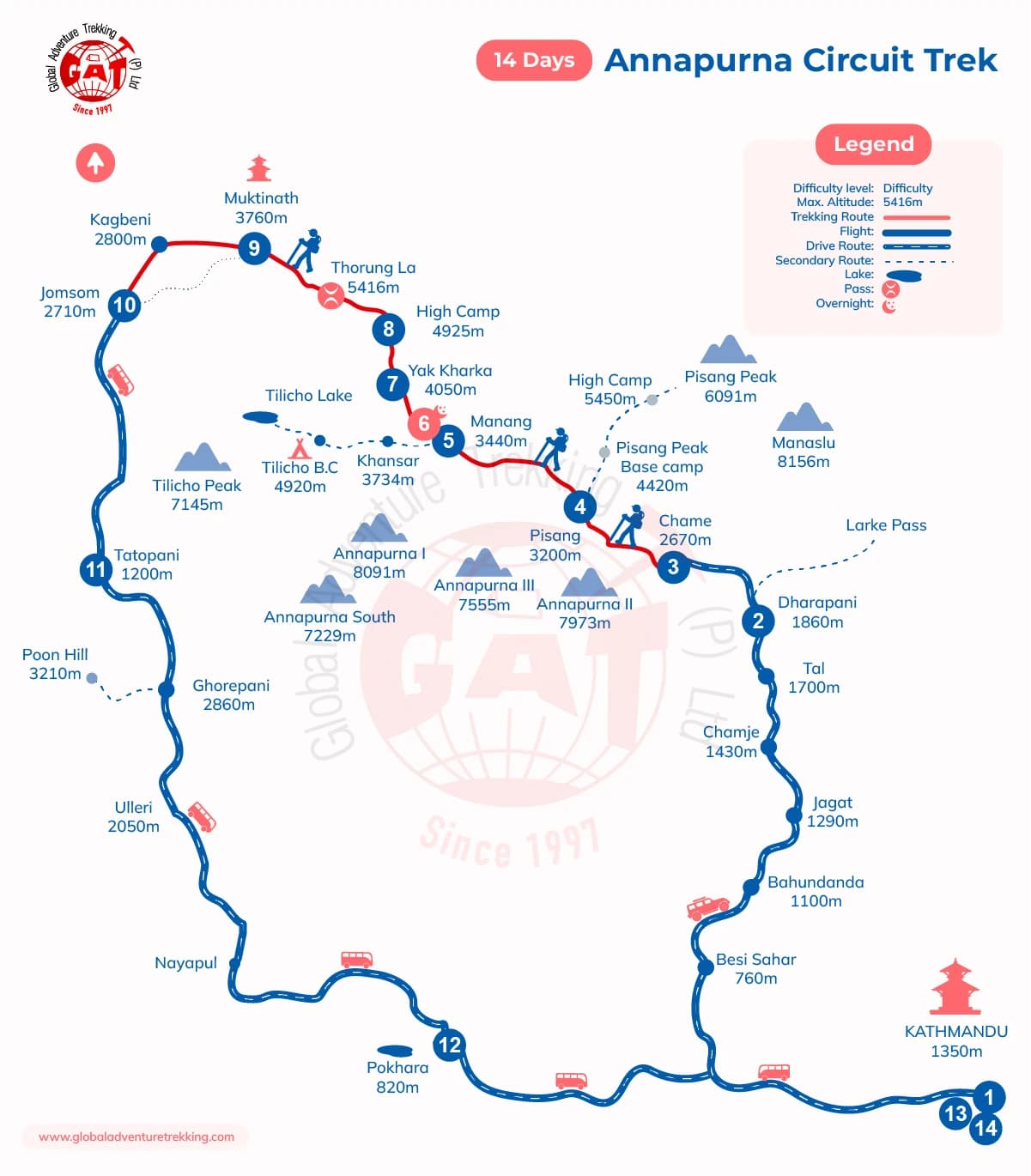
The Annapurna Circuit Trek is a complete 16-day trek around the Annapurna massif from Kathmandu through Dharapani, over the 5,416 m Thorong La Pass to Muktinath, Kagbeni, Marpha Village, Tatopani, and the Poon Hill sunrise viewpoint. Includes full acclimatization, permits, a guide, and comfortable teahouse accommodation. 

Trip Facts
Duration
16 Days
Trip Grade
Difficulty
Maximum Altitude
5,416 m./17,764 ft.
Group Size
1-12
Starts
Kathmandu
Ends
Kathmandu
Activities
Hiking and Trekking
Best Time
Autumn and Spring
Wishlist

Annapurna Circuit Trek: 16 Days at a Glance

  • Duration: 16 Days (Kathmandu to Kathmandu)
  • Highest Point: Thorong La Pass (5,416 m)
  • Difficulty: Moderate to Strenuous (Difficulty)
  • Accommodation: 3-star Hotel (in Kathmandu and Pokhara) and Teahouse/lodges (during the trek)
  • Meals: Full Board Meal (B, L, and D) during the trek
  • Best Season: March to May (Spring) and September to November (Autumn)
  • Maximum Walking Hours: 5 to 8 Hours
  • Trek Starting Point: Dharapani
  • Trek Ending Point: Ulleri
  • Trek Distance: Approx. 145 to 155 km
  • Transportation: Shared Jeep (Local Sumo Jeep) and Tourist Bus
  • Activity: Kathmandu Sightseeing, Teahouse Trekking, Mountain Sightings, and Cultural Tour
  • Permits: ACAP and TIMS Card

Annapurna Circuit Trek: 16 Days

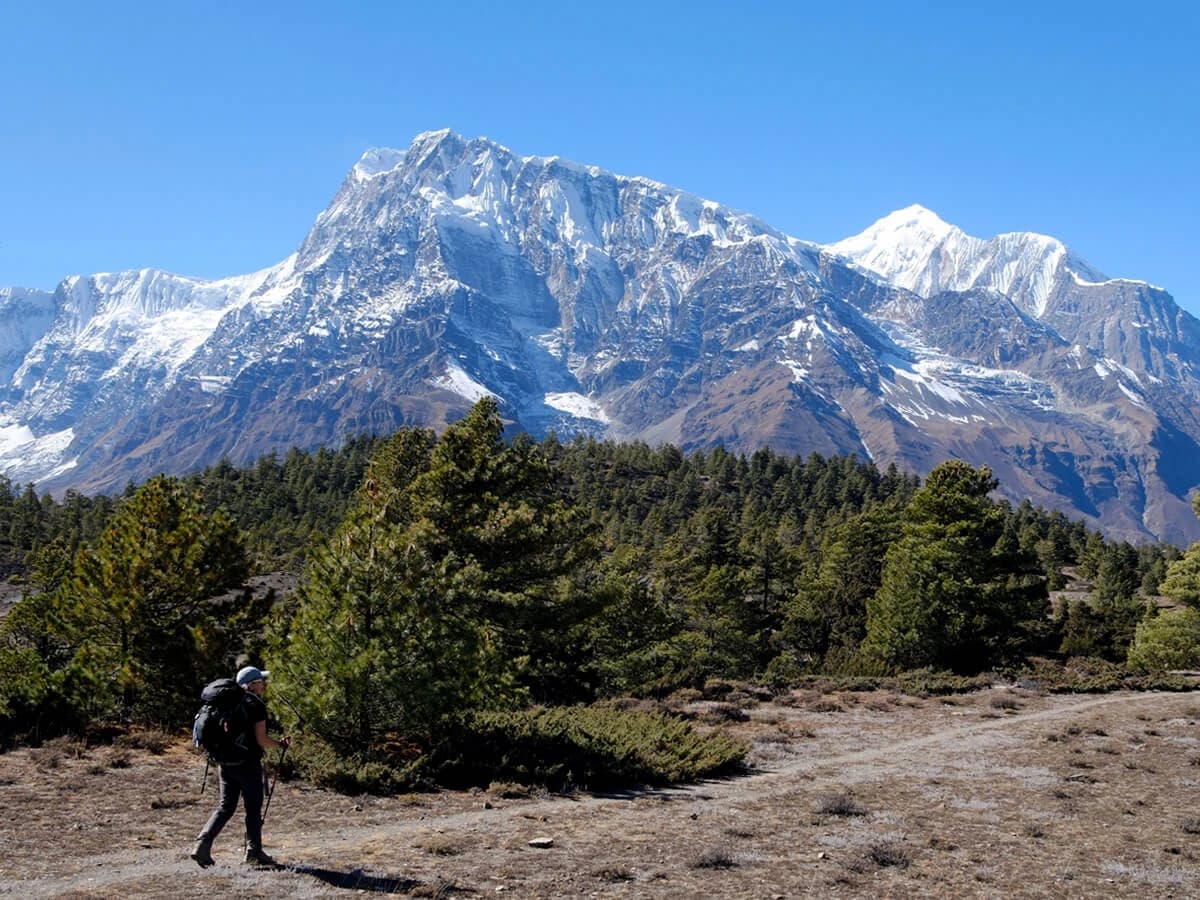
The Annapurna Circuit Trek is one of Nepal's most iconic trekking adventures, taking you through an extraordinary range of landscapes, cultures, and mountain scenery in a single journey. From lush river valleys and pine forests to alpine meadows, windswept high deserts, and the snow-covered Thorong La Pass (5,416 m / 17,769 ft).

The Annapurna Circuit Trek (16 days) is about the journey itself. As you follow the historic trading route through the Marshyangdi Valley, pass traditional villages like Chame, Pisang, and Manang, where Tibetan-influenced culture, ancient monasteries, prayer wheels, and warm tea houses reflect the region's rich heritage. 

A carefully planned 16-day Annapurna Circuit Trek Package, with an acclimatization day in Manang, allows your body to adapt to the altitude while giving time to explore nearby attractions such as Braga Monastery, Gangapurna Lake, or the stunning Ice Lake.

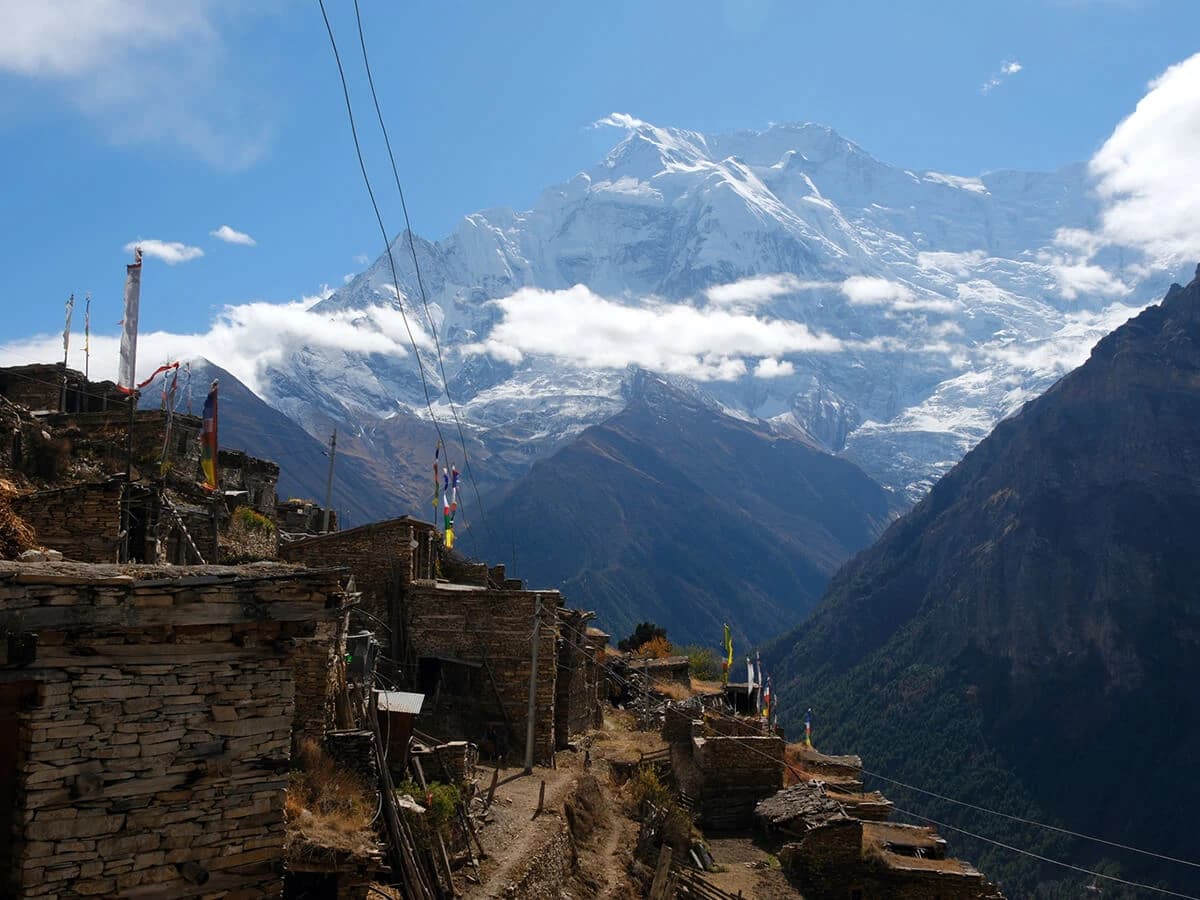
The highlight of the Thorong La Pass Trek is crossing the legendary Thorong La Pass (5,416 m) before descending into the unique landscapes of Lower Mustang. Here, you visit the sacred pilgrimage site of Muktinath, walk through the medieval village of Kagbeni, and spend a night in the charming apple-growing village of Marpha. 

Instead of ending the Annapurna Circuit Trek itinerary with a drive to Pokhara, this Annapurna trek route continues to Tatopani's natural hot springs and the gorgeous village of Ghorepani, where an early-morning hike to Poon Hill rewards you with one of Nepal's most spectacular Himalayan sunrises.

Throughout the Annapurna Circuit Trek 2026, spend most of the journey inside the Annapurna Conservation Area, Nepal's largest protected region and one of the country's richest biodiversity hotspots. Beyond its spectacular landscapes, the region is home to a fascinating blend of cultures. 

As you ascend according to the Annapurna Circuit Trek Route, you can experience a remarkable cultural transition, from the traditional Gurung, Magar, Brahmin, and Thakali villages of the lower hills to the Tibetan-influenced communities of Manang and Lower Mustang, where ancient monasteries, mani walls, prayer flags, and centuries-old Buddhist traditions continue to shape everyday life. 

The classic Annapurna Circuit Trek is best suited for trekkers with good physical fitness who want to experience Nepal's most complete trekking route with gradual altitude gain, comfortable teahouse accommodation, and a well-organized itinerary. It offers an achievable yet rewarding Himalayan adventure for both experienced hikers and enthusiastic first-time trekkers.

If you’re planning your first Himalayan adventure, our comprehensive Annapurna Circuit Trek Information guide explains the route, altitude, permits, weather, accommodation, and practical travel tips to help you prepare with confidence. Or if you're looking for quieter trails with less road walking and trekking with limited time, you can opt for the Short Annapurna Circuit Trek, which covers the route's major highlights in fewer days. 

Whether your goal is to conquer Thorong La Pass, discover authentic Himalayan culture, or witness the unforgettable sunrise from Ghorepani, Poon Hill, the Annapurna Circuit Trek 2026 and 2027, for around half a month, delivers an adventure that continues to inspire trekkers from around the world. Check Availability.

Highlights of Annapurna Circuit Trek

  • An ideal way to explore the geographically diverse and culturally rich Annapurna region is to cross the highest point on the Annapurna Circuit (5,416 m/17,769 ft) at Thorong La Pass (5,416 m/17,769 ft).
  • An opportunity to discover the tranquil villages and isolated communities and get a first-hand, authentic experience of the ancestral traditions of local people.
  • Experience diverse climatic zones, geography, vegetation, flora, fauna, and the lifestyles of people
  • Witness the cultural diversity from Hindu villages dominated by Gurung, Magar, Thakali, and Brahmin in the lower elevations to Tibetan cultural villages in northern Manang Valley and lower Mustang
  • Escape the daily grind and get a new perspective on life in the Himalayas, and the way of life of Nepalese mountain communities, and be appreciative of the varied cultures and multilayered history of mankind
  • Experience the diverse landscapes of the Annapurna Conservation Area, from lush green forests to alpine deserts.
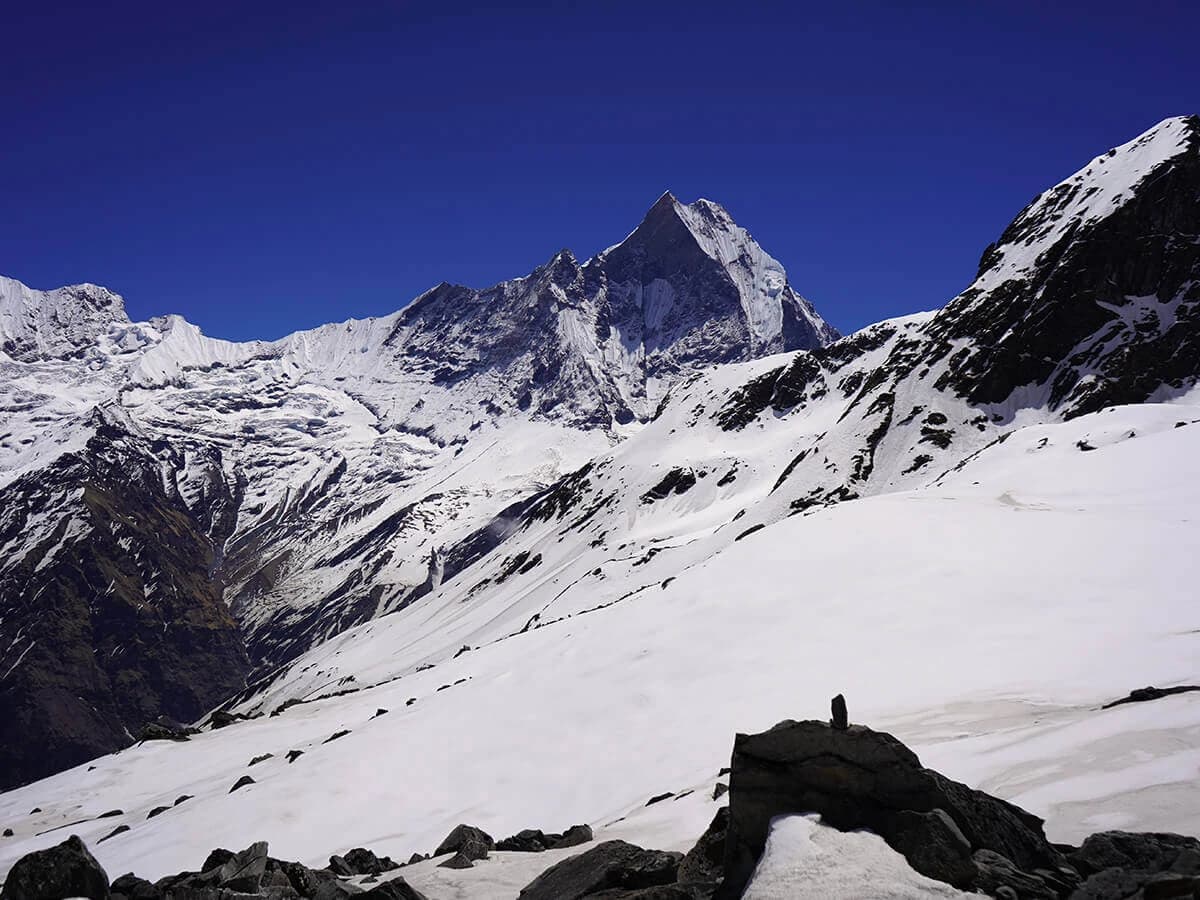
  • Enjoy breathtaking views of Annapurna I-IV, Dhaulagiri (8,167 m/26,795 ft.), Manaslu (8,163 m/26,781 ft.), Machhapuchhre (Fishtail) (6,993 m/22,943 ft.), Gangapurna (7,455 m/24,459 ft.), Nilgiri (7,061 m/23,166 ft.), and other Himalayan peaks.
  • Acclimatize in the magnificent mountain village of Manang, with optional hikes to Gangapurna Lake, Braga Monastery, or Ice Lake.
  • Visit the sacred Muktinath Temple and explore the historic villages of Kagbeni and Marpha.
  • Enjoy the natural hot springs at Tatopani before continuing through rhododendron forests to Ghorepani.
  • Witness a spectacular Himalayan sunrise from Poon Hill (3,210 m / 10,531 ft).
  • Complete the full traditional route instead of ending at Muktinath, making the journey more rewarding and diverse.

Spots fill quickly in the peak spring and autumn seasons. Secure your place on the 16-day Annapurna Circuit trek route. Contact us now!

Why Choose the 16-Day Annapurna Circuit Trekking?

The 16-day Annapurna Circuit Trekking package is designed for travelers who want to experience Nepal's most celebrated trekking route in its entirety. From the tranquil valleys of the Marshyangdi River to the dramatic landscapes of Lower Mustang and the panoramic sunrise from Poon Hill, this itinerary combines breathtaking scenery, authentic Himalayan culture, and a well-paced trekking routine. Here's what makes this route stand out:

Complete the Entire Circuit

Many modern itineraries finish at Muktinath or Jomsom, where trekkers board a jeep to Pokhara from Ulleri. This route keeps walking. After crossing Thorong La Pass, you'll continue through the medieval-style village of Kagbeni, the apple orchards of Marpha, the soothing hot springs of Tatopani, and the rhododendron forests leading to Ghorepani. The final sunrise from Ghorepani, Poon Hill, provides a fitting conclusion to the greatest mountain trekking adventures in Nepal.

Cross the World's Highest Trekking Pass (Thorong La Pass)

Reaching Thorong La Pass (5,416 m) is a milestone for many Himalayan trekkers. The steady ascent rewards you with spectacular views stretching across the Annapurna and Dhaulagiri ranges before the trail descends into the rugged, wind-carved landscapes of Lower Mustang.

Discover the World's Deepest Kali Gandaki Gorge

As the trail descends from Muktinath toward Tatopani, you'll follow the ancient Kali Gandaki Valley between the towering peaks of Dhaulagiri (8,167 m) and Annapurna I (8,091 m). This remarkable river corridor is widely recognized as the world's deepest gorge, carved over millions of years by the sacred Kali Gandaki River and surrounded by some of the highest mountains on Earth.

Walk Through the Tibetan Plateau-Like Landscapes of Lower Mustang

After crossing Thorong La Pass, the scenery changes dramatically. Dense forests give way to wide, windswept valleys, colorful cliffs, and rugged mountain terrain that closely resembles the Tibetan Plateau. This striking transition is one of the Annapurna Circuit's most distinctive features, offering a completely different trekking experience from the green hills of central Nepal.

Experience the Rich Cultures of the Annapurna Region

The Annapurna Circuit trail passes through charming villages where different cultures have flourished for centuries. Lower elevations are home to Gurung, Magar, Brahmin, and Thakali communities, while Manang and Lower Mustang reflect a strong Tibetan Buddhist heritage. Ancient monasteries, prayer wheels, mani walls, and warm local hospitality add a meaningful cultural dimension to every day on the trail. 

Stay in Welcoming Traditional Mountain Teahouses 

Each evening ends in family-regulated tea houses that offer a warm meal, a comfortable bed, and a chance to connect with fellow trekkers. While facilities become more basic at higher elevations, the genuine hospitality of mountain hosts is often one of the most memorable parts of the adventure.

Trek with Local Himalayan Experts

Our experienced, licensed trekking guides know these NATT trails inside and out. Beyond leading the route, they monitor your well-being, share local history and traditions, and ensure the trek progresses at a safe, comfortable pace. Their knowledge allows you to focus on enjoying the mountains with confidence.

What to Expect on the classic Annapurna Circuit Trek 

The classic Annapurna Circuit Trek, over sixteen days, offers far more than reaching a mountain pass. Over two weeks, you're traveling through one of the world's most geographically and culturally diverse trekking regions, the Annapurna Region, where every day brings new landscapes, traditions, and experiences. From lush river valleys and rhododendron forests to alpine pastures, high mountain deserts, and the snow-covered Thorong La Pass (5,416 m), the scenery changes drastically as you gain elevation. Along the way, you'll also experience the warm hospitality of Nepal's mountain communities, making this Annapurna Circuit Trek with Ghorepani and Poon Hill Trek as culturally rewarding as it is physically challenging.

Experience Nepal's Diverse Landscapes

The most remarkable feature of the Annapurna Circuit is its incredible geographical diversity. Within a relatively short distance, you can travel from subtropical forests and terraced farmland to rugged alpine terrain and the dry, windswept landscapes of Lower Mustang. The Annapurna Circuit Trek Route Map passes through deep river valleys, waterfalls, pine forests, rocky cliffs, glacial streams, and high mountain passes, offering a constantly changing backdrop throughout the journey.

Witness a Remarkable Change in Climate

The Annapurna Circuit Trek from Kathmandu spans a wide range of elevations, from around 1,860 meters in Dharapani to 5,416 meters at Thorong La Pass. As you climb higher, temperatures gradually decrease, and the vegetation changes accordingly. Warm, green valleys give way to snowy meadows and eventually to the stark beauty of the Himalayan highlands, where snow-capped peaks dominate the skyline. This dramatic transition is one of the reasons the Annapurna Circuit remains one of Nepal's most fascinating trekking routes.

Discover the Rich Biodiversity of the Annapurna Conservation Area

Most of the trail lies within the Annapurna Conservation Area, Nepal's largest protected area. The region supports an impressive variety of plant and animal life thanks to its changing climates and elevations. Lower sections are filled with rhododendron, oak, pine, bamboo, and maple forests, while higher elevations feature alpine shrubs and hardy mountain vegetation. With a little luck, trekkers may also spot wildlife such as Himalayan thar, blue sheep, musk deer, Himalayan monals, and, in remote areas, even the elusive snow leopard during this Himalayan trekking adventure.

Experience the Culture of the Himalayas

The classic Annapurna Circuit is also a journey through Nepal's diverse ethnic heritage. In the lower hills, you’re passing through villages inhabited by Gurung, Magar, Brahmin, and Thakali communities, each known for their unique traditions and welcoming hospitality. As the trail climbs into Manang and Lower Mustang, Tibetan Buddhist culture becomes increasingly prominent. Ancient monasteries, mani walls, prayer wheels, chortens, and colorful prayer flags reflect centuries of Himalayan tradition, creating a cultural trekking experience that is just as memorable as the mountain scenery.

Challenge Yourself and Celebrate the Achievement

Crossing Thorong La Pass is both a physical and mental accomplishment in teahouse trekking in Nepal. The steady ascent, high altitude, and changing terrain require determination, but every step is rewarded with extraordinary mountain views and a deep sense of achievement. Reaching the summit before descending to the sacred temple of Muktinath is a moment that many trekkers remember as the highlight of their Himalayan adventure.

Typical Day on the Annapurna Circuit Trek, Nepal 

Each day’s destinations and landscapes change on the Annapurna Circuit Trek, Nepal. The typical day on the teahouse trek follows a comfortable pattern. 

Morning: Morning starts early, usually between 6:00 am and 7:00 am, with a warm cup of tea or coffee at your mountain teahouse, followed by a delicious breakfast, porridge, eggs, Tibetan bread, or pancakes, along with tea, coffee, or hot lemon. After breakfast, your guide will brief the group on the day's route, walking time, and any points of interest along the way.

Trekking Starting: Trekking typically begins by 7:30 or 8:00 AM, when the trails are cool and the mountain views are at their clearest. Most days involve 5 to 7 hours of walking, broken up with short rest stops to catch your breath, take photos, or simply enjoy the scenery. Around midday, the group usually stops at a teahouse along the trail for a lunch break, giving trekkers time to refuel before continuing for the best teahouse trek in Nepal.

Afternoon: By early-to-mid-afternoon, you'll arrive at your overnight teahouse or lodge, with enough daylight left to rest, explore the village, or simply sit back with a hot drink while your muscles recover. Many teahouses offer basic hot showers (sometimes at an extra cost) and charging facilities, especially at lower elevations.

Evening: As evening sets in, the group gathers for dinner, usually a hearty Nepali or Western meal at around 7:00 to 8:00 pm, in the shared dining hall, which becomes the heart of teahouse life. This is often the best part of the day, trading stories with other fellow trekkers, learning about the region from your guide, and watching the dining hall's wood stove crackle. Your guide will also brief you on the next day's plan before you retire for the night.

Note: Days involving high-altitude crossings, such as Thorong La Pass, start much earlier, often between 4:00 and 5:00 AM, to take advantage of calmer weather and safer trail conditions before winds pick up later in the day. 

Annapurna Circuit Trek Cost 

Our Annapurna Circuit Trek pricing is based on the number of participants. The larger the group, the lower the cost per person. Private departures, family trips, and customized itineraries are available upon request. 

Annapurna Circuit Trek Cost: 2026/2027

Group Size

Price/person

1 Person (Private trek) USD 1,099
2 to 5 Trekkers USD 986
6 to 12 Trekkers USD 953

Note: We also organize private departures, family holidays, student groups, and customized trekking itineraries. Please contact us for a personalized quotation if your group size falls outside the options above or if you would like to tailor the itinerary. 

Traveling solo, with a family, or with a larger group? Contact GAT for a personalized price based on your group size and dates. Get a Custom Quote!

Annapurna Circuit Trek: 16 Days Itinerary Outline

  • Day 01: Arrival in Kathmandu and Transfer to Hotel 1,400 m./4,593 ft./30 min. drive
  • Day 02: Kathmandu Valley Sightseeing and Trek Brifing at Evening
  • Day 03: Drive from Kathmandu to Dharapani via Besisahar: 207 km 1860 m./6,100 ft. (172 km to Besisahar and 35 km to Dharapani)5-6
  • Day 04: Trek from Dharapani to Chame (16 km.)2,700 m./8,856 ft/5-6 hrs
  • Day 05: Trek from Chame to Pisang (13 km.) 3,200 m./10,496 ft./5 hrs
  • Day 06: Trek from Pisang to Manang (17 km.) 3,519 m./11,545 ft/ 5-6 hrs
  • Day 07: Acclimatization Day at Manang Opt. Hike to Ice Lake or Gangapurna Lake
  • Day 08: Trek from Manang to Yak Kharka (10 km.) 4,050 m,/13,284 ft./4-5 hrs
  • Day 09: Trek from Yak Kharka to Phedi/High Camp via Ledar (8 km.)4,927 m./16,154 ft./5-6 hrs
  • Day 10: Cross Thorong La Pass (5,416 m./ 17,767 ft.) and Trek to Muktinath (15 km.) 3,760 m./12,336 ft./7-8 hrs
  • Day 11: Trek from Muktinath to Marpha via Kagbeni (25 km.) 2,670 m./8,760 ft./5-6 hrs
  • Day 12: Trek from Marpha to Ghasa and Drive to Tatopani (20 km.) 1,190 m./3,904 ft./5-6 hrs
  • Day 13: Trek from Tatopani to Ghorepani (Poon Hill) (17 km.) 2,850 m./9,350 ft./7-8 hrs
  • Day 14: Poon Hill Sunrise Hike, (3,210 m./10,531 ft.) Trek to Ulleri, and Drive to Pokhara
  • Day 15: Tourist Bus Drive from Pokhara to Kathmandu (200 km.) 5-6 hrs
  • Day 16: Final Departure for onwards journey
Annapurna Circuit Trek

Annapurna Circuit Trek: 16 Days Itinerary

Your Annapurna Circuit Trek itinerary (16 days) starts the moment you land at Tribhuvan International Airport (TIA), where a Global Adventure Trekking (GAT) representative will greet you and transfer you to your hotel in Thamel, Kathmandu. 

Note: If you do not see our GAT airport representative holding a sign with your name upon arrival at the terminal, please contact us immediately at +977 9841527668. Our team is available 24/7 and will assist you as quickly as possible.

Depending on your arrival time, you'll have the rest of the day to settle in, rest after your flight, or take a short walk through Thamel. In the evening, your trek leader will meet you for a welcome briefing to introduce the itinerary and answer any last questions before the adventure in the Annapurna Region begins.

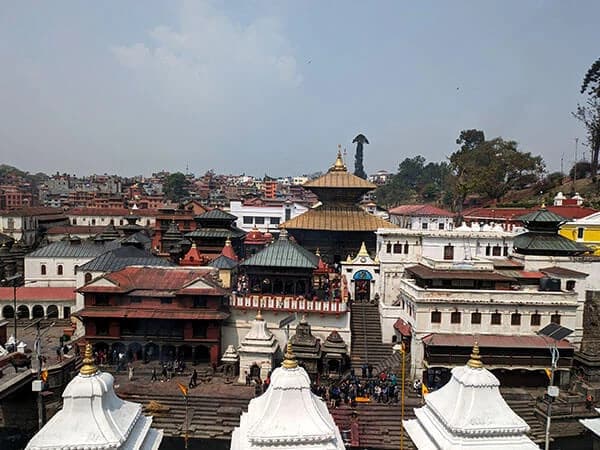
Spend the second day in Nepal by exploring Kathmandu's UNESCO World Heritage Sites (Kathmandu Day Tour) with a licensed city tour guide: the sacred Hindu temple of Pashupatinath, the ancient stupa of Boudhanath, the hilltop Swayambhunath (Monkey Temple), and the historic Kathmandu Durbar Square. 

Today is also your final day to rent or buy any remaining trekking gear in Thamel and complete your permit paperwork for your Annapurna Trek. Your GAT guide will do a final equipment check and route briefing in the evening ahead of tomorrow's drive to Dharapani.

On your 3rd day, start an early-morning drive from Kathmandu Valley along the scenic Prithvi Highway to Besisahar (172 km), the traditional gateway to the Annapurna Circuit Trek. The road from Kathmandu to Besisahar is well-paved and offers a comfortable drive through scenic countryside. From Besisahar, continue by shared jeep through the picturesque Marsyangdi River Valley, passing by terraced hillsides, waterfalls, and traditional Gurung villages on a rugged mountain road before reaching Dharapani (35 km). Dharapani is the official starting point and an important junction connecting the Annapurna Circuit Trek and Manaslu Circuit Trek. 

Expect a long but spectacular drive with your first close-up views of the Manaslu and Annapurna ranges. 

Today marks your first day of trekking on the Annapurna Circuit. Leaving Dharapani behind, follow the scenic trail along the Marsyangdi River Gorge through thick pine and fir forests, crossing ancient Gurung and Manangi villages. 

After crossing the Marsyangdi River Gorge, the trail climbs steeply to Timang, where you’re rewarded with your first breathless views of Annapurna II (7,937 m) and Lamjung Himal (6,983 m). Beyond Timang, the path becomes more gradual as the dense forests give way to drier alpine landscapes. 

By afternoon, arrive at Chame, the administrative headquarters of the Manang District and the largest settlement since Besisahar. Next is to rest at your comfortable guest house and have a warm dinner. 

Leaving behind Chame, the Annapurna trek enters a beautiful stretch of pine and juniper forest before reaching the Paungda Danda (a massive curved rock face) that is considered sacred by local Buddhists. 

As the trail follows the upper Marsyangdi River Valley, the landscape gradually changes, with lush woodlands and open terrain of the Annapurna rain shadow region. Crossing suspension-style bridges and passing small settlements, you will eventually arrive at Pisang, which is divided into Upper Pisang and Lower Pisang. 

Enjoy your first truly panoramic Himalayan views, including Annapurna II (7,937 m), Annapurna III (7,555 m), Annapurna IV (7,525 m), and other glacier-capped peaks that dominate the Manang Valley.

Today's Annapurna Circuit Trek itinerary follows the northern trail through Upper Pisang and Ghyaru, a rewarding route known for its outstanding Himalayan valleys.

As you gain elevation, the landscape becomes increasingly arid, with juniper shrubs replacing dense forests and yak pastures dotting the hillsides.

Along the way, you may see local herders tending their Tibetan yaks, an iconic sight in the high Himalayas. A friendly tip from the locals: Tibetan yaks are said to be curious about bright red clothing, so it may be wise to choose your trekking gear accordingly.

Today is an important acclimatization day in Manang, allowing your body to adjust to the increasing altitude before you proceed toward Thorong La Pass. Rather than taking a complete rest, you can hike to a higher elevation during the day and return to Manang (3,519 m) to spend the night by following the “climb high, sleep low” principle. 

Your guide will also explain the symptoms of altitude sickness and share essential tips for staying healthy at higher elevations. If possible, attend the afternoon briefing at the Himalayan Rescue Association (HRA) clinic, where medical experts provide valuable information on altitude awareness and prevention.

Manang, the largest settlement in the valley, is home to around 500 traditional stone houses. Depending on your fitness level and interests, you can choose one of the following acclimatization hikes:

  • Praken Gompa (3,945 m): An uphill (1 to 2 hours) hike to a cliffside monastery, where a local monk offers blessings for a safe crossing of Thorong La Pass.
  • Gangapurna Lake and Viewpoint: An easy walk to the glacial-fed lake, with the option to continue to a higher viewpoint for panoramic views of the Manang Valley.
  • Ice Lake (4,620 m): A challenging 5-6-hour round-trip hike recommended only for trekkers who are well acclimatized and feeling strong.
  • Braga Monastery: A short walk to one of the oldest monasteries in the region.

Note: This itinerary can be customized to include an optional Tilicho Lake side trip. Beginning from Manang, the 3-to-4-day extension visits the spectacular Tilicho Lake (4,919 m) before rejoining the main trail en route to Thorong La Pass. Please let us know before booking if you would like to include this extension.

Leaving Manang behind, the Annapurna Circuit trail gradually ascends into the rugged high-altitude wilderness, where the last of the forests disappears, and the open alpine terrain begins. Although today's trek is shorter than previous days, the increasing elevation calls for a slow and steady pace to support proper acclimatization. 

Following the Jarsang Khola Valley, you may spot blue sheep grazing on the rocky hillsides before arriving at Yak Kharka, a peaceful settlement surrounded by highland meadows, traditional yak grazing pastures, and cozy teahouses on the Annapurna Circuit expedition. This quiet stop offers another opportunity to adjust to the altitude before moving forward toward Thorong La Pass.

Today's journey is short but challenging as the high-altitude trail climbs above 4,900 meters toward High Camp, the final overnight stop before crossing Thorong La Pass. 

Arriving at High Camp via Ledar by early afternoon gives you ample time to rest, hydrate, and prepare for tomorrow's rewarding crossing of Nepal's highest trekking pass.

Note: You can make the decision, once you reached at the Throng Phedi, whether you go further up to High Camp or spend the night at Phedi

Get ready for the last leg of this Himalayan tour and make sure to wake up early; you’ll be departing right at the crack of dawn. You will start your day between 4:00 and 5:00 AM while making your way towards the Thorong La Pass (5,416 m). As the sun rises on the horizon, enjoy the view of the prayer flags that symbolize the Tibetan Buddhist culture at the top of the pass. Here, you can witness the marvelous 360-degree view of the Annapurna range in the distance as well as the Damodar Himal. 

After basking in the beauty of the surroundings at Thorong La, you will have an almost 1,600-meter descent into the valley below towards Muktinath. It is considered to be one of the holiest places in Nepal for Hindus and Buddhists. This sacred village is home to an eternal flame, 108 holy water spouts, and an ancient temple complex. Muktinath (3,760m) provides a memorable end to a challenging Himalayan trek but will surely fill you with immense satisfaction.

Note: Trekkers with limited time can end their trek at Muktinath and travel by shared or private jeep to Pokhara via Jomsom and Beni. The overland journey typically takes 8 to 9 hours, depending on road and weather conditions. GAT can customize your travel as per your needs. Contact us for the full details. 

Today, you will trek from Muktinath down to the lower hills of the Mustang region. Along the way, pass through the traditional villages of Jharkot and Khingar before arriving at Kagbeni. Nestled above the Kali Gandaki Gorge, Kagbeni is an ancient walled-in village on the border of the restricted Upper Mustang region. From Kagbeni, trek south along the gorge to Marpha, a Thakali village perched on a rocky outcrop along the banks of the Kali Gandaki River.

The trail takes you through the narrow gorges of the Kali Gandaki River, which carved its way between the towering peaks of Annapurna and Dhaulagiri. This deep gorge is known to be the deepest river gorge in the world. You'll pass through the village of Jomsom on your way to Marpha.

Marpha is a smaller version of the walled-in villages found in Upper Mustang. Surrounded by terraced fields and orchards of apple trees, this village is famous for its local brandy made from the region's apples. If time permits, you could spend a couple of hours here visiting the local monastery or tasting the local apple products such as fresh-squeezed juice, apple cider, dried apples, and the very popular apple brandy that the locals are proud to share with you.

Note: If you're short on time, you can continue to Jomsom and take a scenic 20-to-25-minute domestic flight to Pokhara instead of trekking further. As flights operate only in the early morning and are weather-dependent, we recommend allowing a buffer day in your travel plans. Please inform GAT in advance to book an early flight. 

Today’s trek follows the Kali Gandaki River through the heart of the Lower Mustang region after leaving the lovely village of Marpha. Besides the traditional Thakali villages of Tukuche, Larjung, Kalopani, and Ghasa, you can see apple orchards and farms, as well as the river that runs through the world’s deepest gorge (formed between the Annapurna and Dhaulagiri massifs). 

On the trail down, there is a great contrast to the semi-arid Mustang landscape as we walk through forests made up of subtropical vegetation, terraced hillsides, and fields of crops from Marpha to Ghasa. Part of the trail passes over spectacular suspension bridges, and you will also see one of Nepal’s most spectacular waterfalls, the Rupse Chhahara Falls. After lunch break, your trek ends with a beautiful and comfortable drive by jeep or bus to Tatopani. 

Note: Trekkers who wish to drive from Marpha to Tatopani directly without trekking experience can do so, but we suggest trekking experience can be more rewarding than driving due to comfortable terrain.

After arriving exhausted in the village of Tatopani at the end of the day (in Nepali, it means hot water) with its hot springs, where most hikers recover from their trek over the Thorong La pass. Enjoy a well-deserved massage at the hot springs before your next destination, the trek to Ghorepani begins the next morning

On day 13 of the ACT, you’ll have one of the longest walks with an ascent of almost 1,700 meters from leaving the beautiful Tatopani village. We follow the contours of the valley and walk through terraced fields and local villages like Ghara, Shikha, Chitre, and many more until we enter the forest of rhododendron, oak, and magnolia. During the springtime, the forests of rhododendron are especially beautiful because of their flowers. Spot some Himalayan animals and enjoy the view of the mountains while walking through these scenic woods. 

Onward, we also have great views of the Annapurna South, Hiunchuli, Dhaulagiri, and Nilgiri mountain ranges. Mostly following the NATT (New Annapurna Trekking Trail), we try to keep our trails as far as possible from the roads and follow routes that are safe for the local villages.

On the same day, around late afternoon, we will be arriving at the mountain village of Ghorepani (2850 m). Ghorepani is one of the most popular places to stay while trekking in the Annapurna region. The area is very mesmerizing, and because it is the main trailhead for visiting Poon Hill to see the sunrise over the Himalayas, it has become one of the most visited villages in Nepal. Get some rest after a long day of trekking and recharge yourself with a good sleep. 

Note: If you prefer to skip today's challenging ascent, you can choose a shared or private jeep from Tatopani to Ghorepani for an additional cost. Please let us know in advance if you'd like to include this optional service. 

Rise early for a short hike to Poon Hill (3210 m), one of the most popular viewpoints around the Annapurna region. After hiking for about 45 to 60 minutes, you’ll be offered a magnificent view of sunrise over the Annapurna peaks, including Annapurna I, Annapurna South, Dhaulagiri, Machhapuchhre (Fishtail), Nilgiri, and Hiunchuli. A beautiful sight of golden light falling on the white snow caps of the mountain peaks awaits you to enjoy and conclude your hiking.

Return to Ghorepani for breakfast, then take a short walk down to Ulleri through exquisite rhododendron and oak forests. Walk around the village of Ulleri, the last glimpse of traditional Nepalese village life in the Annapurna Conservancy. A shared jeep (local sumo jeep) will be waiting for you to drop you back to Pokhara through gorgeous mountain roads, rivers, and villages. 

Upon arrival in Pokhara, check in at your hotel and enjoy the evening leisurely in the city by visiting the Lakeside area or relaxing at the side of Phewa Lake. If your schedule allows, you may also experience the Annapurna Base Camp Helicopter Tour, a spectacular aerial journey into the Annapurna Sanctuary that offers a completely different perspective of mountains you’ve spent the past two weeks trekking through.   

After breakfast, leave Pokhara and head to Kathmandu by tourist bus. The drive along the Prithvi Highway will take you through the Trishuli River Valley and past charming villages and farms, offering beautiful scenery. 

Note: You can choose to do this excursion by private car/vehicle or aircraft at an extra cost. The domestic flight takes around 25 to 30 minutes to reach Kathmandu and offers spectacular views over the Himalayas.

After arriving in Kathmandu, transfer to your designated hotel and then spend the rest of the day at leisure. In the evening, join your guide and trekking crew for a celebratory farewell dinner. It will be a wonderful opportunity to appreciate the fantastic views and unique experiences of your trip and share thoughts and impressions in the company of new friends.

Note: If you'd like to extend your holiday in Nepal or unwind after your Himalayan trek, consider adding a 2-night, 3-day Chitwan Jungle Safari Tour to experience the country's rich wildlife and Tharu culture.  

Depending on your international flight schedule, a Global Adventure Trekking (GAT) representative will transfer you to Tribhuvan International Airport (TIA) for your onward journey. As you trek on the Annapurna Circuit Trek, you will leave Nepal with great memories of crossing the Thorong La Pass, discovering traditional Himalayan villages, and experiencing the kindness of the local people and the majesty of the mountains.

We thank you for choosing Global Adventure Trekking (GAT) and hope that your experiences and the friendships gained during your trip will encourage you to return to Nepal for another adventure. We wish you a safe journey home and look forward to seeing you again in the Himalayas.

Annapurna Circuit Trek: 16 Days Cost Details

Includes

Transportation:

  • Airport pick-up and drop-off in Kathmandu by private tourist vehicle.
  • Tourist bus transfer from Kathmandu to Besishahar.
  • Local shared jeep from Besishahar to Dharapani.
  • Local jeep or bus from Marpha to Tatopani.
  • Local jeep or bus from Tatopani to Pokhara.
  • Tourist bus transfer from Pokhara to Kathmandu.

Accommodation
Kathmandu

  • Two nights of twin-sharing accommodation in a comfortable tourist-standard hotel, including daily breakfast.
  • Pokhara
  • One night of twin-sharing accommodation in a comfortable tourist-standard hotel, including daily breakfast.
  • During the Trek
  • Ten nights of twin-sharing accommodation in the best available teahouses or mountain lodges along the trekking route. Rooms are clean and comfortable with basic facilities, and shared bathrooms are available in most locations.

Meals:

  • Daily breakfast during your hotel stays in Kathmandu and Pokhara.
  • Three freshly prepared meals each day during the trek (breakfast, lunch, and dinner).
  • Tea or coffee served with breakfast during the trek.
  • Seasonal fresh fruits after dinner on selected trekking days.

Trekking Permits & Entry Fees

  • Annapurna Conservation Area Permit (ACAP).
  • Trekkers' Information Management System (TIMS) Card.
  • All required government permit fees and administrative processing charges.

Professional Trekking Team

  • Experienced, government-licensed, English-speaking trekking guide from Global Adventure Trekking.
  • Friendly, reliable, and experienced local porter(s) (as per the package and group size).
  • Guide and porter salaries, meals, accommodation, transportation, insurance, and all related expenses.
  • Comprehensive insurance coverage for all Nepalese trekking staff.

Safety & Support

  • Government-authorized rescue coordination in case of emergencies.
  • Comprehensive first-aid kit carried by your trekking guide.
  • Daily health and altitude monitoring using a pulse oximeter by your experienced guide.
  • 24/7 support from the Global Adventure Trekking operations team throughout your journey.

Trekking Equipment:

  • Complimentary company duffel bag for use during the trek (returnable after the trek).
  • Sleeping bag available upon request (returnable after the trek).
  • Complimentary Global Adventure Trekking T-shirt.

Taxes & Service Charges

  • All applicable government taxes.
  • 13% Value Added Tax (VAT).
  • Company service charges.

Special Extras

  • Warm welcome and airport assistance upon your arrival in Kathmandu.
  • Seasonal fresh fruits during the trek.
  • Trek Completion Certificate to commemorate your successful journey.
  • Farewell dinner at a traditional Nepalese restaurant in Kathmandu after the trek.

Excludes

Travel Documents:

Nepal entry visa fee. A Nepal tourist visa can be obtained upon arrival at Tribhuvan International Airport in Kathmandu. The current visa fees are:

  • USD 30 for 15 days
  • USD 50 for 30 days
  • USD 125 for 90 days

Flights:

  • International airfare to and from Nepal.
  • Any domestic flight upgrades or additional transportation not specified in the itinerary.

Accommodation & Meals:

  • Extra nights of accommodation in Kathmandu due to early arrival, late departure, early return from the trek, flight delays, or any other unforeseen circumstances.
  • Lunch and dinner in Kathmandu (except for the farewell dinner included in the package).
  • Meals in Kathmandu or Pokhara in the event of an early return from the trek.

Trekking Services:

  • Porter service (available upon request at an additional cost if not included in your package).
  • Insurance
  • Comprehensive travel insurance (mandatory).
  • Emergency medical expenses, helicopter rescue, evacuation, trip cancellation, or other insurance-related costs.

Personal Expenses:

  • Personal spending, including snacks, soft drinks, alcoholic beverages, bottled or boiled drinking water, hot showers, Wi-Fi, battery charging, laundry, telephone calls, and souvenirs.
  • Personal trekking equipment and clothing.

Tips:

  • Gratuities and tips for your trekking guide, porter(s), and driver(s). Tipping is customary in Nepal and is greatly appreciated for good service.

Add-ons & Options

Customize your Annapurna Circuit Trek with the following optional services for added comfort, convenience, and flexibility.

Porter Service

Travel light and enjoy your trek while a professional porter carries your duffel bag (up to 20 kg, shared between two trekkers).

Porter Service: USD 22 per trek day (one porter shared between two trekkers)

Hotel Upgrades

Upgrade your stay in Kathmandu or Pokhara with a comfortable 4-star or 5-star luxury hotel before or after your trek.

Note: Hotel upgrade rates vary depending on the property, room category, travel season, and availability. Please contact us for the latest pricing.

Private Jeep Upgrades

Enjoy greater comfort with a private jeep transfer on selected sections of the journey.

Note: Private jeep rates are subject to the route, group size, and seasonal availability. Please contact us for a customized quotation.

Pokhara to Kathmandu Flight

Upgrade your return journey with a scenic domestic flight from Pokhara to Kathmandu and enjoy impressive aerial views of the Annapurna and Langtang ranges.

Note: Airfares vary depending on the airline, travel date, and seat availability. Please contact us for the latest fare.

Single Supplement

Enjoy additional privacy by booking a single room in Kathmandu and Pokhara before or after your trek.

Single supplement charges vary depending on the hotel category and room availability. Please contact us for current rates.

Pokhara Adventure 

Extend your stay in Pokhara and experience some of the city's most popular attractions before returning to Kathmandu. Choose from paragliding above Phewa Lake, a relaxing boat ride on Phewa Lake, or an early morning Sarangkot sunrise hike for astonishing views of the Annapurna and Dhaulagiri ranges. 

This optional extension is perfect for travelers who want to combine their trekking adventure with a taste of Pokhara's outdoor activities and lakeside charm.

Dates & Availability

Select your preferred date

Aug 2026
Sep 2026
Oct 2026
Nov 2026
Dec 2026
August Departure Date(s)
Starts
Aug 03, 2026
Ends
Aug 18, 2026
Status
Guaranteed
Price
US$953US$1199
Starts
Aug 09, 2026
Ends
Aug 24, 2026
Status
Guaranteed
Price
US$953US$1199
Starts
Aug 19, 2026
Ends
Sep 03, 2026
Status
Guaranteed
Price
US$953US$1199
Starts
Aug 30, 2026
Ends
Sep 14, 2026
Status
Guaranteed
Price
US$953US$1199

Essential Information

Permits required for the Annapurna Circuit Trek 

The Annapurna Circuit Trek permits are two major official permits to enter the Annapurna Conservation Area. Both permits are mandatory for the ACT, and they are

ACAP (Annapurna Conservation Area Permit)  

The ACAP is required for trekking in the Annapurna Conservation Area, which is the largest conservation area in Nepal. The permit supports conservation projects, trail maintenance, wildlife protection, and sustainable tourism initiatives that benefit local communities throughout the Annapurna region. 

TIMS (Trekkers’ Information Management System)

The TIMS Card is used to record trekkers’ details and trekking routes, helping improve safety and coordination in the event of emergencies or natural calamities. Your trekking guide will carry the necessary documents all along the Annapurna journey. 

Annapurna Circuit Trek Permit Costs (2026/2027)

Permit

Foreign Nationals

SAARC Nationals

Annapurna Conservation Area Permit (ACAP)

NPR 3,000

NPR 1,000

Trekkers’ Information Management System (TIMS CARD) 

NPR 2,000

NPR 1,000
Total NPR 5,000 (Approx. USD 38) NPR 2,000 (Approx. USD 15)

Note: All required permits are included in our trek package. Global Adventure Trekking (GAT) will arrange all required trekking permits before your departure. Simply provide a copy of your passport and a recent passport-sized photograph during the booking process, and we'll take care of the permit applications. Annapurna Circuit Trek Permit Costs are subject to change by the government of Nepal without prior notice.

Annapurna Circuit Trek Best Time: Weather Guide 2026 and 2027

The Annapurna Circuit Trek can be enjoyed throughout much of the year, but March to May (spring) and September to November (autumn) offer the most favorable weather, trail conditions, and unparalleled views. The best time to visit the Annapurna Circuit Trek is in spring and autumn.

Season

Temperature

Annapurna Circuit Trail Conditions

Recommendation

March to May (spring) 

Lower Elevation: 10℃ to 25℃

Higher Elevation: -6℃ to 12℃

Excellent weather, blooming flowers (rhododendrons and magnolia), clear visibility

Best time to visit
June to August (monsoon/summer)

Lower Elevation: 18℃ to 30℃ 

Higher Elevation: 2℃ to 15℃

Frequent rain, muddy trails, risk of slippery conditions, cloudy skies, fewer clouds

Challenging
September to November (autumn)

Lower Elevation: 8℃ to 22℃ 

Higher Elevation: -8℃ to 10℃

Dry trail conditions with clear skies, spectacular mountain views

Best time to visit

December to February (winter)

Lower Elevation: 2℃ to 18℃

Higher Elevation: -15℃ to 5℃

Cold temperature, snowy trails, heavy snow chances at Thorong La Pass Only for experienced trekkers

March to May (spring)

Trekking in spring is one of the most popular seasons for the Annapurna region. Daytime temperatures in March to May are pleasant, while rhododendron, magnolia, and other wildflowers blanket the forests, especially around Ghorepani and Poon Hill. The weather is generally stable, providing excellent visibility of the Annapurna and Dhaulagiri ranges.

September to November (autumn)

Trekking in autumn is widely regarded as the best time and season to trek the Annapurna Circuit. After the monsoon rains, the skies become exceptionally clear, offering some of the year's finest mountain views from September to November. Comfortable daytime temperatures, dry trails, and predictable weather make this the peak trekking season in Nepal.

December to February (winter)

Trekking in the winter offers a quieter trekking experience with fewer visitors on the trail. However, temperatures drop well below freezing at higher elevations during the December to February months, and heavy snowfall can occasionally make Thorong La Pass (5,416 m) difficult or temporarily inaccessible. Trekkers should be well prepared with proper winter gear and remain flexible with their itinerary.

June to August (summer/monsoon) 

The Annapurna Circuit trekking in the monsoon season brings heavy rainfall to the lower sections of the trail, resulting in muddy paths, lush vegetation, and occasional leeches. Despite these conditions, the upper Annapurna region, including Manang and Mustang, lies within a rain-shadow area and receives significantly less rainfall, making it a viable option for experienced trekkers seeking a quieter adventure from June to August.

Annapurna Circuit Trek Difficulty

The Annapurna Circuit Trek is well-known as a moderate-to-strenuous (difficulty) adventure that rewards trekkers with diverse landscapes, rich cultural experiences, and one of the world's most spectacular mountain crossings. While the trek does not require technical climbing or mountaineering skills, it does involve long days of walking, significant elevation gain, and high-altitude trekking. 

With regular preparation, including hiking, walking, cycling, or cardio training, most people with a reasonable level of fitness can easily complete the Annapurna Circuit Trek. This Annapurna counterclockwise route around the Annapurna Circuit is physically challenging; careful pacing, gradual acclimatization, and the support of expert guides make it achievable for first-time high-altitude trekkers and also experienced hikers. 

If you’re looking for a more comfortable trekking experience with upgraded accommodations, private transportation, premium services, and additional comfort before and after your trek, consider our Luxury Annapurna Circuit Trek. It follows the same iconic route while enhancing your overall Himalayan adventure with extra convenience and personalized service. 

What Makes the Annapurna Circuit Trek Challenging?

Several factors contribute to the difficulty of the Annapurna Circuit Trek:

High altitude: The trail reaches Thorong La Pass (5,416 m / 17,769 ft), where thinner air and lower oxygen levels make trekking more physically tough.

Long trekking days: Most days involve 5 to 7 hours of walking, and the crossing of Thorong La Pass usually takes 7 to 8 hours.

Difficult Landscapes: Hiking can be challenging due to dense jungle, rivers, mountainous terrain, alpine meadows, and desert-like surroundings in the Mustang region.

Extended itinerary: The trek spans more than two weeks, making consistent stamina and recovery just as important as physical strength.

Despite these challenges, the trail is well established with comfortable teahouses, professional local guides, and carefully curated daily stages that make the journey achievable for well-prepared trekkers.

Can Beginners Complete the Annapurna Circuit Trek?

Beginners with a good level of fitness, determination, and adequate preparation can safely complete the Annapurna Circuit Trek. Previous trekking experience is helpful but not essential. The key to success is maintaining a steady pace, allowing your body to adjust gradually to the increasing elevation, and following your guide's advice every step of the trek.

How Fit Do I Need to Be for the Annapurna Circuit Trek?

A moderate to good level of fitness is required. You should be prepared to walk five to seven hours per day over difficult terrain with a light daypack. To improve your endurance (and increase your fun on the trail), we suggest beginning a training regimen of hiking, walking, climbing stairs, biking, or other exercises twelve to eight weeks before your trek.

Altitude Sickness and Acclimatization: Annapurna Region Trek 

One of the most important aspects of the Annapurna Region Trek is adapting safely to the increasing altitude. As the trail climbs above 3,000 meters, the risk of acute mountain sickness (AMS) increases, making proper acclimatization essential for a safe and enjoyable journey.

What Is the Highest Altitude on the Annapurna Circuit Trek?

The highest point of the trek is Thorong La Pass (5,416 m / 17,769 ft), one of the highest trekking passes in the world. Most groups begin the ascent before sunrise to take advantage of calmer weather and complete the crossing before stronger afternoon winds develop. Reaching the pass is one of the greatest highlights of the Annapurna Circuit, which grants trekkers dazzling panoramic views of the Annapurna and Damodar Himal ranges.

How This Annapurna Circuit Trek Itinerary Supports Gradual Acclimatization

This Annapurna Circuit trek itinerary has been meticulously designed with gradual acclimatization in mind. A dedicated acclimatization day in Manang (3,519 m) allows your body to naturally adapt before heading toward higher elevations. 

All along the trek, your experienced guide monitors your health, encourages proper hydration and physical activity, and provides daily advice to help you cope safely with the altitude. Trekkers are also encouraged to attend the informative altitude awareness session at the Himalayan Rescue Association (HRA) clinic in Manang whenever possible.

How Can I Prevent Altitude Sickness on the Annapurna Circuit Trek?

Although altitude sickness cannot be prevented in all cases, some measures will definitely help to prevent altitude sickness during the Annapurna Circuit Trek:

  • Try to walk at a slow, gradual speed and do not try to hurry.
  • Drink at least 3 or 4 liters of fluids (water) per day.
  • Eat regular, nutritious meals to maintain your energy.
  • Avoid drinking alcohol or taking sleeping pills at altitude.

Important Note: Inform your guide immediately if you experience symptoms such as headache, nausea, dizziness, unusual fatigue, or difficulty sleeping.

Note: Our GAT guides are trained in altitude awareness and emergency response. If symptoms become severe, they will arrange an immediate descent and coordinate evacuation as necessary to ensure your safety during the trek.

Have any questions about fitness, permits, visas, or altitude preparation? Talk to our expert. (WhatsApp) +977-9841527688

Accommodation, Food, and Water on the Annapurna Circuit Trek

The Annapurna Circuit Trek offers comfortable teahouse accommodation during the journey, making it one of the most accessible multi-day treks in Nepal. Each evening, you'll stay in locally run mountain lodges where you can relish warm hospitality, home-cooked meals, and a chance to experience the unique culture of the Himalayan communities. Before and after the trek, you'll enjoy comfortable stays in 3-star hotels in Kathmandu and Pokhara with breakfast included. 

Teahouse Accommodation on the Annapurna Circuit Trek

Rooms are typically offered on a twin-sharing basis, with comfortable beds, pillows, blankets, and warm hospitality provided by local teahouse owners. In many villages along the route, including Chame, Pisang, Manang, Yak Kharka, and Muktinath, you'll stay in carefully selected teahouses where rooms with attached bathrooms are available, offering a higher level of comfort than many trekkers expect in the Himalayas. 

The only exception is High Camp, the final overnight stop before crossing Thorong La Pass (5,416 m). Due to its remote location at over 4,900 m, accommodation here is more basic, with shared bathroom facilities. This is standard for high-altitude teahouses and reflects the limited infrastructure available at this elevation.

Note: During the peak spring and autumn trekking seasons, rooms with attached bathrooms can fill up quickly, especially in popular villages such as Manang and Muktinath. We (GAT) suggest booking your Annapurna Circuit Trek in advance to secure the best available accommodation on the journey.

Meals/Foods on the Annapurna Circuit Trek

One of the highlights of the Annapurna Circuit Trek is taking advantage of freshly prepared meals/foods at welcoming mountain teahouses. This package includes daily breakfast in Kathmandu and Pokhara, along with full board meals (breakfast, lunch, and dinner) throughout the trekking period. Meals are freshly prepared at local teahouses using seasonal ingredients to provide the energy needed for each day's hike.

Traditional Nepali and International Cuisine

Staple meals include Dal Bhat (rice, lentil soup, seasonal vegetables, and pickles), fried rice, noodles, pasta, momos, soups, potatoes, eggs, pancakes, porridge, bread, tea, coffee, and seasonal desserts. Dal Bhat is the favorite choice among trekkers because it is nutritious, energy-rich, and often comes with unlimited refills, making it ideal for long days on the trail.

Vegetarian, Vegan, or Special Dietary Options

Vegetarian and vegan meals are widely available, and many teahouses also serve Western favorites such as pizza, pasta, and sandwiches. If you have any dietary requirements or food allergies, please let us know before the trek so we can assist with meal arrangements whenever possible.

As you gain altitude, menu prices gradually increase because food and supplies must be transported by jeep, mule, or porter. For health reasons, we generally recommend choosing freshly prepared vegetarian meals above Manang, as meat may not always be transported or stored under ideal conditions at higher elevations.

Note: GAT encourages trekkers to choose meals made with locally grown vegetables and traditional Nepali dishes. Supporting family-run teahouses and local farmers helps sustain the mountain communities that make the Annapurna Circuit Trek such a memorable cultural and culinary experience.

Drinking Water

Staying well hydrated is essential for the Circular Trek to Annapurna, especially at higher elevations, where proper hydration supports acclimatization and helps reduce the risk of altitude sickness. Safe drinking water is readily available at teahouses along the trekking route, although it is not included in the package price.

Safe drinking water options available during the trek:

Boiled or filtered water: Available at most teahouses for approximately NPR 150 to 500 (approx. USD 1 to 4) per liter, depending on the village and altitude.

Bottled mineral water: Available in most villages but costs more as you gain elevation, typically NPR 100 to 400 (approx. USD 1 to 3) per bottle.

Water purification: You can also use water purification tablets or a portable water filter to treat tap or natural water sources.

Please note: Drinking water is a personal expense and is not included in the package cost. To help reduce plastic waste in the Annapurna Conservation Area, GAT encourages trekkers to carry a reusable water bottle and refill it with boiled or filtered water whenever possible.

Wi-Fi and Connectivity during Annapurna Circuit 

Although the Annapurna Circuit passes through remote Himalayan villages, most teahouses offer basic communication and charging facilities. Availability and service quality become more limited as you go higher. 

Wi-Fi in the Annapurna Circuit Trek in Nepal

Wi-Fi is available in many teahouses, particularly in larger villages such as Chame, Manang, Muktinath, and Marpha. While convenient for checking messages or sharing photos, internet speeds are generally slower at higher elevations and may be affected by weather conditions. 

Wi-Fi Cost:

NPR 300 to 800 (Approx. USD 2 to 6) per device (depending on the location and signal quality)

Note: Connection speeds vary and are not guaranteed in remote areas. 

Mobile Network and SIM Cards on the Annapurna Circuit 

Mobile connection coverage is available throughout the Annapurna Circuit, although signal strength becomes less reliable in higher mountain sections. For the best coverage, we recommend purchasing a local SIM card before your trek. 

Suggested Mobile Networks: 

NTC (Nepal Telecom): Best overall coverage in remote trekking regions.

Ncell: Reliable in lower elevations and larger villages but more limited in high-altitude areas. 

Note: A tourist SIM card can be purchased at Tribhuvan International Airport (TIA) or in Kathmandu with your passport and a passport-sized photo. 

Estimated cost: 

Tourist SIM Card: NPR 100 to 200 (approx. USD 1 to 2)

Data Package: From NPR 500 (approx. USD 4 to 5), depending on your preferred validity and data allowance. 

Electricity and Charging: Annapurna Circuit Trek

Electricity is available at most teahouses along the Ananpurna Circuit Trek. Most teahouses provide electricity for charging phones, cameras, smartwatches, and power banks. Lower villages are mainly supplied by hydroelectric power, while higher settlements often rely on solar energy. As a result, charging facilities become more limited and expensive as you gain altitude. 

Charging Information: 

  • Lower elevations (Beshisahar, Chame, and Manang): Charging is often free or costs around NPR 50 to 100 (approx. USD 1) per device.
  • Higher elevations (Yak Kharka and High Camp): Charging typically costs around NPR 200 to 500 (approx. USD 2 to 4) per device, depending on the location and available power supply. 

Note: Charging points are often located in the dining hall rather than inside guest rooms.  

Some helpful tips: 

  • Carry a 10,000 to 20,000 mAh power bank to reduce charging costs and keep your devices powered throughout the trek. 
  • Bring a universal travel adapter, as Nepal commonly uses Type C, D, and M electric sockets (220 to 240 V).
  • Cold temperatures drain batteries very quickly, so keep your phone and power bank inside your sleeping bag or close to your body overnight. 
  • Switching your devices to airplane mode when not in use helps conserve battery life. 

Please note: Charging electronic devices is not included in the package cost and should be budgeted as a personal expense.    

Hot Showers availability on the Annapurna Trek

After a fulfilling and gratifying day on the Annapurna trek trail, a hot shower can be a great comfort. Most teahouses along the trek offer hot showers, though availability and water temperature vary with altitude and weather conditions. 

What to expect: 

Lower elevations (Dharapani, Chame, and Lower Manang): Gas-heated or electric hot showers are commonly used. 

Mid to higher elevations (Manang, Yak Kharka, and Muktinath): Most teahouses rely on solar-heated water or gas geysers. Hot showers are generally available but may be limited on cloudy days. 

High Camp: Due to the remote location and limited infrastructure, hot showers are generally not available.  

Charging Costs: 

Lower elevations: Around NPR 200 to 300 (approx. USD 2 to 3) per shower

Higher elevations: Around NPR 300 to 500 (approx. USD 4 to 6) per shower, depending on the fuel availability and village.  

Please note: A hot shower is not included in the package cost and should be budgeted as a personal expense. 

Estimated Personal Expenses Note:

GAT suggests budgeting approximately USD 20 to 30 per day for personal expenses during the Annapurna Circuit Trek, including drinking water, Wi-Fi, charging electronic devices, hot showers, snacks, beverages, and other optional purchases. Actual spending will vary depending on trekkers’ preferences and the altitude.

How to Prepare for the Remote Trekking in Nepal: Annapurna Circuit Trek

Proper preparation is one of the keys to experiencing safe and thrilling remote trekking in Nepal, such as the Annapurna Circuit Trek. While no technical climbing experience is required, a reasonable level of fitness, suitable equipment, and perfect travel insurance will help trekkers to make the most of their Himalayan paradise journey. 

Physical Fitness

Anapurna Circuit is a moderate-to-strenuous trek; you’ll be walking 5 to 8 hours a day for close to two weeks, topping out at Thorong La Pass (5,416 m/17,769 ft.). You do not need to be an athlete to complete this trek. But building fitness before your trek can help you enjoy the Annapurna Circuit journey in Nepal more. 

Start training around 8 to 12 weeks before your Annapurna Circuit trekking journey: 

  • Cardio, hiking, walking, jogging, cycling, swimming, and anything that helps to raise the heart rate. 
  • Stairs or hill walks, since they build the exact stamina for the trail.
  • Some strength training for the leg, core, and back. 
  • A few days of practice hikes with a lightweight backpack on to get real trekking experience before the Annapurna trek.  

What to Pack for the Annapurna Region Trekking

Packing the right gear is essential for changing weather conditions and varying elevations when trekking in the Annapurna region of Nepal. 

Essential Packing List: 

  • Comfortable, broken-in trekking boots.
  • Waterproof jackets and trousers.
  • Warm fleece and down jacket.
  • Thermal base layers and trekking clothes.
  • Warm hat, gloves, and hiking socks.
  • Sleeping bag suitable for cold temperatures.
  • Sunglasses, sunscreen, and lip balm. 
  • Reusable water bottle or hydration bladder.
  • Headlamp, powerbank, and universal travel adapter.
  • Personal medications and a basic first-aid kit. 

For a complete checklist of recommended clothing, equipment, and accessories, read our Trekking and Climbing Gear List guide before your Annapurna trip. It will help you pack efficiently and ensure you’re fully prepared for your mountain adventure, or simply contact our travel expert to get all the detailed information.  

Travel Insurance for the Annapurna Circuit Trek: 2026 and 2027 Guide

Comprehensive travel insurance is mandatory for joining our Annapurna Circuit Trek (2026/27 guide). As the trek reaches Thorong La Pass (5,416 m), your policy must specifically cover high-altitude trekking up to at least 5,500 meters, along with emergency medical treatment and helicopter evacuation. 

Before purchasing your policy, please ensure it includes: 

  • Emergency helicopter evacuation from remote mountain regions.
  • High-altitude trekking coverage up to 5,500 meters or higher.
  • Emergency medical treatment and hospitalization.
  • Trip cancellation, interruption, and medical repatriation. 
  • Coverage for lost, stolen, or delayed baggage and trekking gear.

Helicopter evacuation in the Himalayas costs USD 3,000 to 10,000 or more, depending on your location and the nature of the emergency. Having the right insurance protects you from significant unexpected expenses and ensures you receive prompt medical assistance if required. 

Important note: Please send us a copy of your travel insurance policy before you arrive in Nepal. Our Global Adventure Trekking (GAT) team can assist quickly and efficiently in the unlikely event of an emergency during your Annapurna Circuit Trek.      

Why Book with Global Adventure Trekking (GAT)? 

The selection of the right trekking company can make all the difference to your Annapurna journey. With over 30 years of experience, Global Adventure Trekking (GAT) offers a meticulously prepared itinerary, knowledgeable local guides, and personalized service to ensure a safe, pleasant, and fascinating journey through the Annapurna region. Learn more about our team, experience, and commitment to quality on About Global Adventure Trekking. 

Why Trek with GAT?  

  • 30 Years of Himalayan Experience: Trusted trekking experts with decades of experience leading adventures across Nepal.
  • Carefully Designed 16-Day Itinerary: Follow the counterclockwise route with gradual acclimatization, a rest day in Manang, and iconic highlights including Thorong La Pass, Muktinath, Marpha, Tatopani hot springs, and Poon Hill.
  • Safety-First Approach: Licensed guides trained in first aid and altitude awareness, plus 24/7 emergency support throughout your trek.
  • Experienced Local and Multilingual Guides: English-speaking guides are included, and Chinese, Spanish, Russian, Hindi, Japanese, French, Italian, and other languages are available on request.
  • Female Trekking Guide Option: Experienced female guides can be arranged for solo female travelers, couples, families, and women's groups.
  • Comfortable Accommodation: Enjoy 3-star hotels in Kathmandu and Pokhara, along with carefully selected best-available teahouses throughout the trek.
  • Small Groups and Flexible Departures: Choose from private trips, family holidays, or small group departures for a more personalized trekking experience.
  • Customizable Adventure: Extend your holiday with optional trips to Tilicho Lake, the Annapurna Base Camp Trek, Chitwan Jungle Safari, or the Everest Base Camp Helicopter Tour.
  • Transparent Pricing: Clearly listed inclusions, exclusions, and optional add-ons with no hidden charges.
  • Licensed and Trusted Company: Government-registered and affiliated with TAAN, Nepal Tourism Board (NTB), Nepal Mountaineering Association (NMA), and KEEP.
  • Responsible and Sustainable Tourism: We support local guides, porters, teahouses, and community projects while promoting environmentally responsible trekking practices.
  • Community Support: A portion of our annual revenue helps fund education (education materials: stationery, uniforms, and others) and community development projects in remote Himalayan villages.

From your arrival in Kathmandu until your final airport transfer, our dedicated team is committed to providing a safe, authentic, and memorable 16-Day Annapurna Circuit Trek experience for your 2026 or 2027 Himalayan expedition. Book My 16-Day Himalayan Expedition with GAT.

Customize Your Annapurna Circuit Trek

Every traveler has different interests, schedules, and comfort preferences on the Annapurna Circuit Trek. At Global Adventure Trekking (GAT), we can customize your full Annapurna loop to create a journey that best suits your travel style.

You can personalize your adventure with optional side trips, extra days for acclimatization, sightseeing, or relaxation before or after your trek, adventure activities, wildlife and cultural experiences, scenic mountain flights and helicopter tours, private transportation, hotel upgrades, porter service, and additional nights in Kathmandu or Pokhara for added comfort and convenience.

If you have a specific itinerary, travel duration, or special request in mind, simply let us know. Our travel specialists will be happy to tailor your Annapurna Circuit Trek to match your interests, fitness level, and schedule. Customize My Trek!

Solo Travelers and Group Joining

Whether you're traveling independently or with friends, a 16-day Himalayan odyssey offers flexible departure options to suit every type of traveler. You can join a scheduled group, book a private departure, or trek as a solo traveler with one of our experienced guides for the Annapurna Circuit trek.

Solo Travelers on the Annapurna Circuit Trek

Solo travelers are always welcome on the high-altitude traverse of the 16-day Annapurna trek. We organize private departures with experienced, government-licensed trekking guides, allowing you to enjoy the journey safely and at your own pace. Female travelers can also request an experienced female trekking guide for added comfort and confidence.

Group Joining on the Annapurna Circuit Trek

If you'd like to share the adventure and reduce travel costs, you can join one of our scheduled group departures. Group joining is a great way to meet like-minded trekkers from around the world while enjoying the same comprehensive 16-day expedition itinerary, professional guiding services, and personalized support on the Annapurna Circuit. 

Contact us with your preferred travel dates, and we'll be happy to match you with a suitable group whenever possible.

Explore More Annapurna Circuit Trek Options

Every trekker has different travel goals, time, and comfort preferences. If this itinerary isn't the perfect fit, explore our other Annapurna trekking packages and find the adventure that best suits your style.

Luxury Annapurna Circuit Trek: Enjoy the Annapurna Circuit with upgraded hotels, premium services, private transportation, and added comfort throughout your journey.

Short Annapurna Circuit Trek: A shorter itinerary designed for trekkers with limited time who still want to experience the highlights of the Annapurna Circuit.

Annapurna Circuit Trek via Tilicho Lake: Combine the classic circuit with a visit to the breathtaking Tilicho Lake (4,919 m), one of the world's highest alpine lakes.

Tilicho Lake Trek: Perfect for travelers whose main goal is to explore the spectacular turquoise waters of Tilicho Lake and the surrounding Himalayan landscapes.

NATT (New Annapurna Trekking Trails): If a trekker prefers quieter, less-traveled paths, discover how the NATT route avoids road sections and offers a more traditional trekking experience through the Annapurna region.

Guide and Porter: Annapurna Circuit

Your Annapurna Circuit Trek is led by experienced, government-licensed trekking guides who are passionate about sharing Nepal’s mountains, culture, and traditions in addition to ensuring your safety throughout the journey. From the moment you arrive in Kathmandu until your departure, our team is committed to providing professional support and a unique trekking experience in Nepal. 

Professional Trekking Guides:

Every trek is accompanied by a licensed English-speaking guide trained in first aid, altitude awareness, and emergency response. Throughout the trek, your guide will:

  • Lead the trek at a safe and comfortable pace.
  • Monitor your health and acclimatization each day.
  • Explain local culture, history, and Buddhist traditions.
  • Coordinate accommodation, meals, and daily logistics.
  • Assist with emergencies and evacuation procedures if required.

Female and Multilingual Guides:

Global Adventure Trekking (GAT) proudly offers female trekking guides upon request for solo female travelers, women's groups, couples, and families. 

Besides English-speaking guides, we can also arrange professional guides who speak Chinese, Spanish, Russian, Hindi, Japanese, French, Italian, and other languages with advance notice.

Porter Service

Porter service is not included in the standard Annapurna Circuit Trek sixteen-day package price. However, we highly suggest hiring a porter if you prefer to trek with a light daypack and enjoy an easier experience.

Global Adventure Trekking (GAT) provides experienced, reliable, and insured local porters who are familiar with the Annapurna Circuit trail and work closely with our trekking guides.

  • Cost: USD 22 per trekking day (per porter)
  • Carrying Capacity: Up to 20 kg, shared between two trekkers (approximately 10 kg per person).
  • Recommended: Carry only your daily essentials, such as water, snacks, camera, rain gear, and personal valuables, while your porter transports your main duffel bag.

Our porters are treated fairly and ethically, with proper wages, suitable equipment, insurance coverage, and accommodation throughout the trek. By hiring a porter through GAT, you not only make your trek more comfortable but also directly support the livelihoods of local Himalayan families and contribute to responsible tourism in Nepal.

For safety and the well-being of our staff, we strictly follow responsible trekking practices and never overload our porters beyond the recommended weight limit.

Rules and Responsible Trekking

The Annapurna Circuit passes through traditional Himalayan villages, Buddhist monasteries, and the protected Annapurna Conservation Area. Following responsible trekking practices helps preserve the region’s natural beauty and cultural heritage for future generations. 

Please keep the following guidelines in mind during your trek:

  • Respect local customs, traditions, and religious sites.
  • Dress modestly when visiting villages, monasteries, temples, and any sacred areas.
  • Ask for permission before photographing local people.
  • Stay on designated trekking trails and follow your guide's instructions.
  • Carry a reusable water bottle to reduce plastic waste (say no to plastic use).
  • Dispose of rubbish responsibly and avoid littering along the trail.
  • Avoid disturbing wildlife and protect the fragile mountain environment.
  • Drone photography requires prior permission from the relevant authorities.
  • Follow all conservation area regulations and local community guidelines.

Responsible trekking not only protects the Himalayas but also supports the local communities whose hospitality makes the Annapurna Circuit one of Nepal's most delightful trekking experiences.

Booking Information

Booking your Annapurna Circuit Trek: 16 Days with Global Adventure Trekking (GAT) is a quick and straightforward process. 

How to Book:

  • Contact our team to confirm your preferred date and departure date.
  • Secure your booking with the required trip deposit.
  • Send us a copy of your passport and passport-sized photo for permit processing.
  • Share your travel insurance details before arriving in Nepal.

Before You Travel: 

Please ensure that: 

  • Your passport is valid for at least six months beyond your travel date.
  • You obtain a valid Nepal tourist visa, which can be arranged on arrival at Tribhuvan International Airport or in advance through a Nepalese embassy. Visas cost USD 30, USD 50, and USD 125 for 15, 30, and 90 days, respectively. 
  • You carefully review the equipment list and prepare for high-altitude trekking.

Payment and Confirmation: 

After receiving your 20% booking deposit, we will confirm your reservation and send your final trip information, including your hotel details, airport transfer arrangements, and a pre-departure briefing.

The remaining balance can be paid before your trek begins or upon your arrival in Nepal. We accept cash payments in USD, CAD, EUR, GBP, NPR, INR, and others. Payments can also be made by credit or debit card, subject to a 5% bank processing fee.

Before confirming your booking, we encourage you to review our Terms and Conditions, which include detailed information about payment policies, booking procedures, cancellation charges, refunds, and other important travel information.

If you have any questions before booking, our travel specialists are always happy to help you choose the best departure and customize your Annapurna Circuit Trek for 2026 or 2027. Book the Annapurna Circuit Trek.

Helpful Resources for Planning Your Annapurna Circuit Trek

Things to Do on the Annapurna Circuit: Discover the top attractions, viewpoints, villages, monasteries, and hidden gems along the trail.

Manaslu Circuit Trek vs. Annapurna Circuit Trek: Compare Nepal's two iconic trekking routes to find the one that best suits your adventure.

Which Annapurna Trek Is Right For You?

Particular

Annapurna Circuit Trek (ACT)

Annapurna Base Camp Trek (ABC Trek)

Best For

Long-distance adventure and diverse landscapes

Shorter trek with close-up Himalayan views

Duration 16 Days

13 Days 

Highest Altitude

Thorong La Pass (5,416 m)

Annapurna Base Camp (4,130 m)

Difficulty 

Moderate to Strenuous Moderate
Fitness Requirement

Moderate to good fitness

Moderate fitness
Landscapes Green forests, alpine valleys (Kali Gandaki Gorge), Tibetan-style landscapes Rhododendron forests, waterfalls, glaciers, Annapurna Sanctuary
Cultural Experience

Gurung, Manangi, Thakali, Tibetan Buddhist culture

Majorly Gurung and Magar villages

Choose the:

Annapurna Circuit Trek (ACT): If you’re looking for Nepal’s most diverse trekking experience, it features high mountain passes, traditional high-altitude mountain villages, the world’s deepest Kali Gandaki Gorge, and ever-changing landscapes from lush valleys to the Tibetan-influenced terrain of Lower Mustang. 

Annapurna Base Camp Trek (ABC Trek): If you’re seeking a shorter trek that takes you directly into the heart of the Annapurna Sanctuary with amazing close-up mountain views.   

Early Bird Offer for the Annapurna Circuit Trek (2026 and 2027)

Reserve your Annapurna Circuit Trek of 16 days for 2026 or 2027 and enjoy exclusive early booking benefits. 

Early Bird Benefits: 

  • Save up to 10% with discounted rates. 
  • Book 6 to 12 months in advance and receive a 10 % discount
  • Book 3 to 6 months in advance and receive a 5% discount 
  • Get priority access to your preferred departure dates.
  • Enjoy flexible cancellation options and upgrade opportunities. 

Cancellation Policy:

Enjoy free cancellation up to 60 days before your scheduled departure. For complete details, please refer to our Terms and Conditions

Reserve Early and Save: Contact GAT today to secure your preferred departure date and take advantage of our early bird offer for the Annapurna Circuit Trek in Nepal. 
Annapurna Circuit Trek: 16 Days FAQs

Yes, it is a 25-minute domestic flight from Jomsom to Pokhara that is available as an alternative to continuing on foot from Marpha. Flights are subject to weather; it’s better to have a buffer of days. 

GAT guides are altitude trained and aware of emergency responses. Always follow the guide’s instructions. If symptoms get severe, they’ll arrange an immediate descent and coordinate evacuation if needed. 

Yes, the travel insurance is mandatory for this trek; your policy must cover high-altitude trekking up to 5,500 meters, emergency medical treatments, and emergency helicopter evacuation. 

The trekking distance is approximately 160 to 180 km (99 to 112 miles), depending on the route taken and optional side trips. 

Yes, solo trekkers can join this trek with our scheduled group departures or book a private guided trek. In accordance with Nepal's current trekking regulations, solo trekkers must be accompanied by a licensed trekking guide arranged through a registered trekking company. 

Yes, boiled and filtered drinking water is available at most teahouses with a small fee. We suggest trekkers carry a reusable water bottle with purification tablets or a portable filter to reduce plastic waste.  

ATMs are available in Beshisahar and Jomsom, but they may not be always reliable. We suggest carrying enough Nepali rupees before starting the trek. 

Credit card facilities are very limited along the Annapurna Circuit Trek

Yes, one porter can carry up to 20 kg on a sharing basis with two trekkers.  

There are no fixed age limits. The trek is suitable for anyone in good physical condition. GAT welcomed teenagers, families, and senior trekkers who prepare well and trek at a comfortable pace under the guidance of our experienced team. 

Personal trekking along the trekking route should be paid in Nepalese Rupees (NPR). We recommend exchanging your currency in Kathmandu before departing, as exchange services are limited in the mountains.  

Our 16-day itinerary is designed to provide a safer and more satisfying trekking experience. It includes Kathmandu sightseeing, a gradual anti-clockwise ascent, a dedicated acclimatization day in Manang, the complete classic route through Marpha, Tatopani, and Ghorepani, and a Pokhara night stay as an addition before returning to Kathmandu. This Annapurna Circuit route itinerary allows you to experience a comfortable pace without rushing. 

This package is 16 days from Kathmandu to Kathmandu, including a Kathmandu sightseeing tour, trek days from Dharapani to Ulleri, a night in Pokhara, and the return journey.

The highest point of the Annapurna Circuit Trek is Thorong La Pass located at an altitude of 5416 meters.

The Annapurna Circuit Trek offers Nepal’s most exciting and varied trekking experiences. You’ll cross Thorong La Pass (5,416 m), walk through the Kali Gandaki Gorge, visit the sacred pilgrimage site of Muktinath, explore traditional Gurung, Manangi, and Thakali villages; experience Tibetan-Buddhism culture; find comfort at Tatopani Hot Springs; watch the sunrise from Poon Hill; and witness mind-blowing views of Annapurna, Dhaulagiri, Machhapuchhre (Fishtail), Nilgiri, and other Himalayan peaks.

If you want to go for a comparatively easy trekking journey with favorable weather and climatic conditions, we recommend you to choose spring or autumn season. However, you can also go for the Annapurna Circuit Trek in the winter season for a highly adventurous and adrenaline-rushing experience.

Annapurna Circuit Trek is considered a highly difficult trekking route in the Annapurna region.

Yes, we recommend enthusiasts go for at least a couple of trekking or hiking experiences if they want to successfully ascend on the Annapurna Circuit Trek.

A government-licensed trekking guide is included in this package and accompanies you throughout the trek. Hiring a porter is optional but highly recommended for extra comfort. One porter can carry up to 20 kg, which is usually shared between two trekkers.

The Annapurna Circuit Trek package requires the trekkers to obtain two permits: Trekkers' Information Management System and Annapurna Conservation Area Entry Permit.

This package includes 3-star hotels in Kathmandu and Pokhara and comfortable teahouse accommodation throughout the trek. Breakfast is provided in Kathmandu and Pokhara, while breakfast, lunch, and dinner are included during the trekking days. Vegetarian, vegan, and most dietary requirements can be accommodated with prior notice. Contact GAT for further details. 

Altitude sickness is a possibility because the trek reaches Thorong La Pass (5,416 m). However, this itinerary follows a gradual anti-clockwise route and includes a dedicated acclimatization day in Manang, helping your body adapt safely to the increasing altitude. Your experienced GAT guide will monitor your health throughout the journey and arrange immediate descent or emergency evacuation in need. 

Yes, most teahouses along the Annapurna Circuit offer Wi-Fi, electricity, device charging, and hot showers for an additional fee. These services are widely available in villages such as Chame, Manang, Muktinath, Marpha, and Tatopani, although availability may be limited at higher elevations like High Camp. 

Basic health posts and pharmacies are available in some villages along the route, including Manang and Muktinath, but medical facilities become limited at higher elevations. In the event of a serious illness or injury, your guide will arrange the safest course of action, including immediate descent and emergency helicopter evacuation whenever needed. Comprehensive travel insurance covering high-altitude trekking and helicopter rescue is therefore mandatory. 

This package is 16 days from Kathmandu to Kathmandu, including a Kathmandu sightseeing tour, trek days from Dharapani to Ulleri, a night in Pokhara, and the return journey. 

The trekking part of the Annapurna Circuit journey starts from Dharapani and ends at Ulleri. 

This trek rated moderate to strenuous. No technical climbing is required, but you should expect long trekking days of walking on foot, steady elevation gain, and high-altitude conditions near Thorong La Pass.  

Two major permits are required: ACAP (Annapurna Conservation Area Permit) and TIMS Card (Trekkers’ Information Management System). 

A copy of your passport, a passport-size photo for permit processing, and your travel insurance details.

3-star hotels in Kathmandu and Pokhara, and locally run teahouses/lodges on a twin-sharing basis during the trekking days. 

Most villages, including Chame, Pisang, Manang, Yak Kharka, and Muktinath, offer rooms with attached bathrooms. The exception is High Camp, where facilities are shared due to its remote, high-altitude location. 

Yes, you can rent it in Thamel, Kathmandu. Thamel has plenty of options for renting gears. 

Can the Annapurna Circuit Trek be done in winter?

Yes, but only suggested for the experienced, well-prepared trekkers because heavy snowfall can cause Thorong La Pass to be difficult to pass. 

Annapurna Circuit trekking is possible during the monsoon season, but GAT suggests avoiding trekking in the monsoon season due to heavy rainfall and muddy and slippery terrains.

Expect freezing early-morning temperatures and strong winds that build through the day, which is why crossings start between 4:00 and 5:00 am. 

Wi-Fi is available at many teahouses (Chame, Manang, Muktinath, Marpha) for USD 2 to 6 per device, and NTC/Ncell mobile coverage extends through most of the route, though it weakens at higher elevations.

Yes, most teahouses offer free charging options, and some typically charge at a USD 1 cost at lower elevations and USD 2 to 4 higher up. A portable power bank is recommended throughout the trek.

You can travel by shared or private jeep from Muktinath to Pokhara via Jomsom and Beni, an 8-to 9-hour overland journey. GAT can arrange this upon request.

You May Also Like

Living Culture and Heritage
Kathmandu Day Tour

Kathmandu Day Tour 2026

Price FromUS$30US$150
1 Day
3 reviews
Tilicho Lake Trek - 10 Days

Tilicho Lake Trek - 10 Days

Price FromUS$593US$1099
10 Days
Need Help? Call Us+977 9851007457