Best Time to Trek in Tsum Valley and Ganesh Himal
The best time to trek Tsum Valley and Ganesh Himal together is generally in spring (March to May) and autumn (September to November). These seasons usually offer favorable trekking conditions, better mountain visibility, and more comfortable daytime temperatures than the winter and monsoon months.
However, weather in the Himalayas can change quickly, particularly around higher sections of the route. Temperatures at Ganesh Himal Base Camp can be considerably colder than those in the lower villages, even during the main trekking seasons. Understanding the seasonal weather and altitude differences will help you prepare for the journey.
Key Elevation and Temperature Overview
The Tsum Valley and Ganesh Himal Base Camp Trek takes you from the lower Budhi Gandaki Valley to secluded Himalayan settlements and a high-altitude base camp. Temperatures vary considerably with elevation, season, sunshine, and wind conditions.
- Highest elevation point: Ganesh Himal Base Camp at 4,200 m (13,780 ft), reached on a day hike from Gumba Lungdang.
- Highest overnight stop: Mu Gompa at approximately 3,700 m (12,139 ft).
- Other high overnight stop: Gumba Lungdang at approximately 3,200 m (10,499 ft).
- Lowest trekking overnight stop: Machha Khola at approximately 930 m (3,051 ft).
During the main trekking seasons, sunny daytime temperatures at higher elevations can reach approximately 11°C to 15°C. Temperatures may fall to around -2°C to -10°C or lower, depending on the month and weather conditions at night. The upper sections around Mu Gompa and Ganesh Himal Base Camp can feel particularly cold, especially in the early morning and during windy weather.
These are general planning estimates rather than guaranteed temperatures. Pack suitable warm layers and cold-weather equipment regardless of your departure season.
Autumn Trek (September, October, and November)
The autumn months are another excellent season for this trek. Following the monsoon, the air often becomes clearer, the forests look fresh, and mountain views can be particularly rewarding. October and November are especially popular for trekking in Nepal.
September can still experience occasional post-monsoon rain, particularly early in the month. October usually brings more settled conditions, while November has colder mornings and evenings, especially around Mu Gompa and Gumba Lungdang.
The Tsum Valley Ganesh Himal Base Camp Trek Autumn 2027 and Autumn 2028 are good options for you if you prefer crisp mountain views and generally stable weather. October is often a particularly attractive month, although actual conditions vary from year to year.
Spring Trek (March, April, and May)
The spring trek is one of the most beautiful times to explore Tsum Valley areas and hike to Ganesh Himal Base Camp. As temperatures gradually rise, rhododendrons and other wildflowers bloom along parts of the forest trail. You pass green hillsides, pine forests, traditional settlements, and mountain streams as the landscape comes alive after winter.
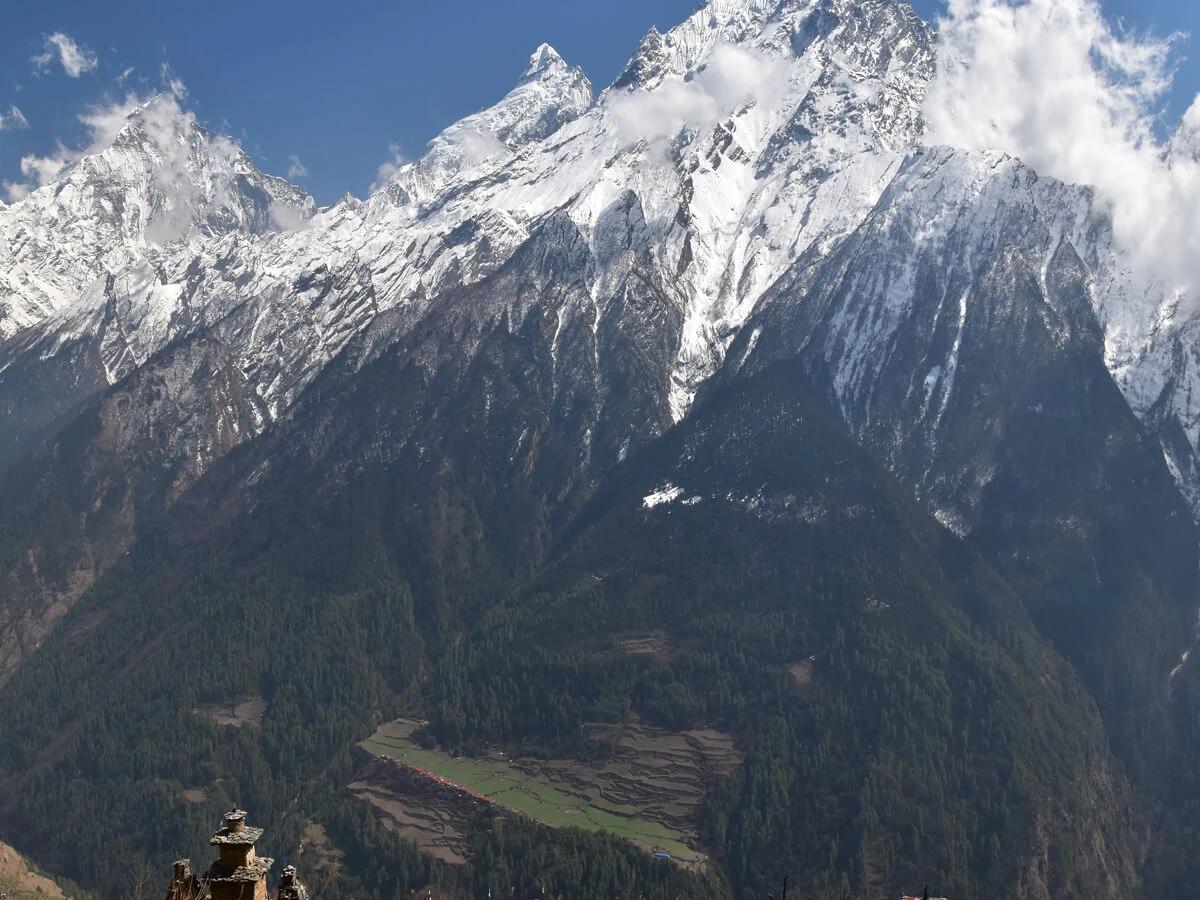
March can still bring cold mornings and chilly nights at higher elevations. April and May generally offer warmer daytime conditions, although afternoon clouds and occasional precipitation are possible. On clear days, you can enjoy impressive mountain views of Ganesh Himal, Himalchuli, Ngadi Chuli, and Manaslu.
If you are planning the Tsum Valley Ganesh Himal Base Camp Trek in Spring 2027 or Spring 2028, this season is worth considering for its flowers, changing landscapes, and generally pleasant daytime walking conditions.
Winter Trekking Conditions
Winter (December, January, and February) brings colder temperatures to Tsum Valley, especially at Mu Gompa and around Ganesh Himal Base Camp. Snow and icy sections may affect the higher trail, and nighttime temperatures can drop considerably. Some lodges may also operate with limited facilities during quieter months. Winter departures therefore require careful planning and confirmation of local conditions.
Monsoon Season Trekking Condition
The monsoon season (June, July, and August) brings rainfall, humid conditions, slippery trails, and an increased risk of landslides and floods along the Budhi Gandaki corridor and access roads. Clouds can also limit mountain views. We generally recommend spring and autumn rather than the monsoon for this trek.
Contact our GAT team early to discuss your preferred departure dates and prepare for both Tsum Valley and Ganesh Himal journeys in one.
How Difficult Is the Tsum Valley Ganesh Himal Base Camp Trek?
The Tsum Valley Ganesh Himal Base Camp Trek difficulty is graded as moderate in the package itinerary. It is suitable for trekkers with good general fitness who can manage several consecutive walking days. However, the additional hike to Ganesh Himal Base Camp makes the journey more demanding than a standard cultural trek in Tsum Valley.
You do not need technical climbing skills, but you should be comfortable walking on uneven mountain trails and terrains, climbing steep sections, and spending many hours outdoors each day.
Daily Walking Hours and Trail Conditions
Most trekking days involve approximately 4 to 7 hours of walking, depending on the route, pace, weather, and trail conditions. You follow stone steps, narrow mountain paths, forest trails, suspension bridges, and sections with steep uphill and downhill walking.
Some sections around the Budhi Gandaki gorge include loose rocks and landslide-prone terrain. The climb from Chumling to Chhokang Paro and the ascent to Gumba Lungdang can feel particularly tiring because of their sustained uphill sections.
The base camp excursion is the most demanding walking day. It takes approximately 7 to 8 hours for the round trip and includes a descent toward the river, an uphill climb through forest, and several river crossings.
Fitness Requirements and Previous Trekking Experience
You need to be in good cardiovascular condition and have strong legs and stamina to walk for several hours for two days in a row. Some hiking or trekking experience is helpful, especially if you have done a multi-day trek before.
You don’t have to be an athlete or an experienced mountaineer. You must be comfortable carrying a daypack, walking uphill for long periods, and crossing uneven terrain.
Physical Preparation for the Ganesh Himal Base Camp Hike
We recommend beginning your preparation at least eight weeks before departure. Regular walking, stair climbing, hill hikes, cycling, and cardiovascular exercise can help build the endurance needed for this journey.
Pay particular attention to uphill and downhill training because the Ganesh Himal Base Camp day hike involves approximately 1,000 m of ascent from Gumba Lungdang at 3,200 m to the base camp at 4,200 m. The approximately 10 km round trip also includes tricky river crossings, so good balance and appropriate footwear are important.
Always take your time on the trail and follow your guide's advice, especially on the base camp day.
Permits Required for Extended Trek to Ganesh Himal Base Camp
Tsum Valley falls within a restricted trekking area in the Manaslu region of Gorkha. Trekkers must obtain the appropriate restricted-area permit before entering the designated region. You also need the Manaslu Conservation Area Permit (MCAP) for this extended trek route to Ganesh Himal Base Camp.
The permit arrangements are part of your Ganesh Himal Base Camp Trek with Tsum Valley package, so you do not need to visit government offices yourself. Global Adventure Trekking (GAT) prepares the necessary documents before the trek begins.
Tsum Valley Restricted Area Permit
The Tsum Valley Restricted Area Permit (RAP) is required for entry into the designated restricted section of Tsum Valley. The published permit fee depends on the trekking season:
- September to November: USD 40 per person for the first seven days, plus USD 7 per person for each additional day.
- December to August: USD 30 per person for the first seven days, plus USD 7 per person for each additional day.
The final charge depends on the number of days covered by your permit and the applicable government rates at the time of travel.
Manaslu Conservation Area Permit (MCAP)
The Manaslu Conservation Area Permit allows you to enter and trek through the protected Manaslu Conservation Area. The currently published entry fee is NPR 3,000 per person for foreign visitors and NPR 1,000 for SAARC nationals.
Note: Your MCAP is included in the standard GAT package.
Chumnubri Rural Municipality Local Entry Fee
A separate local charge collected by the rural municipality from trekkers visiting the region is the Chumnubri Rural Municipality local entry fee, which is NPR 1,000 for foreign visitors and NPR 200 for local people.
How Global Adventure Trekking (GAT) Arranges Your Permits
You do not need to manage the restricted-area permit, MCAP, or Chumbnubri local entry paperwork on your own. Our team collects your passport details and the required documents before departure and handles the permit arrangements in Kathmandu.
Please bring your valid passport and the required passport photographs when requested during the pre-trek preparation. The permit costs covered by your package are included in the price breakdown.
Who Leads this Trek?
This trek is restricted-area trekking; the Tsum Valley, along with Ganesh Himal Base Camp, needs an authorized, licensed guide to walk with you from Machha Khola to Ganesh Himal Base Camp and back.
Our guides are local-based, experienced with Nepal's landscapes, and used to looking after guests from all over the world. They know the Budhi Gandaki trail, the Tsum Valley villages, the challenges of each terrain, and the monasteries’ history and ancient stories, and they know altitude on top of that.
Here is what your guide brings to this trek:
- Local knowledge: Your GAT guide is a local who navigates every corner of the route, from the Budhi Gandaki gorge to Gumba Lungdang.
- Health checks: Your guide carries an oximeter, watches how your body handles altitude, and knows what to do when it does not.
- Emergency care: From the first day to the last, your guide can handle emergencies and arrange a safe descent or evacuation.
- Full logistics: Your guide manages permits, lodges, meals, and bus timings; you can focus on the trail.
- Culture and stories: Your guide explains Mu Gompa, Rachen Gompa, the Mani walls, and local customs in a language you understand.
- Good company: Your guide is multilingual, cheerful, knowledgeable, and keeps the group's spirits high on long days.
Transportation to and From Machha Khola
The journey between Kathmandu and the Tsum Valley and Ganesh Himal Base Camp, Manaslu region, is part of the adventure. Your package includes local bus transportation between Kathmandu and Machha Khola, the starting and ending point of the trekking route.
Kathmandu to Machha Khola by Local Bus
On day three, you leave Kathmandu early and travel approximately 160 km (99 miles) to Machha Khola. The journey usually takes around 7 to 8 hours, depending on road conditions, traffic, weather, and stops along the way.
The drive follows the Trishuli River corridor, passing hills, terraced fields, roadside settlements, and the towns around Arughat. Beyond the main highway, the road narrows and gets rougher as you approach Machha Khola.
A local bus is the standard transportation option included in your package. Travel times are estimates, as road conditions can change.
Private Jeep Transportation
If you prefer a more private and comfortable journey, you can upgrade to an 8-seater private 4WD jeep instead of using the local bus. This option is useful for families, small groups, or travelers who want more flexibility during the drive.
A private jeep can be arranged for the journey from Kathmandu to Machha Khola, the return journey, or both, depending on your preference. The additional cost depends on the vehicle and transfer arrangements.
Return Journey from Machha Khola to Kathmandu
After completing the trek on Day 14, you spend the night in Machha Khola. On Day 15, you return to Kathmandu by local bus, following the road through Soti Khola, Arughat, and the Trishuli River region.
The return drive also usually takes around 7 to 8 hours, although delays can occur because of traffic, construction, rain, or road conditions. You arrive in Kathmandu with time to rest before your departure the following day.
Accommodation and Meals During the Multi-Day Tsum and Ganesh Himal Trek
Accommodation and meals are important parts of any multi-day Tsum and Ganesh Himal Himalayan trek. During this trek, you stay in a tourist-standard 3-star hotel in Kathmandu and local teahouses, homestays, or Himalayan lodges on a twin-sharing basis along the trekking route. The facilities are basic as you travel farther into Tsum Valley, but they give you a chance to experience daily life in the mountain villages.
Local Teahouses Accommodations
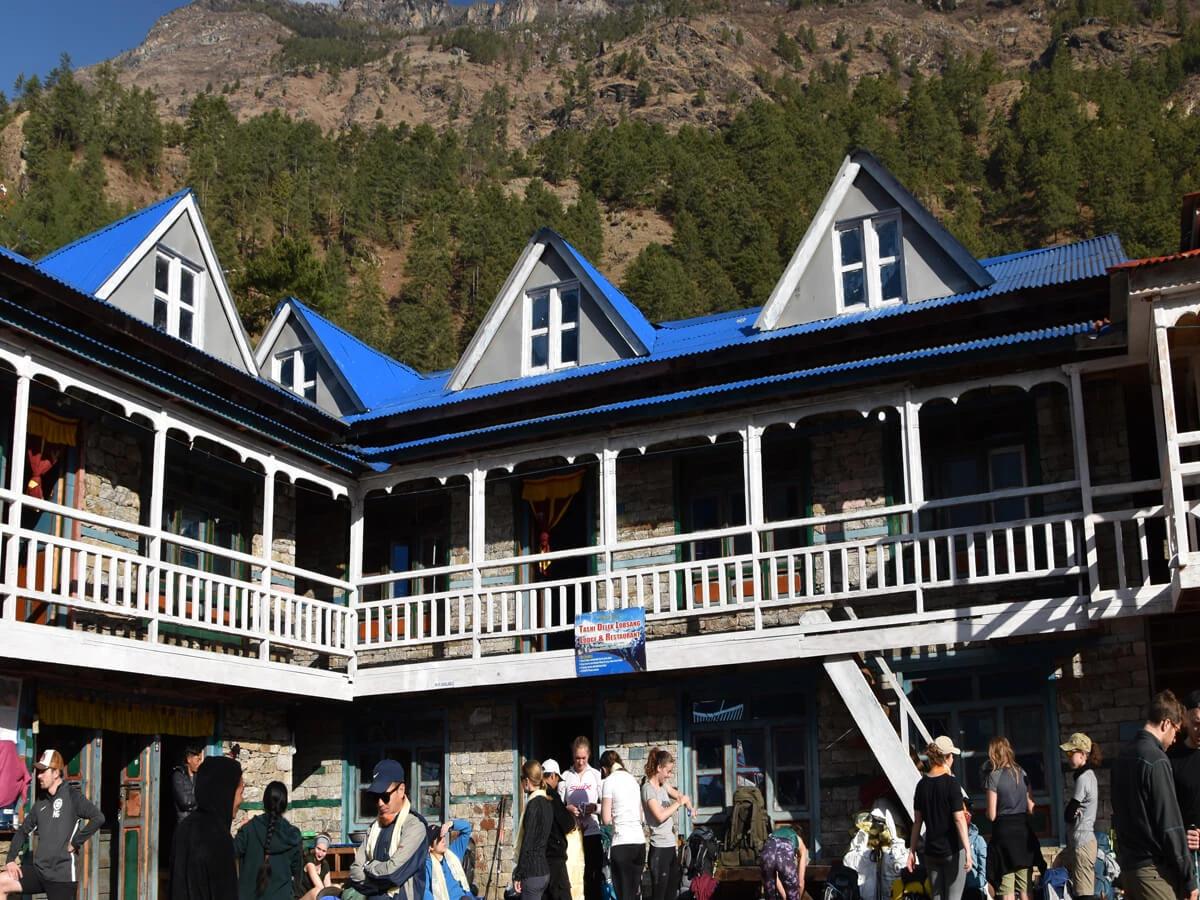
You stay in locally-run teahouses in settlements such as Machha Khola, Jagat, Lokpa, Chumling, and Chhokang Paro. These accommodations are generally family-run, allowing you to experience the hospitality and everyday lifestyle of mountain communities.
As you continue toward the upper valley, accommodation becomes more basic. At Mu Gompa, you stay in a simple guesthouse accommodation, depending on availability. Gumba Lungdang also offers a basic local guesthouse, which is like a monastery lodging, where you spend two nights: one before and another after your Ganesh Himal Base Camp day hike.
There are no permanent teahouses or hotels at Ganesh Himal Base Camp itself. On the standard itinerary, you hike from Gumba Lungdang to the base camp at 4,200 m and return to the same accommodation in the evening. Therefore, you do not need to carry camping equipment for an overnight stay at base camp. An overnight camping arrangement would require separate planning, equipment, and support.
Bathroom Facilities, Hot Showers, and Toilets
Bathroom facilities vary between villages. In lower settlements such as Machha Khola and Jagat, some lodges offer attached bathrooms and hot showers. However, shared bathrooms and basic squat-style toilets are more common as you move toward the upper parts of Tsum Valley.
Hot showers are mostly available through gas or solar heating in selected lodges. At higher elevations, hot water is less reliable, and some guesthouses may offer a bucket of heated water instead of a regular shower. Availability also depends on weather, water supply, and the lodge's facilities. Hot showers generally cost approximately NPR 300-600 per person per use when available.
Note: This is an additional personal expense and is not included in this standard trekking package.
Wi-Fi, Electricity, and Connectivity
Electricity is available in several villages along the trekking route, although some remote lodges rely on solar power or limited local electricity supplies. Charging your phone, camera, or power bank may therefore depend on the weather and available power.
Wi-Fi is available in some lower villages and selected lodges, but connections and browsing become slower and less reliable as you move deeper into Tsum Valley. You should not expect consistent internet access at Mu Gompa or other remote stops.
The approximate additional costs are:
- Wi-Fi: USD 2-5 per session where available.
- Device charging: USD 1-3 per charge, depending on the lodge and device.
We recommend carrying a fully charged power bank to keep your essential devices working throughout the trek. It is also helpful to download offline maps and save important travel documents before leaving Kathmandu.
Mobile connectivity is less reliable along this entire trek. You may get a signal in some lower villages, but reception becomes less dependable as you travel deeper into the valley. Most importantly, at higher elevations around base camp, mobile coverage may be unavailable.
Both Nepal Telecom (NTC) and Ncell SIM cards work in parts of the lower route. However, NTC generally offers better coverage in remote areas of Gorkha, although the signal can still vary depending on the village, terrain, and weather.
Do not rely on a consistent mobile connection during the trek. It is best to inform your family about possible communication gaps before departure and download essential maps and travel information for offline use. The remote setting also offers a chance to disconnect from everyday digital distractions and enjoy the peaceful mountain surroundings.
Laundry Facilities and Personal Washing
Laundry facilities are limited throughout the trekking route. Some lower villages may offer basic washing services, but hand washing is more common than machine laundry. As you reach higher settlements such as Chumling, Chhokang Paro, and Mu Gompa, regular laundry services become difficult to find or may not be available at all.
Where available, laundry may cost approximately USD 5-8 for a small service or load, although the actual charge depends on availability and the amount of clothing. This is an indicative budget rather than a fixed price.
Cold weather, limited sunlight, and humidity can also make drying clothes difficult at higher elevations. Pack quick-drying trekking clothes, enough socks and undergarments for several days, and a few lightweight personal washing essentials.
Food and Full-Board Meals During the Trek
Your trekking package includes three meals a day, breakfast, lunch, and dinner throughout the trekking portion of the journey. Meals are prepared by local teahouses and lodges, offering simple, freshly cooked food to keep you energized during long walking days.
Typical meals include dal bhat tarkari (rice, lentils, and vegetables), noodle soups, fried rice, potatoes, Tibetan bread, eggs, and seasonal vegetables. You can also enjoy tea and other hot drinks at local teahouses, although additional beverages and personal snacks are generally at your own expense.
Most lodges have a shared dining room where trekkers gather, eat, and relax after a day on the trail. Some higher lodges use traditional wood-burning stoves to warm the dining area, creating a welcoming place to rest during cold mountain evenings.
Special Note: Please inform us about any dietary requirements before departure so we can discuss suitable meal arrangements with the local lodges.
A little preparation goes a long way: Bring Nepalese cash of approximately NPR 2,500 to 3,000 for each trekking day for optional services such as hot showers, Wi-Fi, charging, and laundry. These facilities are not guaranteed at every stop, so it is best to prepare for a few days without internet or regular shower facilities as you explore the more remote parts of Tsum Valley.
Packing List for the Tsum-Ganesh Himal Combo Trek
Packing for this Tsum-Ganesh Himal combo trek requires a little planning. You travel through warm lower valleys, cool forests, and colder high-altitude areas; wearing layers is more practical than relying on one heavy outfit.
Clothing and Footwear
Bring comfortable, well-broken-in trekking boots with good grip. You will walk on stone steps, uneven paths, forest trails, and occasional wet or muddy sections. Pack enough trekking socks, quick-drying shirts, trekking trousers, thermal base layers, and a warm fleece.
A waterproof jacket and trousers are useful, even during spring and autumn. You should also carry a warm down jacket, gloves, a woolen hat, and other cold-weather layers for evenings at Mu Gompa and Gumba Lungdang.
Essential Trekking Gear
A comfortable daypack, trekking poles, water bottle, headlamp, sunglasses, sunscreen, and water purification supplies are useful throughout the journey. Trekking poles can be particularly helpful on the long descents and the steep uphill sections toward Chhokang Paro and Gumba Lungdang.
GAT provides a company duffel bag, T-shirt, trekking map, and a sleeping bag and down jacket if required, according to the package arrangements. Confirm availability and sizing with our team before departure.
For a more detailed checklist, read our Trekking and Climbing Gear List. It explains the clothing, footwear, equipment, and personal items you should prepare before traveling to Nepal.
Personal Items and First-Aid Essentials
Carry your passport, a few passport photographs, cash in Nepalese rupees, personal medication, toiletries, hand sanitizer, lip balm, and a small personal first-aid supply. Keep important documents in a waterproof bag and carry any prescription medication you need throughout the trek.
You do not need to pack every item on a mountaineering equipment list for this trek. This is a guided trekking and base camp hiking experience, not a technical climbing expedition. Your guide can help you review your equipment during the Kathmandu briefing.
Altitude Sickness and Multi-Route Trekking Safety
The Tsum Valley and Ganesh Himal Base Camp Multi-Route Trekking reaches 4,200 m at Ganesh Himal Base Camp, while your highest overnight stay is at Mu Gompa at 3,700 m. Altitude affects people differently, and even fit trekkers can experience symptoms when they ascend to higher elevations.
Taking your time, communicating with your guide, and responding to symptoms early are important parts of a safer trek.
Understanding Altitude Sickness Symptoms
Acute Mountain Sickness (AMS) can develop when your body does not adjust well to increasing altitude. Common symptoms include headaches, nausea, dizziness, loss of appetite, unusual tiredness, and difficulty sleeping. HAPE (High-Altitude Pulmonary Edema) and HACE (High-Altitude Cerebral Edema) are not so common on this trek, yet they can happen, so it pays to know the signs before you fly to Nepal.
Warning signs you should never ignore
Headache, nausea, dizziness, and unusual fatigue can be early signs of altitude sickness. Inform your guide immediately if you experience these symptoms, and do not continue ascending until your condition has been assessed. Worsening symptoms require prompt medical attention and may require descent.
Fluid in the lungs (HAPE)
- You feel breathless even while resting.
- You have a cough that will not stop, sometimes with frothy or bloody spit.
- You feel unusually tired and weak.
- Your lips or fingernails turn blue or grey.
Swelling of the brain (HACE)
- You have a severe headache that painkillers do not touch.
- You feel confused or disoriented, or you act out of character.
- You cannot walk a straight line, heel to toe.
- You feel very sleepy or start to drift toward unconsciousness.
What to do if it happens
Tell your guide if you experience any of these symptoms. Do not hide discomfort or try to push through worsening symptoms to keep up with the group. Severe or worsening symptoms require immediate medical assessment and descent when advised.
Go down. Descending to a lower altitude is the best treatment, and it cannot wait until morning. Tell your guide straight away. Your guide carries a first aid kit and knows the fastest way down. Serious HAPE or HACE needs an emergency evacuation, often by helicopter, which is why we ask every trekker to buy travel insurance that covers trekking up to 4,500 m and helicopter rescue before flying.
Acclimatization and Staying Hydrated
The itinerary gradually moves from the lower Budhi Gandaki valley toward higher settlements in Tsum Valley. Your guide monitors how you are feeling and helps maintain a suitable walking pace.
Walk steadily, take regular breaks, eat properly, and drink enough fluids. Avoid alcohol and do not ignore symptoms of altitude sickness. Staying hydrated supports general well-being, but drinking water does not prevent or treat altitude sickness on its own.
Your guide carries a first-aid kit during the trek. Follow the guide's instructions and any medical advice provided if you feel unwell.
Travel Insurance and Emergency Evacuation
Travel insurance is not included in the standard package, but it is essential to arrange insurance before arriving in Nepal. Your policy must cover trekking up to at least 4,200 m and emergency helicopter evacuation, including medical treatment and repatriation where applicable.
If an emergency occurs, Global Adventure Trekking (GAT) can help coordinate communication and evacuation arrangements when medically required. However, rescue and helicopter evacuation charges are not included in the package price and must be covered by you or your insurance provider.
Why Choose Global Adventure Trekking (GAT)?
Choosing the right trekking agency matters, particularly when traveling through a remote restricted area such as Tsum Valley to the Ganesh Himal Base Camp Hiking Area. You need a team that understands the local route, manages the required permits, and can support you through the journey.
Global Adventure Trekking (GAT) is a Kathmandu-based local trekking company in Thamel with experience in Nepal's Himalayan trekking regions and with insightful guides since 1998. We have spent more than 28 years organizing guided adventures across Nepal’s Himalayan region.
Our local experience helps us plan journeys that combine practical trekking arrangements with opportunities to experience the mountains, communities, and cultures beyond the usual tourist routes. So, we arrange the essential logistics for this 16-day journey, from your arrival in Kathmandu to the final airport transfer.
Local Experience and Knowledge of the Trekking Route
Our local trekking team understands the mountain environment, village customs, and practical challenges of traveling through the Manaslu region. Your government-certified guide accompanies you along the route, explains the local culture, and helps you navigate the trail from Machha Khola to Tsum Valley and Ganesh Himal Base Camp.
Licensed Guides and Trekking Support
Your package includes a licensed, experienced trekking guide. The guide's salary, insurance, food, accommodation, and required equipment are covered in the package cost. A first-aid kit is also provided as part of the trekking arrangements.
Having a guide who knows every corner and route makes a difference in a remote area where trail conditions, weather, and local facilities can change.
Permits and Trekking Logistics Arranged for You
Tsum Valley requires special trekking permits and an organized trekking arrangement. Our team prepares your restricted-area permit, MCAP, and all necessary paperwork before you enter the region. We also organize accommodation, meals, local transportation, and the other services listed in your package.
You can spend less time dealing with logistics and more time enjoying the journey.
Clear Package Inclusions and Flexible Travel Arrangements
We provide a clear breakdown of what is included and excluded in the trekking package. Your standard price covers the listed permits, local bus transportation, accommodation, full-board trekking meals, a licensed guide, and other specified services.
If you prefer a private jeep, porter service, or a higher-category Kathmandu hotel, you can request these upgrades before departure. We can also discuss changes to your travel dates, flexible customization, and suitable extensions to your Nepal trip.
Supporting Rural Schools and Himalayan Communities
We believe the benefits of tourism should reach beyond the trekking trails and the people who visit Nepal. The mountain communities that welcome trekkers are an important part of every Himalayan journey, and we believe they deserve opportunities to grow and develop.
As part of our community support commitment, GAT contributes 5% of its total earnings toward rural community development initiatives in Nepal's Himalayan regions. Our focus includes supporting education, improving community infrastructure, and contributing to local development projects.
Supporting rural schools is an important part of this commitment. Based on needs identified in local communities, our initiatives may include providing educational materials such as notebooks, pens, pencils, and other stationery to help children with their studies. We also aim to support community improvement and recovery efforts in areas affected by natural disasters or other hardships, where assistance can make a meaningful difference.
Support Before and During Your Trek
Our team assists you with pre-trek preparation, equipment check, permit arrangements, and the Kathmandu briefing. We want you to understand the route and know what to expect before leaving the city. During the trek, your guide remains your main point of contact for route information, daily arrangements, and any concerns that arise.
We believe responsible tourism is not only about exploring beautiful destinations but also about respecting local cultures, supporting livelihoods, and contributing to the communities that make these journeys possible. When you travel with Global Adventure Trekking, you choose a local company that believes in sharing the benefits of tourism and supporting the long-term development of rural Himalayan communities.
Compare Our Tsum Valley Trek Packages
Both the Tsum Valley Packages, the Tsum Valley Ganesh Himal Base Camp Trek, and the Manaslu Circuit Trek with Tsum Valley take you through the remote Himalayan communities and Tibetan Buddhist heritage of northern Gorkha. But the routes offer different experiences.
The 16-day Tsum Valley and Ganesh Himal Base Camp Trek focuses on exploring the sacred valley and hiking to Ganesh Himal Base Camp. The 18-day Manaslu Circuit Trek with Tsum Valley extends the journey beyond Tsum Valley, taking you through the Manaslu region and over the challenging Larkya La Pass.
Compare the two itineraries below to choose the adventure that best suits your time, fitness level, and trekking interests.
|
Trek Details
|
Tsum Valley Ganesh Himal Base Camp Trek
|
Manaslu Circuit Trek with Tsum Valley
|
| Duration |
16 days |
18 days |
|
Trek Grade
|
Moderate |
Difficult
|
|
Maximum Altitude
|
4,200 m (13,780 ft) at Ganesh Himal Base Camp
|
5,106 m (16,752 ft) at Larkya La Pass |
|
Highest Overnight Stop
|
Mu Gompa 3,700 m |
Dharamshala 4,450 m
|
|
Main Highlight
|
Hike to Ganesh Himal Base Camp |
Crossing the demanding Larkya La Pass
|
|
Tsum Valley Experience
|
Explore Tsum Valley, including Mu Gompa, Rachen Gompa, and Gumba Lungdang |
Explore Tsum Valley before continuing along the Manaslu Circuit
|
|
Mountain Views
|
Ganesh Himal, Himalchuli, Ngadi Chuli, and Manaslu
|
Manaslu, Himlung Himal, Cheo Himal, Kang Guru, and surrounding peaks.
|
|
Route Style
|
Out-and-back trekking route through Tsum Valley
|
Combined Tsum Valley and Manaslu Circuit route.
|
| Major Challenge |
Steep forest trails and exhilarating Ganesh Himal Base Camp hike
|
Longer trekking days, high-altitude terrain, and the Larkya La Pass crossing
|
|
Best For
|
Trekkers interested in Tsumba culture, monasteries, and remote base camp hikes |
Trekkers seeking a longer and more demanding Himalayan circuit
|
|
Price Starts From
|
USD 1,249 for group joining (6-12 people)
|
USD 1,033 for group joining (6-12 people)
|
Compare the two itineraries below to choose the adventure that best suits your time, fitness level, and trekking interests. Which Trek Should You Choose?
Choose the Tsum Valley and Ganesh Himal Base Camp Trek if:
- You have 16 days for a Himalayan adventure.
- You want to explore Tsum Valley's traditional villages and Buddhist monasteries.
- You want to hike to Ganesh Himal Base Camp at 4,200 m.
- You prefer a moderate trekking itinerary without crossing a high mountain pass.
- You want to explore a quieter part of the Manaslu region.
Choose the Manaslu Circuit Trek with Tsum Valley if:
- You have 18 days available for trekking.
- You want to explore both Tsum Valley and the wider Manaslu Circuit.
- You are interested in crossing Larkya La Pass at 5,106 m.
- You have good physical fitness and preferably some previous trekking experience.
- You want a longer and more challenging Himalayan adventure.
Both journeys offer memorable experiences of Nepal's remote mountain communities, Buddhist heritage, and Himalayan landscapes. The right choice depends on how much time you have and whether you prefer a focused base camp excursion or a longer circuit crossing.
Explore our Tsum Valley Trek options or contact Global Adventure Trekking (GAT) to discuss the itinerary that suits your travel plans
Explore More Treks in the Manaslu Region
The Manaslu region offers many trekking options, from cultural journeys through ancient villages to longer Himalayan circuits. Depending on your available time and the kind of experience you prefer, you may also consider these packages.
Tsum Valley Trek for 15 Days
Our Tsum Valley Trek is ideal if you want to explore the traditional villages, Buddhist monasteries, and preserved Tsumba culture without adding the Ganesh Himal Base Camp day hike. It reaches Mu Gompa at approximately 3,700 m and follows a shorter 15-day itinerary.
Manaslu Circuit Trek with Tsum Valley for 18 Days
The Manaslu Circuit Trek with Tsum Valley combines the cultural experience of Tsum Valley with the wider Manaslu Circuit. It includes the challenging Larkya La Pass crossing at 5,106 m and is suitable for trekkers looking for a longer and more demanding Himalayan adventure.
Manaslu Circuit Trek for 14 Days
If you prefer a classic high-altitude circuit without the additional Tsum Valley exploration, consider our Manaslu Circuit Trek. This route takes you through traditional mountain villages and high Himalayan landscapes before crossing Larkya La Pass.
Book Your Tsum Valley and Ganesh Himal Base Camp Trek
The Tsum Valley and Ganesh Himal Base Camp Trek brings together two gorgeously rewarding experiences: discovering the traditional Tsumba culture of a remote Himalayan valley and hiking to the base camp of Ganesh Himal together.
You spend time in peaceful villages, visit important monasteries, walk through forested mountain trails, and enjoy the views from a base camp at 4,200 m. It is an opportunity to slow down, reconnect with nature, experience the warmth of Nepal's mountain communities, know the spiritual corner of Himalayan people, and rediscover a sense of peace within yourself. It is one of those Himalayan journeys everyone should experience at least once in a lifetime.
Plan this Tsum Valley and Ganesh Himal experience for 2027 or 2028. Contact Global Adventure Trekking to discuss your preferred travel dates, check available departures, and receive a detailed quotation. Book Now!