How Difficult Is the Manaslu Circuit Trek? Difficulty, Fitness, and Altitude
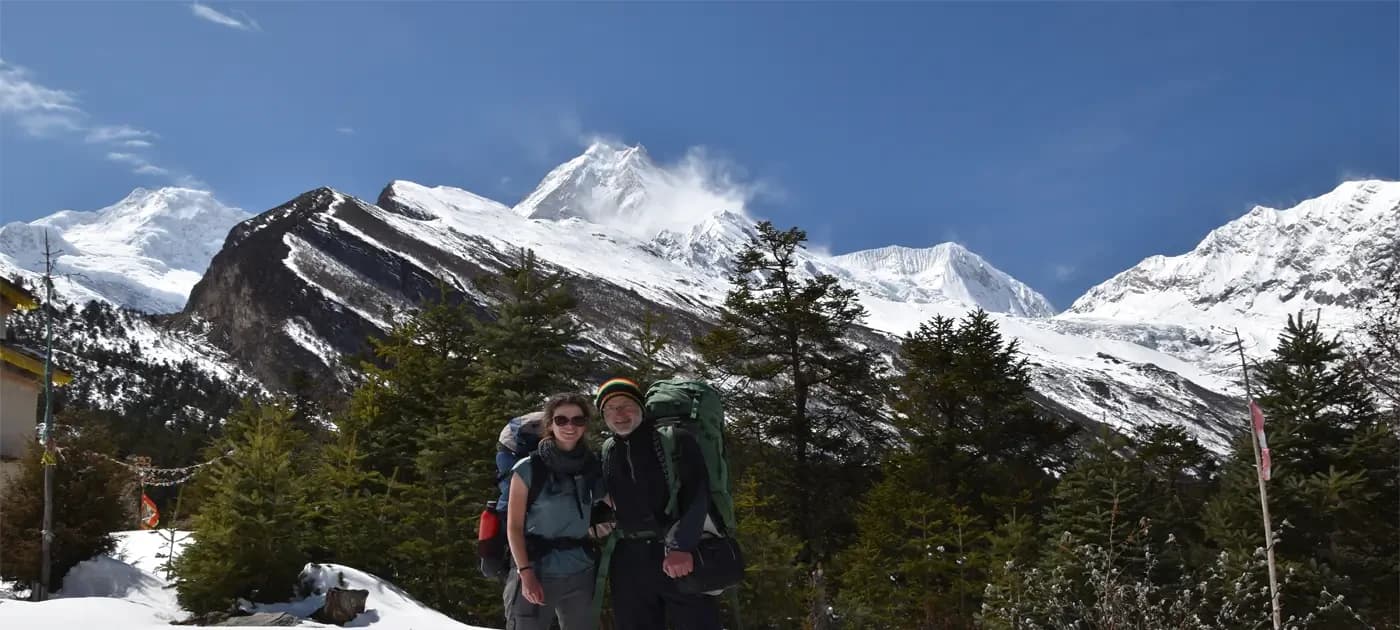
The Manaslu Circuit Trek is a challenging Himalayan trek in Nepal. It is known for remote mountain trails, traditional villages, steep climbs, and the crossing of the Larkya La Pass at 5,106 meters (16,752 feet). The trek suits trekkers with good fitness who can walk steadily for many days in a row over rough terrain.
You do not need technical mountaineering skills. You do need to be ready for long walking days, changing weather, basic facilities in remote villages, and the effects of altitude. Even the road journey from Kathmandu to Machha Khola can be tiring before the trek begins.
This guide covers the main challenges, daily walking demands, altitude risks, road conditions, seasons, fitness needs, and preparation.
Manaslu Circuit Trek Difficulty Rating: The Quick Answer
The trek is generally rated challenging due to longer walking days, steep ups and downs, high altitude, and the demanding Larkya La Pass crossing. Most operators also rate the Manaslu Circuit Trek as difficult. Previous trekking experience helps, but fit first-time trekkers can complete it with proper preparation and guidance.
The challenge is not limited to one section. Fatigue builds over many days, so a comfortable pace, regular meals, and enough time to acclimatize matter more the higher you go.
Difficulty Summary: Walking, Altitude, and Terrain
| Factor |
Details |
| Trek duration |
Around two weeks on the standard itinerary |
| Highest point |
Larkya La Pass, 5,106 meters (16,752 ft.) |
| Walking time |
Usually 5 to 8 hours on trekking days, depending on the route and your pace, and 8 to 10 hours on the pass day. |
| Hardest part |
The Larkya La Pass crossing, with long uphill walking |
| Terrain |
Forest trails, stone steps, suspension bridges, rocky paths, and high alpine landscapes |
| Technical climbing |
Not required |
| Fitness needed |
Good cardiovascular fitness, leg strength, stamina, and endurance |
| Previous experience |
Helpful but not mandatory for well-prepared trekkers |
The Manaslu Circuit is not a trek to take lightly; with a sensible itinerary, adequate preparation, and a gradual pace, you can manage the challenges.
Ready to see the full route? View the Manaslu Circuit Trek 14-Day itinerary, cost, and departure dates.
Price from
US$893
Off-The-Beaten-Path Route
What Makes the Manaslu Circuit Trek Difficult?
Several factors add to the difficulty. Knowing them in advance helps you prepare for the physical demands and the practical realities of travelling in a secluded mountain region.
Long Road Journey from Kathmandu to Machha Khola
The adventure begins before you reach the trail. On the standard itinerary, the roughly 160 km journey from Kathmandu to Machha Khola takes about 8 to 9 hours by local bus or shared jeep. Traffic, stops, road conditions, and the vehicle used can change the time.
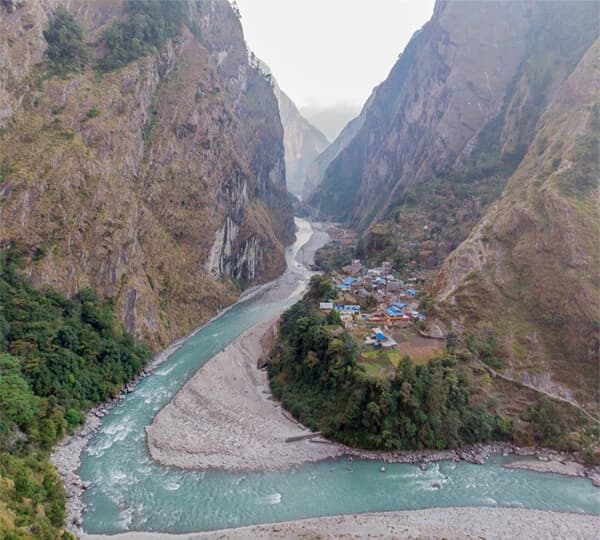
The route follows the highway and then heads up the Budhi Gandaki Valley. Parts of the road are paved, but it becomes rougher and more worn near Machha Khola. After rain, the final stretch can be very bumpy. If you get motion sickness, ask a pharmacist or healthcare professional about options before you start travelling.
The return can be tiring too. The standard route uses a shared jeep from the Dharapani area to Besisahar, then another vehicle to Kathmandu or Pokhara. The itinerary estimates roughly 8 to 9 hours, so avoid booking a tight connection straight after the trek and confirm the exact route with your agency. If you would rather skip the long drive, the Luxury Manaslu Circuit Trek offers an optional helicopter return from Bhimthang for an extra fee.
Keep water, snacks, personal medication, and one extra warm layer within reach during both drives.
Long Walking Days and Building Fatigue
The real challenge of the trek is not one steep climb. It is the demanding journey of walking continuously for many days. On this trek, you’ll walk an average of 5 to 8 hours a day over changing and uneven terrain. Some days mean covering long distances. On others, you climb stone steps that put heavy pressure on your legs or descend steep slopes that jolt your knees.
On a long trek like this, the challenge is not how many kilometers you cover. It also matters how well your body rests overnight in basic teahouses before the next day’s walk. As the days go by, sore muscles, tired knees, a heavy backpack, and thinner air at higher altitude slowly add up to deep fatigue.
This is why crossing the Larkya La Pass at 5,106 meters feels like such a big achievement. It is a hard high-altitude day, and your body has to take on a high pass after walking for more than a week.
How to reduce fatigue:
- Build your stamina: Start leg-strengthening exercises and long-duration physical activity a few months before you come to Nepal.
- Keep a steady pace: Walk slowly and evenly during the trek. This is not a short sprint; it is a journey that you have to sustain over a long time.
- Listen to your body: If you feel unusually tired or unwell, tell your licensed trekking guide straight away.
Steep Ascents, Descents, and Rough Trails
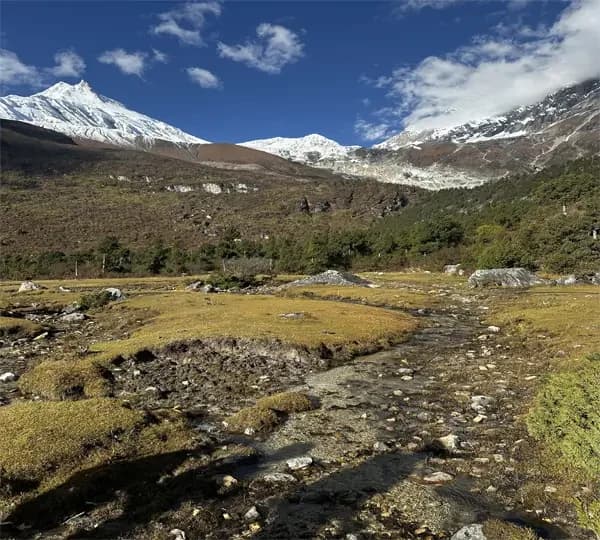
As you move from river valleys to high-mountain terrain, the trail changes significantly. Expect stone steps, green forest paths, rocky sections, suspension bridges, and steep parts that need careful footing. Descents are hard on the knees even at lower altitudes, and rain, snow, or loose rock can make some sections harder.
You do not have to be a mountaineer, but you should be comfortable walking on natural trails for many hours. Sturdy boots with good grip and trekking poles make a real difference.
High Altitude and Acclimatization
Altitude is one of the biggest challenges on the Circuit. The higher you go, the less oxygen there is in the air, and effort feels harder than at lower elevations. You may walk more slowly, breathe harder, and need more rest.
The itinerary includes an acclimatization day at Samagaon, followed by Samdo, Dharamshala, and the Larkya La Pass. This gradual ascent helps the body adapt, but it does not remove the risk of altitude sickness. Fitness alone cannot prevent it, and healthy, experienced trekkers can be affected too.
To lower the risk:
- Follow the planned acclimatization schedule
- Ascend slowly and do not rush to keep up with faster trekkers.
- Drink fluids regularly and eat enough.
- Avoid alcohol and smoking.
- Tell your guide straight away about any symptoms.
- Do not go higher if you suspect altitude sickness until you have been properly assessed.
Crossing the Larkya La Pass at 5,106 Meters: The Ultimate Test
The Larkya La Pass is the highest point of the trek and one of its most physically demanding sections. It combines high altitude, cold weather, longer walking days, and sustained climbing followed by a long descent.
The walk from Dharamshala usually starts very early in the morning. Before the top, you may cross rocky or glacial ground. In clear weather, the summit offers wide views of the surrounding mountains. The descent toward Bhimthang is long; reaching the pass is not the end of the day’s effort.
| Why the pass day is hard |
What it means for you |
| Altitude |
Slower pace and harder breathing |
| Continuous ascending |
Tiring, steady effort for hours |
| Cold and wind |
Less comfort and faster energy loss |
| Long descent |
Needs balance, focus, and leg strength |
| Position in the trek |
It comes after many days of walking. |
Your guide assesses weather and trail conditions and helps decide whether it is safe to proceed.
Changing Weather and Trail Conditions
Mountain weather can change rapidly. A clear morning does not guarantee a clear day, especially on the higher parts of the route. Cold, strong winds, rain, snow, and poor visibility can all affect comfort and trail conditions.
Pack in layers and keep waterproof gear easy to reach, and follow your guide’s advice each day. A flexible itinerary helps in remote areas where road delays or weather can disrupt plans.
Basic Teahouses and Limited Facilities
The route passes through small settlements where facilities are more limited than in major trekking hubs. Rooms are usually basic, and toilets are mostly shared. Hot showers, device charging, and Wi-Fi cost extra or may not be available at all, and food choices narrow as you go higher.
These conditions are not physically hard in themselves, but a cold room and interrupted sleep can add to fatigue. Bring warm sleepwear, a power bank, hygiene items, and any medication you need while you’re travelling.
Limited Food Choices and Water Safety
Food is rarely the reason trekkers struggle on the trek, but it can quietly add to the strain. Almost everything served in the upper villages is carried in on foot or by mule. Choices shrink, and prices rise with the elevation gain.
| Everyday Challenge |
What to Expect |
How to Handle It |
| Shrinking Menus |
The lower valley offers plenty of choice, but the upper villages repeat the same rice, noodle, potato, and soup dishes. |
Keep eating regular meals even when your appetite fades, and carry snacks such as nuts, chocolate, or energy bars. |
| Meat |
Animals are rarely slaughtered locally, so any meat is carried up from lower areas and may be days old. |
Choose vegetarian meals such as dal bhat at the higher stops. |
| Fresh Produce |
Fresh fruit and vegetables become scarce and pricey, and meals lean on root vegetables and dried or tinned items. |
Accept simple meals and top up with your own snacks. |
| Rising Prices |
Supplies arrive on foot, so costs go up with every day of the walk. |
Carry enough Nepali rupees in cash, as there are no ATMs on the route. |
| Slow service in peak season |
Teahouses fill quickly in spring and autumn, so food can take a long time to arrive. |
Order dinner as soon as you arrive and be patient. |
| Unsafe tap and stream water |
Clear water can still carry germs from livestock and villages upstream. |
Drink only boiled, filtered, or purified water. |
Water needs the same care. A stomach upset on an off-the-beaten-track can cost you several days of walking, so never drink untreated tap or stream water, however clean it looks. Teahouses sell boiled water, usually for about USD 1 to 3 a liter, with the price rising as you go higher.
Many trekkers carry their own bottle and use a purification tablet or a filter, which saves money and cuts down on plastic waste. The dry, cold air at altitude also dries you out faster; keep drinking even when you do not feel thirsty, and tell your guide early if your stomach feels unsettled.
Mental Endurance on Consecutive Trekking Days
The trek tests persistence as much as fitness. Some days feel long, the weather can be uncomfortable, and your body may need more time to recover. Focus on one section at a time instead of the whole trek, rest regularly, eat well, and talk openly with your guide.
How the Season Changes the Manaslu Circuit Trek Difficulty
The season changes how hard the trek feels and how safe it is:
| Season |
Typical Temperatures |
Condition |
Suitability |
| Spring (March to May) |
10-20 degrees Celsius during the daytime in the lower valley and 0-10 degrees Celsius in the high region. Nights as low as -10 degrees Celsius above 4,000 meters |
Clear skies, moderate temperatures |
Good choice for most trekkers |
| Autumn (September to November) |
10-20 degrees Celsius during the daytime in the lower valley and 0-10 degrees Celsius in the high region. Nights as low as -8 degrees Celsius above 4,000 meters |
Clear skies, stable weather, good mountain views |
Best choice for most trekkers |
| Winter (December to February) |
Day: 5-15 degrees Celsius in the lower valley and -5 to 5 degrees Celsius in the high region. Nights as low as -20 degrees Celsius above 4,000 meters. |
Very cold, with snow possible on the higher sections |
Only for well-prepared, experienced trekkers |
| Monsoon (June to August) |
Day: 15-25 degrees Celsius in the lower valley and 5 to 15 degrees Celsius in the high region. Nights: 0-5 degrees Celsius above 4,000 meters. |
Heavy rain, slippery trails, leeches, risk of floods and landslides |
Best avoided |
Note: Nights above 4,000 meters are cold in every season; pack a warm sleeping bag and down jacket even in the autumn season.
For a detailed breakdown of seasonal weather, trail conditions, and the best months to visit, read this guide to the best time for Manaslu Circuit trekking.
Is the Manaslu Circuit Trek Suitable for Beginners?
Yes, it can be difficult for beginners, but it is not automatically out of reach. First-time trekkers with good fitness, adequate preparation, and a willingness to walk steadily can complete it.
The better question is whether you are ready for the back-to-back days of walking, basic mountain accommodations, and a high-altitude pass. If you rarely exercise, struggle with long walks, or expect comfortable facilities throughout, this trek may not suit you. If you are trekking in the Himalayas for the first time and want a relatively easier journey, you can start with one of Nepal’s easy and short treks.
If it’s culture that draws you the most, the Tsum Valley Trek is a moderate alternative that reaches a maximum of 3,700 meters at Mu Gompa, with no high pass to cross.
If you have never trekked at high altitude before, prepare carefully and discuss your experience and concerns with your trekking agency. For detailed information on the route, trip length, and preparation needed for the trek, read the complete guide to the Manaslu Circuit Trek.
How Fit Do You Need to Be for the Manaslu Circuit Trek?
Physical fitness matters for the trek, but not in the way many people expect. You do not need a gym-built body or the ability to run a marathon. What matters most for this trek is stamina, or the ability to walk comfortably for several hours, rest, and be ready to do it again the next day. This routine is continuous for about two weeks.
A simple way to check your readiness is to walk for five to six hours on hilly terrain while carrying a light daypack. If you still feel ready to walk the next morning again, you have a good fitness base. If that feels difficult, there is no need to worry. You simply need more time to train. Building strong leg muscles and improving cardiovascular endurance are especially helpful.
How to Prepare for the Manaslu Circuit Trek
Begin training around eight to twelve weeks before departure. Start with walks that feel easy today, then add a little more time, distance, and hill work each week. Aim for steady progress rather than big jumps, because this trek rewards stamina far more than speed. By the time you reach Machha Khola, your legs should be used to long days on the move.
| Training Area |
What to do |
| Walking endurance |
Start with shorter walks, then build time and distance. Do a longer hike on weekends if you can. |
| Uphill and downhill |
Use hills and stairs to build your leg strength. Practise with trekking poles if you plan to use them. |
| Leg and core |
Step-ups, squats, lunges, and calf raises improve stability and endurance. |
| Loaded daypack |
Gradually walk with about the weight you expect to carry, without adding unnecessary load. |
| Boots and gear |
Break in your boots well before the trip. |
| Recovery |
Take rest days, sleep well, and do not increase your load too fast. |
Training improves your ability to handle the physical demands, but it does not guarantee you will avoid altitude sickness. Acclimatization and safe decisions on the trail are still essential.
Altitude Sickness Risks and Warning Signs
The route ascends well above 5,000 meters, so altitude sickness is a serious concern. Learn the signs early and report them to your guide.
Types of Altitude Sickness: AMS, HAPE, and HACE
Altitude sickness is not one single problem. It ranges from a common, mild condition to less common emergencies, and knowing the difference helps you react at the right time.
| Type |
What happens |
Typical sign |
What to do |
| Acute Mountain Sickness (AMS) |
The most common form, a sign that your body is struggling to adjust to thinner air. |
Headache, nausea, dizziness, tiredness, and poor sleep. |
Stop walking up, rest, drink fluids, and tell your guide. |
| High-altitude pulmonary edema (HAPE) |
Fluid collects in the lungs. |
Breathlessness at rest, a tight chest, a persistent cough, and extreme tiredness. |
Descend straight away and get medical help. |
| High-altitude cerebral edema (HACE) |
Fluid collects around the brain. |
Severe headache, confusion, clumsiness, and loss of balance. |
Descend straight away and get medical help. |
How the Standard Itinerary Helps You Acclimatize
The standard itinerary gradually increases your sleeping elevation before the pass, and the rest day at Samagaon is its most important feature. The optional hike to Manaslu Base Camp that day follows the old rule of climbing high and sleeping low. You reach about 4,800 meters during the day, then come back down to sleep at Samagaon.
| Trekking Stop |
Altitude |
Role in Acclimatization |
| Namrung |
2,630 meters |
Air starts to thin, and the trail leaves the lower valley. |
| Shyala |
3,500 meters |
An elevation gain of about 870 meters in one day, so walk slowly. |
| Samagaon |
3,530 meters |
Rest day with an optional hike to Birendra Lake or Manaslu Base Camp. |
| Samdo |
3,875 meters |
A short day of 3 to 4 hours, with about 345 meters of elevation gain. |
| Dharamshala |
4,475 meters |
The highest and coldest night before the pass. |
| Larkya La Pass |
5,106 meters |
The high point crossed in one long day. |
| Bhimthang |
3,590 meters |
A drop of about 1,516 meters, so you sleep much lower again. |
Two things are worth remembering. The steps up from Samdo to Dharamshala are about 600 meters, and the pass follows the very next morning; the rest day at Samagaon matters. The Manaslu Base Camp hike is also demanding, taking around 6 to 8 hours; let your guide decide whether it suits you based on how you feel and the weather conditions.
Early Symptoms and Danger Signs
| Early Symptoms |
Danger signs that require immediate action |
| Headache |
Symptoms getting worse instead of better |
| Nausea or vomiting |
Confusion |
| Dizziness |
Trouble walking in a straight line |
| Loss of appetite |
Breathlessness even at rest |
| Unusual fatigue |
Severe weakness |
| Poor sleep |
Persistent vomiting |
Important notice: if you notice danger signs, treat them as an urgent warning. You need help and must descend.
What to Do If You Feel Unwell
Altitude symptoms are easiest to manage when you act early. If something feels wrong:
- Stop going higher and rest.
- Sip water or warm fluids, and eat if you can.
- Tell your guide. Your guide carries a first-aid kit and a pulse oximeter and checks your oxygen level each evening.
- Descend if symptoms do not ease or get worse. Sleeping even a few hundred meters lower often helps.
- Take any altitude medication only as your doctor has advised because medication doesn’t replace rest and descent.
If you have breathing or heart-related problems or any kind of high-altitude-related issues, speak to a doctor and then book your trek.
Manaslu Circuit vs. Everest Base Camp vs. Annapurna Circuit: Difficulty Compared
All three are challenging, but the difficulty comes in different forms. Your own experience depends on your itinerary, pace, weather, and acclimatization.
| Factors |
Manaslu Circuit |
Everest Base Camp |
Annapurna Circuit |
| Typical length |
About 14 days |
About 14 days |
About 16 days |
| Highest Point |
Larkya La Pass, 5,106 meters |
Everest Base Camp (about 5,364 meters) |
Thorong La Pass, about 5,416 meters |
| Hardest Point |
The long pass day, 8 to 10 hours |
Altitude and many days of sustained walking |
The high pass and long walking days |
| Access |
Long, rough road to Machha Khola |
Weather-dependent flight to Lukla |
Road access to several sections |
| Facilities and crowds |
Basic teahouses, fewer amenities, and quieter trails |
Wider range of facilities, busy and very popular |
Basic to comfortable, popular, with roads now changing parts of the route |
| Who may find it difficult? |
Trekkers who dislike remote travel and basic facilities |
Trekkers who struggle with altitude and consecutive walking days |
Trekkers who find a very high pass daunting |
There is no single answer for who finds which trek hardest. If remote facilities and rough road travel bother you, Manaslu may feel more demanding. Everest Base Camp can be tough for those who struggle with its altitude and walking schedule, while the Annapurna Circuit’s high pass is a major challenge in itself. Choose the route that matches your fitness, experience, schedule, and expectations, not just the one with the highest altitude. For more details, see the Everest Base Camp Trek and Annapurna Circuit Trek pages.
Curious why many trekkers choose Manaslu over the Annapurna Circuit? Read why the Manaslu Circuit Trek is better than the Annapurna Circuit Trek.
Is the Manaslu Circuit Trek Worth the Difficulty?
For many trekkers, yes. The effort takes you from river valleys and forest trails to alpine terrain and spectacular mountain views. You also pass through traditional villages where local life and Tibetan-influenced Buddhist culture are part of the journey. If culture is the main reason for going, the Manaslu Circuit Trek with Tsum Valley adds a side trip into the Tsum Valley’s monasteries and Tibetan Buddhist villages.
Compared with busier routes, Manaslu feels quiet along much of the trail. That untouchedness is part of its appeal, but it also means being flexible and ready for basic facilities. Reaching the Larkya La Pass is a memorable achievement, but finishing the trek safely matters more than reaching a point on schedule.
How to Plan a Safe Manaslu Circuit Trek
The Manaslu Circuit passes through restricted trekking areas, so foreign trekkers must follow Nepal’s current permits and trekking rules. According to Nepal’s Department of Immigration, restricted area permits are processed through registered trekking agencies. A notice published in March 2026 allows solo trekkers to apply under certain conditions, including applying through an agency and hiring a trekking guide. Check the current requirements with the Department of Immigration and your booking agency.
Plan transport, permits, accommodation, and trekking support well in advance, and confirm road and return transport arrangements, especially if you have a flight or other commitment afterwards.
Many parts of the route are far from immediate medical help. Normally the operator covers the guide insurance, but travelers need their own high-altitude travel insurance. Choose a policy that covers trekking to at least 6,000 meters and emergency helicopter evacuation, because helicopter rescue is paid for through your insurer.
If you are working out a budget, the Manaslu Circuit Trekking Cost 2026 guide explains what the trek costs.
If you want to see the route, itinerary, inclusions, and departure dates, view Global Adventure Trekking’s Manaslu Circuit Trek 14-Day package. For short-on-time trekkers, they can compare it with the Short Manaslu Trek 8 Days.
Price from
US$703
US$1050
Off-The-Beaten- Path Track
Manaslu Circuit Trek Difficulty: Frequently Asked Questions
How difficult is the Manaslu Circuit Trek?
The Manaslu Circuit Trek is considered one of the tougher treks. It is challenging due to the need to walk for long hours, cross steep and uneven terrain, trek at high altitudes, and cross the Larkya La Pass at an elevation of 5,106 meters. Good physical fitness, proper acclimatization, and adequate preparation help in facing these challenges.
Is the Manaslu Circuit Trek too difficult for first-time trekkers?
Physically fit and well-prepared beginner trekkers can complete this trek with appropriate training, a realistic itinerary, and the support of an experienced guide. Prior trekking experience helps in maintaining a steady walking pace and comfortably walking for several consecutive days.
How many hours per day do you need to walk on the Manaslu Circuit Trek?
On most days of the Manaslu Circuit Trek, you need to walk for about 5 to 8 hours daily. The day crossing the Larkya La Pass is particularly long and tough, taking around 8 to 10 hours.
How high does the Manaslu Circuit Trek go?
The highest point of the Manaslu Circuit Trek is the Larkya La Pass, located at an altitude of 5,106 meters (16,752 feet) above sea level.
Is crossing the Larkya La Pass difficult?
Yes, crossing the Larkya La Pass is one of the most challenging parts of this trek. High altitude, a long and continuous uphill walk, and cold and unpredictable weather, followed by a long descent, can make this day physically very demanding.
Is prior trekking experience required before doing the Manaslu Circuit Trek?
Having prior trekking experience is helpful, but it is not always mandatory. Trekkers who are physically fit, train regularly, and understand the challenges of walking on mountain terrain for several consecutive days can complete this trek even without extensive experience.
How far in advance should one prepare for the Manaslu Circuit Trek?
For most people, it is ideal to start preparing 8 to 12 weeks before beginning the trek. However, the preparation duration depends on your current physical condition. Gradually increase regular walking, uphill climbing practice, cardiovascular and stamina exercises, and leg muscle strengthening workouts.
Is there a risk of altitude sickness on the Manaslu Circuit Trek?
Yes, because the route of the Manaslu Circuit Trek reaches altitudes above 5,000 meters, there is a risk of altitude sickness. Give your body enough time to acclimatize to the elevation, inform your guide immediately if you notice any symptoms, and seek prompt medical assistance if symptoms become severe or worsen.
How difficult is the road journey from Kathmandu to Machha Khola?
The road journey from Kathmandu to Machha Khola can be long and bumpy. Under a standard itinerary, covering the distance of about 160 kilometers by local bus or shared jeep can take around 8 to 9 hours. The road sections near Machha Khola can be particularly rough. Travel duration may vary depending on road conditions and the mode of transport.
Is the return journey from the Manaslu Circuit Trek tiring as well?
Yes, the return journey can also be exhausting. You need to travel along a hilly road from the Dharapani region to Besisahar, followed by further travel toward Kathmandu or Pokhara. It is advisable to confirm road conditions, available transport, and travel times with your trekking agency before departing.
Is a licensed guide mandatory for the Manaslu Circuit Trek?
Yes, a licensed trekking guide arranged through a registered trekking agency is required for the Manaslu Circuit Trek. According to a notice issued by the Department of Immigration of Nepal in March 2026, solo trekkers who fulfill certain conditions can also apply through an agency, but a guide remains mandatory. Please confirm the latest permit procedures and rules with your registered trekking agency before starting your trip.
Final Thoughts
The Manaslu Circuit is hard, and that is part of why it stays with people. It asks for patience on long days, trust in your own legs when the air grows thin, and gratitude for a warm teahouse dining room at the end of it all. In return, it gives you prayer flags moving in the wind above a quiet village, the first sight of Manaslu in the early light, and long stretches of path where the only sounds are the river, your footsteps, and the voices of the people walking beside you.
Then comes the pass. You leave Dharamshala in the dark with a headlamp and cold fingers, and every slow step feels earned. Somewhere near the top, the sky opens, and the mountains rise on every side. Standing there, tired and grateful, you may realize that the trek was never only about reaching a high point. It was about all the days that led you to it. You do not need to be an expert on the mountains or a technical climber. You need patience, steady fitness, and respect for the mountains. If something in you is already leaning towards those quiet terrains, begin with the itinerary and practical details of GAT’s Manaslu Circuit Trek 14-Day and let the journey start on the page before it starts on foot.