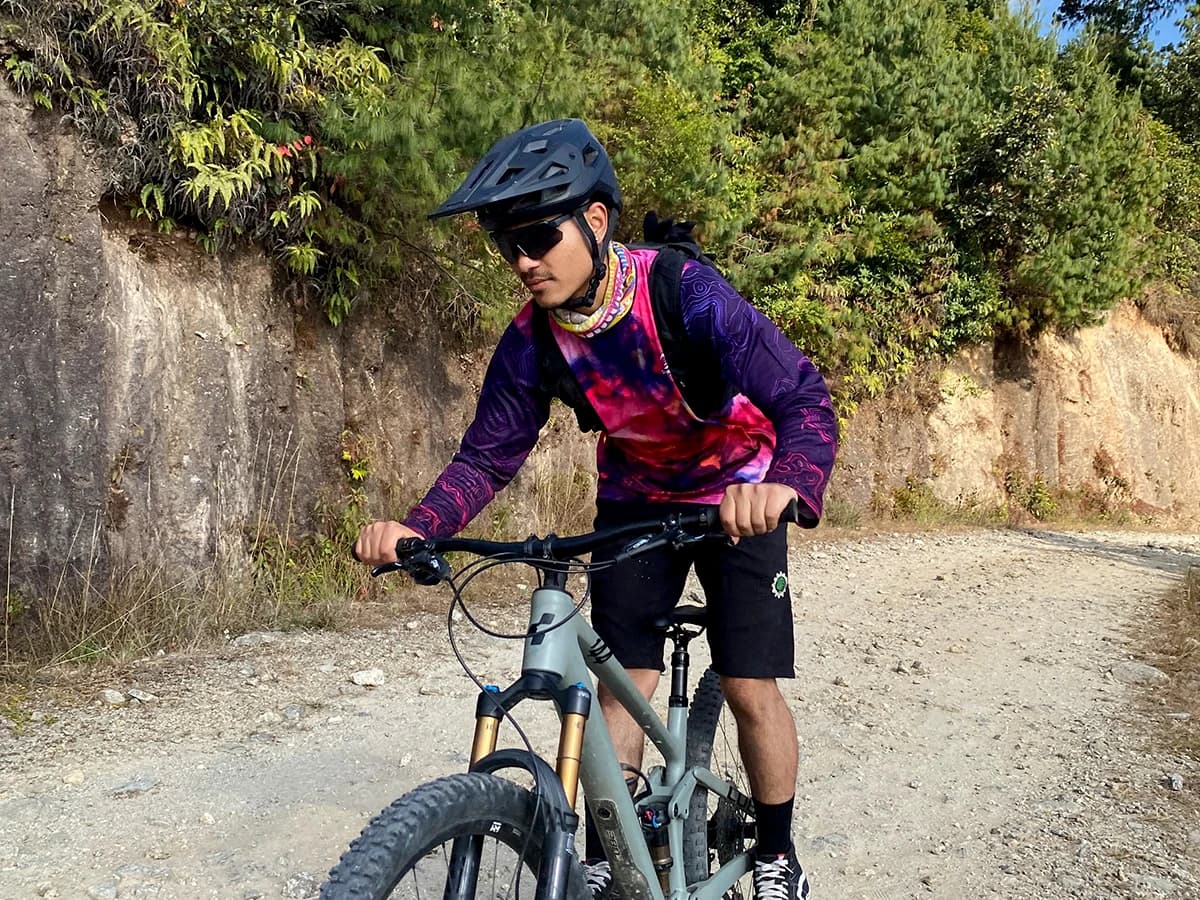
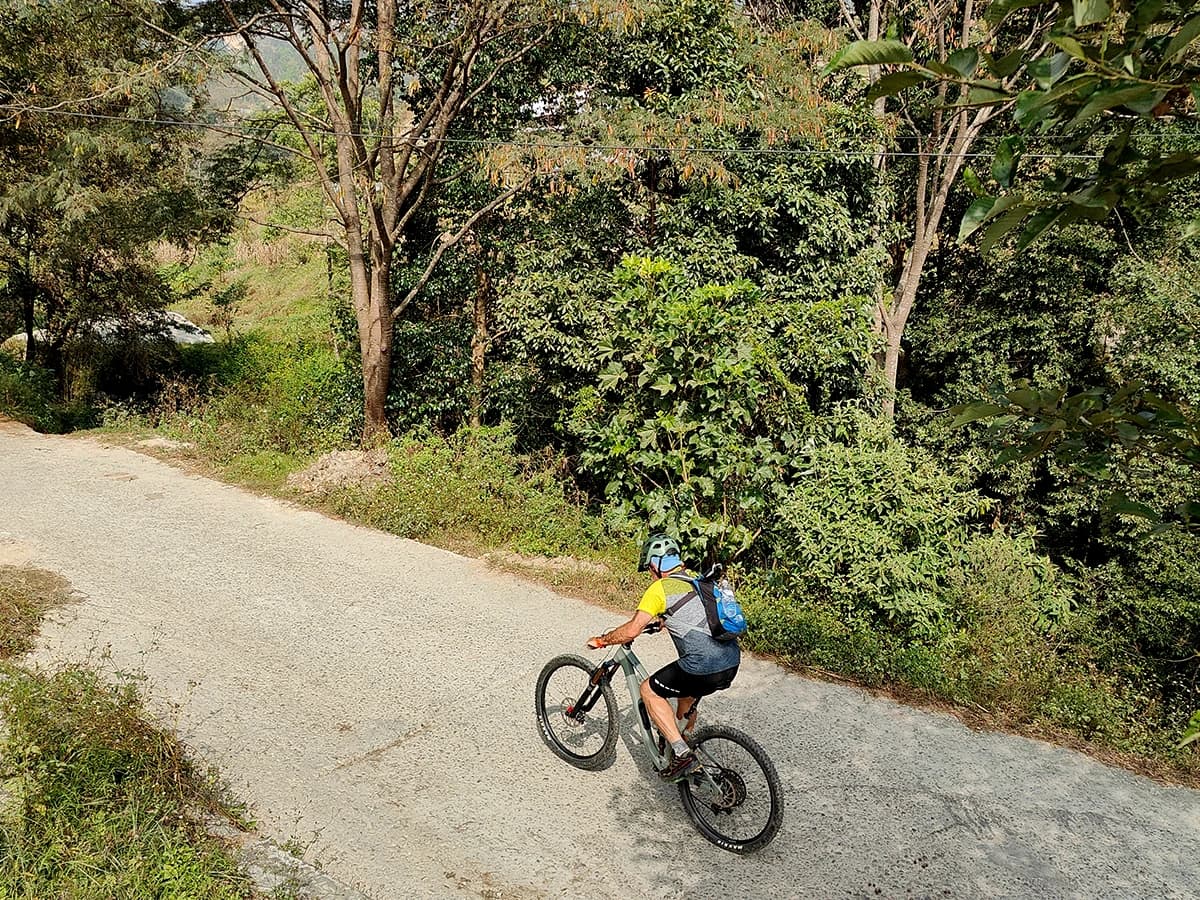
The Kathmandu Mountain Biking Tour is a guided approximately 40 km ride through the quiet countryside of the Kathmandu Valley, with Himalayan views on clear days. You ride a well-prepared mountain bike with a guide who can fix it, and the tour starts and ends in Kathmandu. It is one of the best one-day tours and activities and an easy addition to any of our tours in Nepal.
Kathmandu Mountain Biking Day Tour
Kathmandu Mountain Biking Tour Overview
The Kathmandu mountain biking day tour is a relatively new outdoor adventure in Nepal. However, adventure sports have grown quickly in popularity here, and cycling has become one of the best ways to see the country at a human pace.
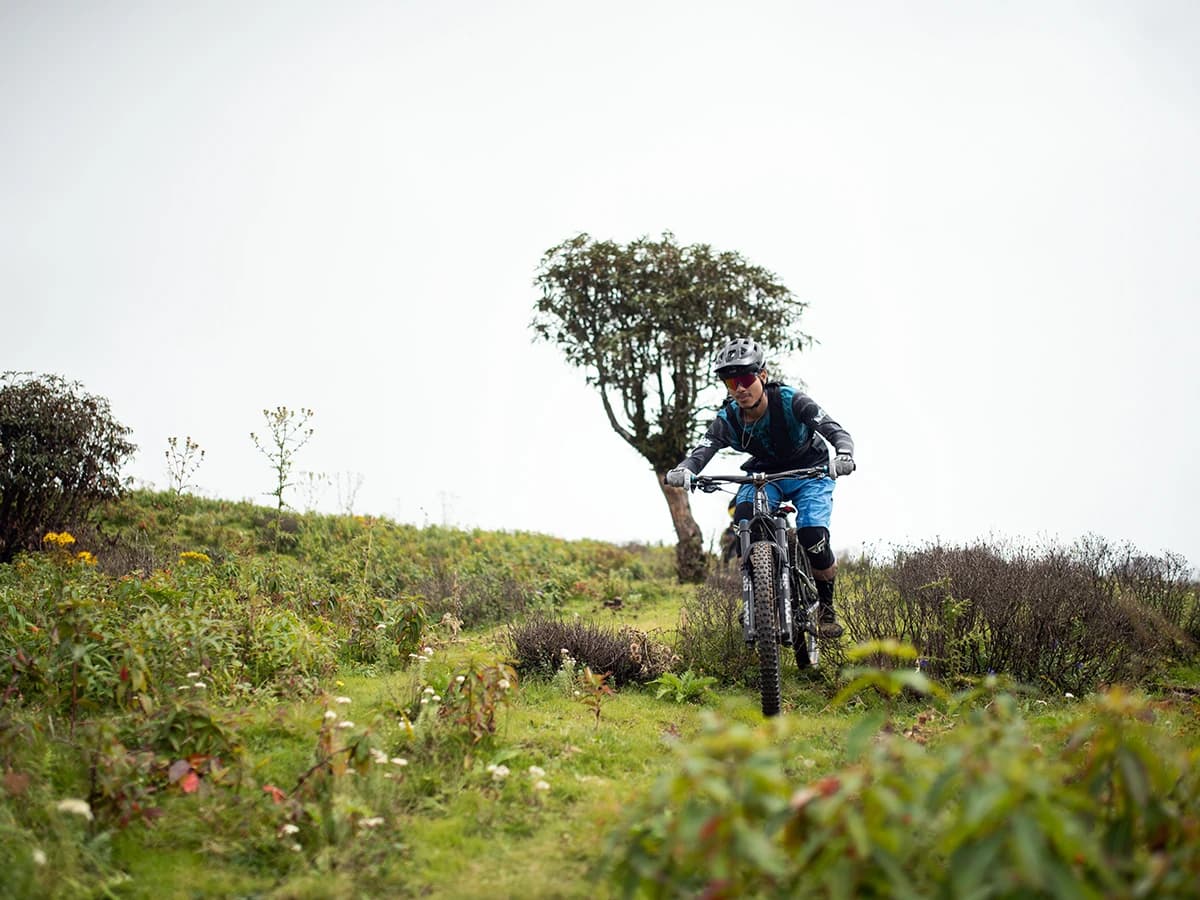
Our Kathmandu Mountain Biking Tour covers approximately 40 km in and around the Kathmandu Valley. You’ll be moving through farmland, forest, and traditional villages while the Himalayas stay in view on clear days.
Mountain biking in the Kathmandu Valley is a low-risk activity that builds endurance and general fitness, and it shows you a side of Nepal that buses and taxis cannot. Instead of seeing villages through a window, you ride through them.
You greet farmers in their fields, pass small tea shops and temples, eat local food, notice everyday customs and traditions, and return with a much wider picture of life outside the city. The ride is also eco-friendly: no engine, no fumes, and a light footprint on the trails and communities you visit.
The tour is graded Moderate. That means you need a good level of fitness, because the day includes gradual climbing, varied terrain, and several hours in the saddle, although you do not need to be a competitive cyclist. The pace is flexible, with breaks built in for photos, water, and rest. Your guide rides with the group the whole way, and groups can be anywhere from one to twelve riders.
Top Experiences on the Kathmandu Mountain Biking Tour
- Ride about 40 km through the countryside in and around the Kathmandu Valley on a day trip that starts and ends in the city
- Pedal past terraced hillsides, farmland and forest on peaceful routes away from busy city traffic
- Cycle from village to village and see everyday Nepali life up close, from farmers in the fields to tea shops beside the trail
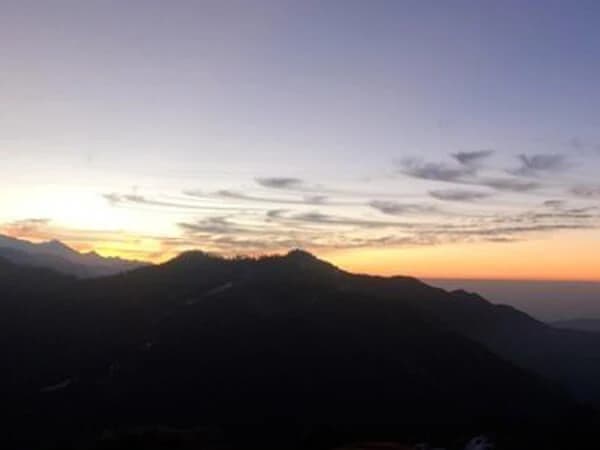
- Reach a high point of 2,030 m (6,660 ft) and enjoy Himalayan views on clear days
- Stop for lunch and taste local food, either as a packed lunch on the trail or at the end of the ride
- Ride with a guide who has mechanical knowledge and carries repair tools and spare parts, so small problems never end your day
- Set your own rhythm with a flexible pace and plenty of breaks for photos, water, and rest
- Test your fitness on gradual climbs and enjoy the rush of the descents that follow
- Explore the valley in an eco-friendly way that supports the local communities you pass through
- Upgrade to a full-suspension bike, a high-end hardtail, or an e-bike if you want extra comfort on the climbs
Why Choose a Kathmandu Mountain Biking Tour to Explore the Valley?
A bike gives you something a car window cannot: time. Riding moves you slowly enough to notice the smell of wood smoke, the sound of a temple bell, and the way the light changes across the terraces, yet fast enough to cover far more ground than you could on foot in a day. That balance is the main reason a Kathmandu Mountain Biking Tour is such a rewarding way to see the valley.
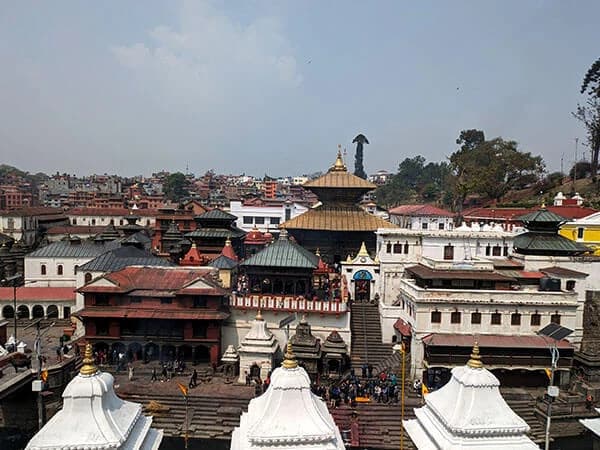
The valley is also a place where history and daily life sit side by side. Kathmandu is home to ancient Newar towns, Hindu and Buddhist shrines, and farming communities that still follow the traditional rhythm of planting and harvest. Riding between villages lets you see these layers up close, and the stops along the way give you a natural chance to meet local people.
Here is what riders tend to value most:
- Freedom from traffic: Quiet lanes and country tracks replace the noise of the main roads.
- A real workout with a reward: Gradual climbs lead to open views and satisfying descents.
- Cultural insight: You see rural life, local food and customs that most city tours never reach.
- Low-impact travel: A bicycle leaves no fumes and a small footprint, so more of the benefit stays with local communities.
- Everything arranged: A guide, a prepared bike, a helmet, and lunch are all taken care of, so you can simply ride.
If you plan a longer stay, our sightseeing tour in Nepal page lists other ways to explore the capital’s heritage. The flora and fauna in Nepal guide explains what you might notice along the trails.
What Makes This Kathmandu Mountain Biking Tour Special
Plenty of operators offer a ride around the valley. What sets this one apart is how well it balances adventure, culture, and ease of planning.
- Trouble-free access: Our tour starts and ends in Kathmandu, so you do not need to travel far or arrange extra transport to reach the trails.
- A peaceful route: You spend the day away from the noise and traffic of the city, on rural tracks and village paths.
- Local life, not just scenery: Riding village to village lets you see how people live, farm and trade in the valley.
- A guide who is also a mechanic: Your cycling guide has mechanical knowledge and carries repair tools and extra spare parts.
- Daily departures: You can choose the day that fits your trip, from short city breaks to the days before or after a trek.
- Support for local communities: Part of what you spend stays in the villages and businesses along the way.
Other Mountain Biking Tours in Nepal
If one day in the saddle leaves you wanting more, you are in the right country. Nepal offers some of the most varied cycling terrain in Asia. Our team can arrange mountain biking well beyond the Kathmandu Valley, and every route can be tailored to your fitness and experience.
More Kathmandu Valley Cycling Options
Within and around the valley, we can arrange day cycling, downhill cycling, Nagarkot cycling, and wider Kathmandu Valley cycling routes. You can also pair your ride with a different kind of day out.
The Nagarkot Sunrise Tour and the Chisapani Nagarkot Short and Easy Trek both explore the hills on the rim of the valley on foot. This makes them a good way to see the same landscapes from a different angle.
Multi-Day Mountain Biking in Nepal
For longer adventures, we can plan cycling trips such as the Annapurna Circuit, Upper Mustang, Manaslu Circuit, Langtang, Lumbini, Chitwan, Muktinath to Pokhara, and even the long Lhasa to Kathmandu route.
Tell us how many days you have and what kind of terrain you enjoy, and we will design a plan. You can browse all of our adventure activities, including rafting in Nepal, paragliding in Nepal, and bungy jumping in Nepal, or contact us for any mountain biking tour in Nepal.
Why Book Your Kathmandu Mountain Biking Tour with Global Adventure Trekking
A good day on a bike depends on small details: a well-tuned bike, a guide who reads the trail, and a team that handles problems quickly.
Here is what you can expect when you ride with us:
- Experienced, mechanically skilled guides: Your cycling guide carries repair tools and extra spare parts and can fix common issues on the trail.
- Trusted by travellers: We have 169 reviews on TripAdvisor and 26 on Google, and 99% of travellers recommend us. Read more client reviews from people who have travelled with us.
- Recognised and registered: We are affiliated with the Nepal Government, the Nepal Tourism Board (NTB), the Nepal Mountaineering Association (NMA), the Trekking Agencies’ Association of Nepal (TAAN), the Hotel Restaurant Association (HRA), and KEEP. See our legal documents for details.
- Local knowledge: We are based in Thamel, Kathmandu, and our team knows the valley’s trails, villages, and seasons well.
- Flexible planning: Want a different pace, a private ride, or a longer route? Use our plan your trip page or customize this tour.
- Responsible travel: Cycling is a low-impact way to travel, and our tours support local communities.
Learn more about our approach on the Why Travel with Us and About Global Adventure Trekking pages.
Who Is This Mountain Biking Tour For?
This ride is designed to be open to riders of all cycling levels, as long as you have a good basic level of fitness and feel comfortable on a bike.
It works especially well for:
- First-time mountain bikers who are active and want a guided introduction to off-road riding
- Experienced cyclists who want local knowledge and a well-supported route
- Travellers with one free day in Kathmandu who want something more active than sightseeing
- Trekkers who want a lighter day before or after a longer adventure such as an Everest region trek or an Annapurna region trek
- Friends and families travelling together, with groups of up to 12 riders
- Solo travellers, who are welcome to join
If you prefer a gentler experience, take a look at our easy and short treks. If you want something tougher or longer, we can customize a trip around your fitness and schedule.
Kathmandu Mountain Biking Day Tour Outline Itinerary
- Day 01: Kathmandu Mountain Biking Day Tour – Approx. 40 km
Kathmandu Mountain Biking Day Tour Itinerary
Meals: Lunch | Mode of travel: Mountain bike | Distance: about 40 km | Highest point: 2,030 m (6,660 ft)
Your day begins in Kathmandu, where you meet your guide and the rest of the group. We fit your mountain bike to your height, check the brakes and gears, and make sure your helmet sits correctly. A short safety briefing covers the route, hand signals, riding order, and what to do if you need a break or a repair.
From the city, you roll out onto quieter roads and then onto country tracks. The noise of Kathmandu fades, replaced by birdsong, bicycle bells and the sound of tyres on dirt. You pass through small settlements and farmland, with terraced hills rising on either side, and your guide points out local crops, temples and viewpoints along the way.
The central part of the ride brings the main climbs, which are gradual rather than brutal, and the high point of the ride at 2,030 m. When the sky is clear, you can see the Himalayas in the distance, and your guide will stop for photos. Lunch is included, whether packed or at the end of the tour, and gives you time to rest, refuel, and share stories.
After lunch, you head back toward Kathmandu on a different mix of trail and road. The group stays together, and your guide keeps an eye on everyone’s energy. By the time you return to the city, you will have ridden around 40 km through some of the most scenic countryside close to the capital. Your guide will check your bike back in, and the day ends with a well-earned rest.
If you would like a different route, a slower pace, or a private ride, we are happy to customize the itinerary for you.
Kathmandu Mountain Biking Day Tour Cost Details
Includes
Your tour is fully guided and supported, so you can focus on the ride. Here is what is covered and what you should arrange yourself.
- A good mountain bike
- A cycling guide with mechanical knowledge
- A packed lunch, or lunch at the end of the tour
- Repair tools
- Extra spare parts
- A safety helmet
Excludes
- Biking gear other than the helmet and bike (gloves, glasses, padded shorts, and similar items)
- Personal expenses such as snacks, drinks, and souvenirs
- A full-suspension bike or e-bike (available as an upgrade)
- Personal medical expenses
- Travel or accident insurance
- Tips for your guide and support staff
Add-ons & Options
Optional Bike Upgrades
On request, we can arrange a full-suspension mountain bike, a high-end hardtail, or an e-bike. These upgrades improve comfort, ease, and performance on longer climbs and varied terrain. Tell us which one you would like when you book so we can confirm availability.
Dates & Availability
Daily departure are available
Essential Information
Kathmandu Mountain Biking Tour vs. Other Ways to Explore the Valley
Kathmandu offers many ways to spend a day outdoors, so it helps to know how a Kathmandu Mountain Biking Tour compares with the alternatives.
|
Option |
Effort | What you see |
Best for |
|
Mountain biking tour |
Moderate |
Villages, farmland, forest, and Himalayan views over about 40 km |
Active travellers who want culture and adventure in one day |
| Car-based sightseeing | Low |
Heritage sites and viewpoints with short walks |
Travellers who prefer comfort and temple visits |
| Day hike | Moderate | Hills and trails within walking distance |
Walkers who enjoy a slower pace |
Compared with a car tour, a bike ride takes you off the main roads and into places that vehicles cannot easily reach.
Compared with a hike, it covers much more distance, so you see several villages and landscapes in a single day. Unlike a long trek, it needs no overnight stays or heavy packing, which makes it easy to fit into a busy itinerary.
Many travellers follow the ride with wildlife time in the lowlands, such as the Luxury Chitwan Jungle Safari Tour or the Bardia National Park Tour.
Hardtail vs Full-Suspension Mountain Bike: Which Is Best for a Kathmandu Mountain Biking Tour?
The bike you ride has a big effect on how the day feels. The two most common types of mountain bikes are the hardtail and the full-suspension bike, and each has its strengths.
Understanding the difference helps you decide whether the standard bike on our Kathmandu Mountain Biking Tour is right for you, or whether an upgrade is worth the extra fee.
Hardtail MTB: Simpler and Lighter
A hardtail mountain bike has suspension only at the front, with a rigid rear frame. That simple design makes it a favourite for beginners, fitness riders and anyone who wants a dependable bike without a lot of maintenance.
- Simpler and lighter
- Front suspension only
- Lower maintenance
- More efficient climbing
- Usually cheaper
As there is no rear shock to absorb your pedalling energy, more of each push goes straight into forward motion. That is why a hardtail feels quick and responsive on long climbs and smooth dirt roads, both of which are common on the Kathmandu Valley’s rural routes.
Full-Suspension MTB: More Comfort and Control
A full-suspension mountain bike has suspension at both the front and the rear. It soaks up bumps, rocks, and roots, keeps the tyres in contact with the ground and gives you more control when the trail gets rough.
- More comfort and control
- Front and rear suspension
- Better on rocky trails
- More comfortable downhill
- Usually more expensive
The trade-off is extra weight and complexity. Full-suspension bikes need more maintenance and can feel slightly less efficient on steady climbs, depending on the design. In return, they reduce fatigue on long rough descents and give less experienced riders more confidence on technical ground.
Key Differences Between Hardtail and Full-Suspension Bikes
| Feature | Hardtail | Full suspension |
| Price | Lower | Higher |
| Weight | Lighter | Heavier |
| Climbing | More efficient | Slightly less efficient |
| Descending | Less comfortable | More controlled |
|
Rocky trails |
Can feel harsh | Excellent |
| Jumps | Less forgiving | More forgiving |
| Maintenance | Easier | More complex |
| Pedaling efficiency | Generally higher | Depends on design |
Which Is Better for Different Riding?
A hardtail is better for:
- City riding and commuting
- Smooth dirt roads
- Cross-country riding
- Beginners on a budget
- Long climbs and fitness riding
A full-suspension bike is better for:
- Rocky and technical trails
- Steep downhill riding
- Mountain trails
- Roots, drops, and jumps
Which Bike Should You Choose for Our Kathmandu Mountain Biking Tour?
The tour includes a good mountain bike, a safety helmet, repair tools, and spare parts, so most riders can simply join the ride on the standard bike. If you want a different experience, we can arrange optional upgrades on request: full-suspension mountain bikes, high-end hardtail models, and electric bikes (e-bikes).
Here is a simple way to choose:
- Stay with the standard bike if you are fit, comfortable on a bike, and mainly want to enjoy the scenery and village life.
- Upgrade to a full-suspension bike if you prefer extra comfort on rough sections, have a sensitive back or joints, or want more control on descents.
- Upgrade to a high-end hardtail if you ride regularly, enjoy efficient climbing and want a lighter, more responsive bike.
- Choose an e-bike if you want help on the climbs and would rather save your energy for the views.
Upgrades depend on availability, so mention your preference when you book or ask us through the contact us page.
Best Time for a Kathmandu Mountain Biking Tour
The tour runs on daily departures, but the best seasons for a Kathmandu Mountain Biking Tour are autumn and spring. During these months, the weather is generally stable, the air is clearer, and the trails are in good condition. Here is how each season feels on the bike.
Conditions change from year to year, so treat the temperatures as a guide rather than a guarantee, and read our climate of Nepal page for more detail.
Spring (March–May)
Spring is one of the most popular times for a Kathmandu Mountain Biking Tour. Days are warm and bright, the hills turn green, and rhododendrons and other wildflowers bloom in the higher forests. Expect good visibility early in the season, though haze or clouds can build toward May. Bring plenty of water and a light layer for changing conditions.
Autumn (September–November)
Autumn is the favourite season for most riders. The monsoon has washed the dust from the air, skies are deep blue, and the Himalayas appear sharply on clear mornings. Trails are firm and the fields around the villages are golden with harvest. If you want the best chance of mountain views, this is the season to choose, and it is also the busiest, so book early.
Winter (December–February)
Winter is cooler, with chilly air in the shade and comfortable temperatures in the sun. Skies are usually clear and dry, which means excellent mountain views and firm trails. Bring warm layers and gloves for the descents.
Monsoon (June–August)
The monsoon brings heavy rain, clouds, and muddy trails. The countryside is lush and green, but views of the Himalayas are often hidden, and slippery sections need extra care. If you ride in this season, bring waterproof layers, expect to get wet, and listen carefully to your guide’s advice on the day.
What to Expect on a Kathmandu Mountain Biking Tour
A little honest preparation goes a long way. These are the things first-time riders most often notice on the day.
The City Takes a Little Patience
Kathmandu traffic can be dense, with horns, motorbikes, pedestrians, and street dogs. The first part of the ride is usually the busiest. Stay close to your guide, keep your speed controlled and ride on the left. Once you pass the outskirts, the roads quiet down quickly.
The Climbs Are Harder Than the Distance Suggests
Forty kilometres may not sound far, but the combination of altitude gain, loose surfaces and heat makes it a real workout. The climbs are gradual, but they add up over the day. Use your low gears early, keep a steady rhythm and do not hesitate to take a break.
The Terrain Changes Often
The tour covers varied terrain, from village lanes and dirt tracks to stony sections and some road. Different surfaces call for different techniques, which is why your guide gives a short briefing at the start and keeps the group together.
Weather and Views Are Never Guaranteed
Himalayan weather changes quickly. A bright morning can turn cloudy by lunchtime, and mountain views depend on the day. That is why we recommend riding in autumn or spring when possible, and why the villages, forests and terraces are as important to the experience as the peaks.
Facilities Are Basic Between Villages
You will find tea shops and small stores in the villages, but facilities along the trail are limited. Use the toilet before you set off, carry enough water, and keep a few snacks in your pocket. Carry out any waste you produce.
Dust and Sun Are Part of the Ride
Dry-season trails can be dusty, and the sun is strong at altitude, even when it feels cool. A light buff or mask for your face, sunglasses, and sunscreen make a big difference to your comfort.
Mountain Biking Tips for Beginners on the Kathmandu Mountain Biking Tour
If you have little off-road experience, a few simple habits make the ride safer and more enjoyable. Your guide will help, but it is worth knowing the basics before you arrive.
Use Your Gears Early
Shift to an easier gear before a climb begins, not halfway up it. A light, steady pedalling rhythm saves energy and protects your knees. If you wait until you are struggling, the chain can jump, and you lose momentum.
Brake Smoothly
Use both brakes together with gentle pressure instead of grabbing a handful. On loose dirt, heavy front braking can make the wheel slide out. Slow down before corners, not in them.
Look Where You Want to Go
Your bike follows your eyes. Look ahead at the line you want to ride, not at the rock or rut you want to avoid. This simple habit improves balance and confidence on uneven ground.
Stay Relaxed on Descents
Stand slightly on the pedals with your weight back, your elbows soft and your fingers resting on the brakes. Let the bike move beneath you instead of gripping it tightly, and keep a safe distance from the rider ahead.
Pace Yourself
The ride is about steady effort, not speed. Drink small amounts of water often, eat before you feel hungry, and take the breaks your guide offers. If something hurts, say so early so the guide can adjust your bike or the pace. Riders who want extra help on hills can also ask about the e-bike upgrade, available on request.
How to Prepare for Your Kathmandu Mountain Biking Tour
You do not need to be a racer, but you do need to arrive in good shape. A little preparation makes the ride more enjoyable.
Fitness and Training
The tour is graded Moderate and requires a good level of fitness. In the weeks before you travel, ride a bike for an hour or two, two or three times a week, and include some hills.
Walking, jogging, swimming, or stair climbing also help. If you have a medical condition, check with your doctor before booking.
What to Wear and Bring
We provide the bike and the helmet.
- For everything else, pack a light daypack with:
- Padded cycling shorts or comfortable, flexible trousers
- A breathable top and a light waterproof or windproof jacket
- Cycling gloves and sunglasses
- Closed, sturdy shoes with good grip
- Sunscreen, lip balm and a hat or buff
- A refillable water bottle (or hydration pack) and a few snacks
- A small amount of cash for tea, snacks, and tips
- A camera or phone with a secure mount or pocket
Safety, Helmet and Insurance
A safety helmet is included in the tour, and you should wear it for the whole ride. Travel or accident insurance is not included, so make sure your policy covers cycling activities before you travel.
Our guide carries repair tools and extra spare parts, and you should tell the guide early if you feel any pain, dizziness or discomfort. Staying hydrated and eating regularly will help you feel better throughout the day.
Trail Etiquette and Responsible Riding
Greet people on the trail, slow down near children and animals, and stay on the track to avoid damaging crops. Ask before photographing people, buy tea or snacks in the villages to support local families, and take all your rubbish with you.
Walk your bike past the sacred sites and mani walls, keeping them on your right as a sign of respect. For more tips on travelling in Nepal, visit our travel guides and travel in Nepal pages.
Cultural Etiquette in Valley Villages
The villages along the way are living communities, not attractions, so small gestures of respect go a long way. Greet people with a smile and a folded-hands “Namaste,” and dress modestly, with shoulders and knees covered when you stop in a village or near a temple.
Take off your shoes before entering a home or shrine, and ask before stepping inside any religious site. Avoid touching people’s heads, and use your right hand or both hands when giving or receiving something.
If you want to take a portrait, ask first and show the photo if they are curious. Learning a little about the people of Nepal and the religion of Nepal will deepen your appreciation of everything you see.
Book Your Kathmandu Mountain Biking Tour Today
If you want to see the Kathmandu Valley the way locals do, away from the traffic, over quiet trails and through living villages, the Kathmandu Mountain Biking Tour is the perfect day out. You will ride about 40 km, enjoy Himalayan views on clear days, eat a good lunch, and finish the day with a deeper connection to Nepal.
Ready to go? Book this trip, customize your ride, or talk to our team on WhatsApp at +977 9841527688. You can also call +977 1 4700355 or visit us at Bhagawati Bahal, Thamel Marg, Kathmandu. For more ideas, explore our other tours in Nepal, read our blog, or return to the Global Adventure Trekking homepage
Kathmandu Mountain Biking Day Tour FAQs
You can book online using the Book This Trip button, or you can contact our team by phone or WhatsApp at +977 9841527688. Let us know your preferred date, group size, and any bike upgrades, and we will confirm the details with you.
Yes. The Kathmandu Mountain Biking Tour has daily departures, so you can choose the date that suits your plans. It is a good option for a free day before or after a trek.
The tour runs for one to twelve riders. Solo travellers are welcome, and groups of friends or family can ride together.
Yes. We can adjust the pace, the distance, or the route and arrange private rides for couples, families, and friends. Use the customize trip form or the plan your trip page to tell us what you have in mind.
The tour is graded Moderate. You ride about 40 km over varied terrain, with some gradual climbing, and reach a high point of 2,030 m (6,660 ft). You need a good level of fitness but not any special racing experience. The pace is flexible, with regular breaks.
No. The ride is suitable for all cycling levels, provided you are fit and comfortable on a bike. If you have never ridden off-road, tell your guide at the start so they can give extra tips on braking, gears, and body position.
The distance is about 40 km. It is a full-day ride that includes breaks, photo stops and lunch, and the overall duration depends on your group’s pace, the trail conditions and the weather. Your guide will explain the plan for the day when you book.
Mountain biking in the Kathmandu Valley is considered a low-risk activity when you ride with a trained guide. We provide a helmet, a well-prepared bike, repair tools and spare parts, and we give a safety briefing before the ride. Follow your guide’s instructions, ride at your own pace and carry travel insurance that covers cycling.
You ride a good mountain bike provided by our team. If you prefer a different experience, you can upgrade to a full-suspension bike, a high-end hardtail or an e-bike on request.
A hardtail is lighter, simpler, and more efficient on climbs and smooth dirt roads, so it suits fit riders and beginners. A full-suspension bike is more comfortable and controlled on rocky or rough ground. For most riders, the standard bike is enough, and an upgrade is a matter of personal comfort. See our hardtail vs. full-suspension section above for a full comparison.
Bring cycling gloves, sunglasses, sunscreen, a light jacket, comfortable clothing and sturdy shoes. Also bring water, a few snacks, a small amount of cash and your own protective gear if you have it. The helmet and bike are provided.
The tour includes a good mountain bike, a cycling guide with mechanical knowledge, lunch, repair tools, spare parts, and a safety helmet. It does not include other biking gear, personal expenses, a full-suspension bike or e-bike, medical expenses, insurance, or tips for the guide and support staff.
Yes, lunch is included, either as a packed lunch or at the end of the tour. If you are vegetarian, vegan or have food allergies, let us know when you book so we can plan accordingly.
Autumn (September–November) and spring (March–May) are the best seasons, with stable weather, good trail conditions, and the clearest views. Winter is also good for dry, clear days, while the monsoon brings rain and muddy trails.
Yes, the tour runs year-round with daily departures. In the monsoon, expect rain and slippery trails, and in winter, cold mornings. Bring suitable layers, and follow your guide’s advice about the route and conditions.
Insurance and tips are not included in the tour. We recommend travel or accident insurance that covers cycling, and a tip for your guide and support staff is a kind way to show appreciation for their work. Tipping is voluntary and depends on your satisfaction.
Absolutely. Many riders combine it with a trek in Nepal, a jungle safari in Nepal, rafting, or paragliding. Our Chitwan jungle safari tour is a popular next step. Before you travel, check our visa procedures and hotel reservation pages, and visit our general FAQs for more help.
Fitness and cycling confidence matter more than age. The tour is graded Moderate, so it suits riders who are comfortable on a bike for several hours. If you are travelling with a younger or older rider, tell us their age and experience when you enquire, and our team will advise on the best option, including a customized route.
Your guide rides with the group, carries repair tools and extra spare parts, and has the mechanical knowledge to handle common bike issues on the trail. If you feel tired, tell your guide, who can slow the pace or add a rest break. The ride is designed to be flexible, so nobody is rushed.
Yes, and your guide will pause at good viewpoints so you can take photos safely. Keep your phone or camera in a secure pocket or on a handlebar mount, and avoid filming while you move over rough ground. Always ask before photographing people in the villages.
Your safety comes first. Heavy rain, fog, or unsafe trail conditions can affect the ride, so your guide will advise you on the day and may suggest changes. If you are concerned about the forecast, contact our team before you travel, and we will talk through your options.